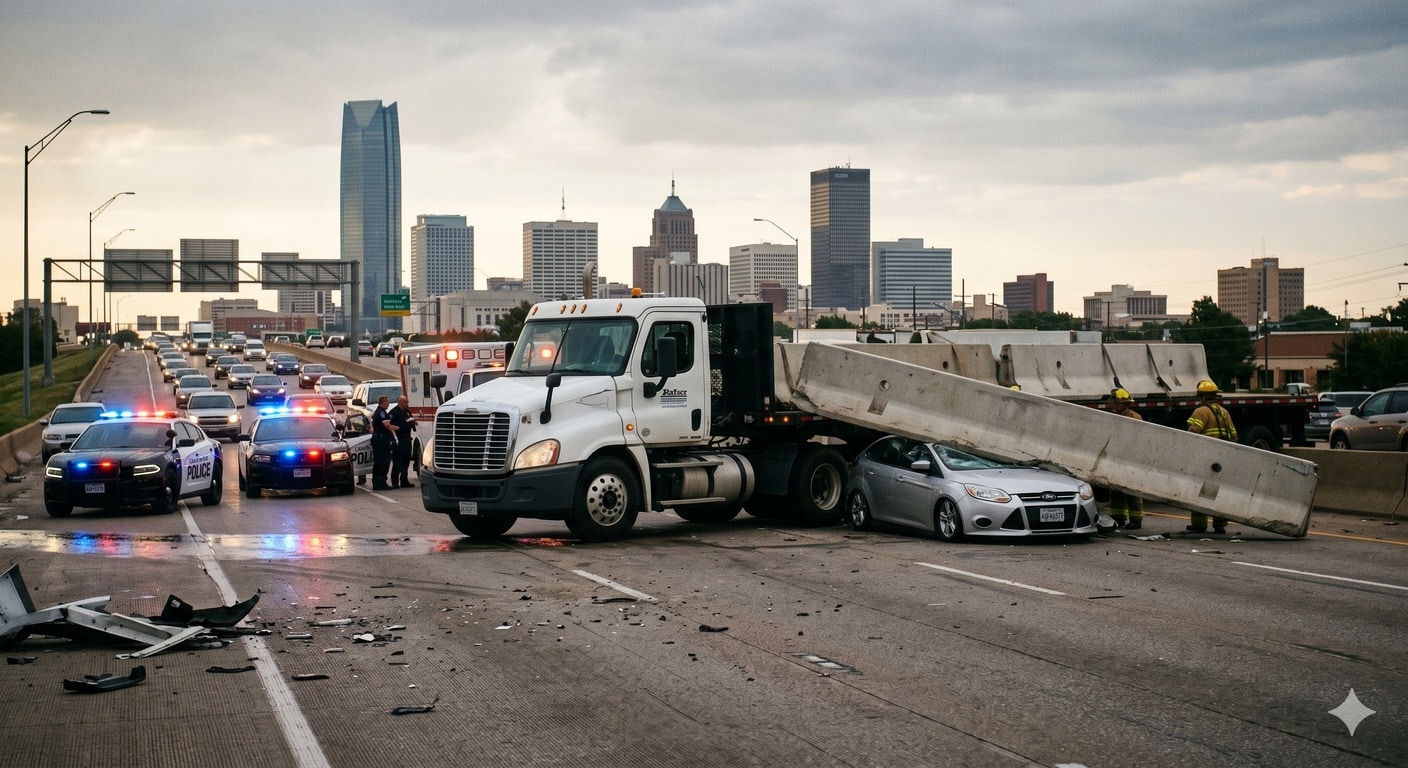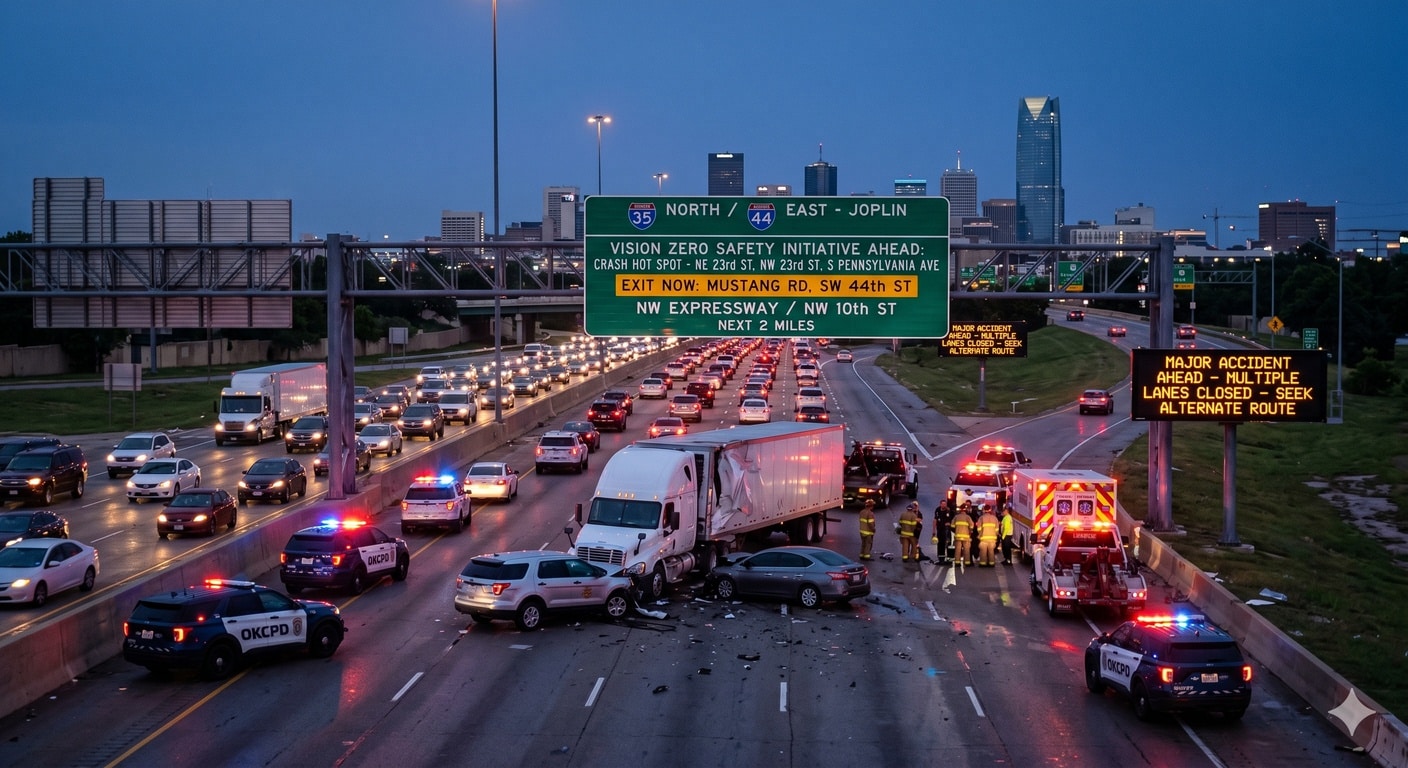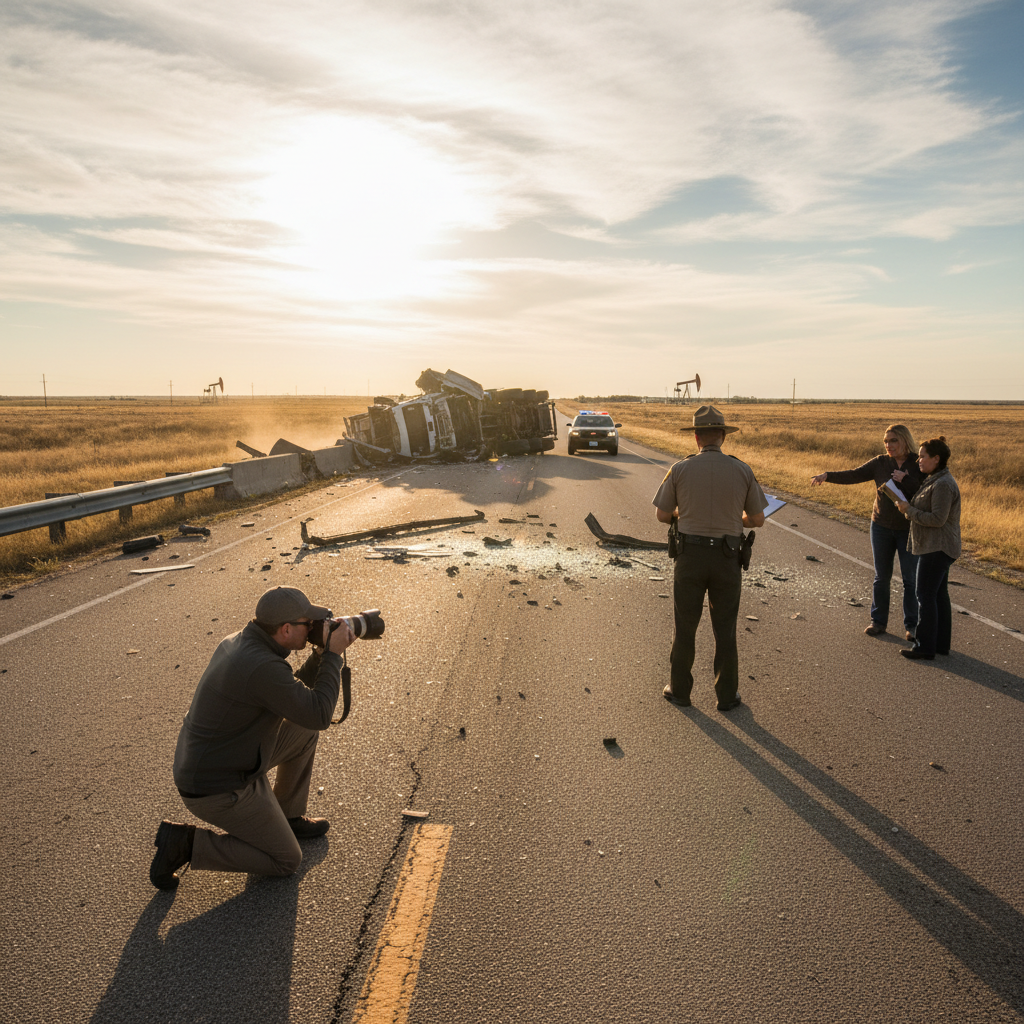
If you’ve been hurt in an accident with a large commercial truck, your world has likely been turned upside down. The screech of tires and the impact are terrifying enough, but the aftermath can feel just as overwhelming. Your first thoughts are naturally about your health, your family, and how you’re going to pay the bills piling up on your kitchen counter.
The legal system is probably the last thing you want to navigate alone right now. However, the days and weeks following a truck accident are critical. Unlike a standard car accident, 18-wheeler crashes involve complex regulations, massive insurance policies, and aggressive legal teams representing the trucking company. Their goal is often to minimize your payout.
To protect your future, you need strong, undeniable proof of what happened. Evidence is the foundation of any successful personal injury claim. It is the tool we use to force insurance companies to treat you fairly.
This guide will walk you through exactly what evidence is needed to build a winning case in Oklahoma, providing you with the clarity and confidence you need during this difficult time.
Immediate Steps: Essential Evidence to Gather at the Scene
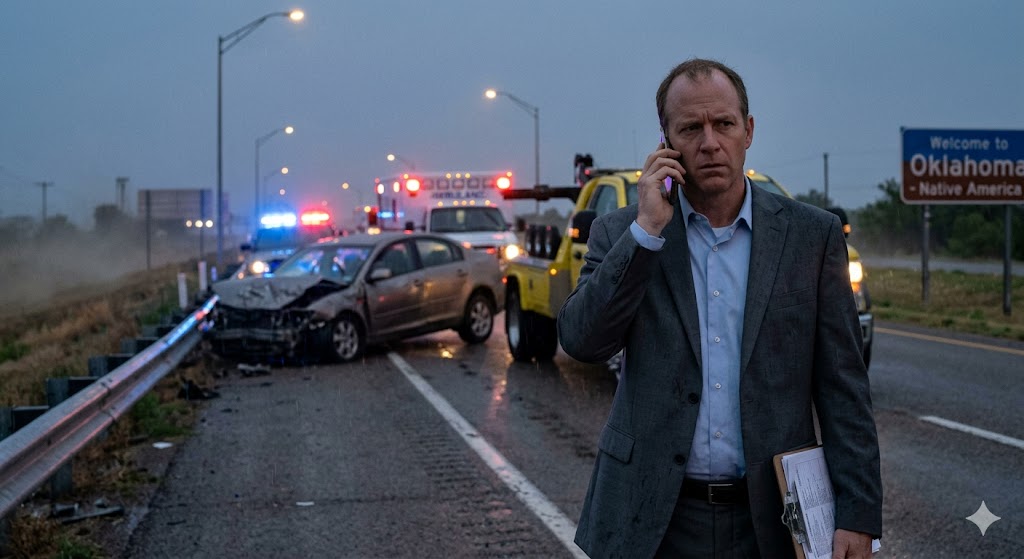
The moments immediately following a crash are chaotic. You may be in shock or pain. Your health is always the top priority, so if you need emergency medical attention, go to the hospital immediately. However, if you are physically able to remain at the scene—or if you have a passenger who can help—gathering evidence right then and there can significantly strengthen your claim later.
Evidence at the scene is temporary. Rain can wash away skid marks, vehicles get moved to clear traffic, and memories fade. Capturing a snapshot of the scene as it happened is vital.
Here is what you should try to collect immediately:
- Driver Information: Get the truck driver’s name, address, phone number, and commercial driver’s license (CDL) number.
- Company Information: This is crucial. Write down the name of the trucking company, their contact information, and their insurance policy details. Often, the logo on the door tells you who operates the rig.
- Vehicle Details: Note the license plate numbers of both the tractor (the front part) and the trailer. They often have different plates and sometimes different owners.
- Witness Contacts: If anyone stopped to help or saw the crash, get their names and phone numbers immediately. Witnesses often leave before police arrive, and their unbiased account can be the difference between winning and losing.
Remember, you don’t need to argue with the driver or discuss who was at fault. In fact, it is best to say as little as possible to the other parties. Just focus on collecting the facts.
The Importance of the Official Oklahoma Highway Patrol Accident Report
In Oklahoma, law enforcement officers—typically the Oklahoma Highway Patrol (OHP) or local police—will respond to the scene of a significant truck accident. They will create an Official Oklahoma Traffic Collision Report.
This document is one of the most important pieces of evidence in your case. It is an unbiased, third-party account of the incident.
The report typically includes:
- The officer’s assessment of fault.
- A diagram of the crash scene.
- Weather and road conditions at the time of the accident.
- Citations issued to the truck driver (e.g., for speeding, improper lane changes, or logbook violations).
- Statements from drivers and witnesses.
How to obtain this report:
You can typically request a copy of your accident report from the Oklahoma Department of Public Safety (DPS) or the specific police department that responded. There is usually a small fee involved.
While the police report is powerful, it is not the final verdict. Officers can make mistakes, or they might not have access to all the facts at the scene. That is why having your own legal team to investigate further is so important. We can look beyond the report to find the deeper truth.
Documentation Checklist: Photos, Witness Statements, and Dashcam Footage
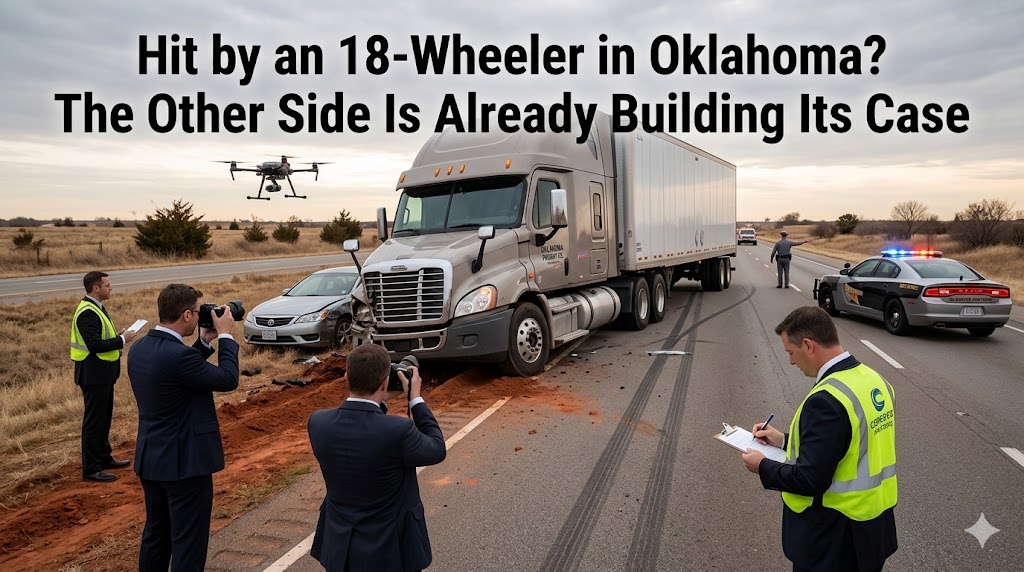
When you are fighting for fair compensation, you cannot rely on the trucking company to provide evidence that hurts their case. You need to build your own documentation. Think of this as building a fortress of facts around your claim.
Photographs and Video
They say a picture is worth a thousand words, but in a legal case, it can be worth thousands of dollars in compensation. Take as many photos as possible.
- Vehicle Damage: photographing the damage to your vehicle and the truck from multiple angles. Close-ups and wide shots are both necessary.
- The Scene: Skid marks, debris on the road, shattered glass, and traffic signs.
- Conditions: Was it raining? Was the sun in the driver’s eyes? Was there construction? Photos prove these conditions existed.
- Injuries: If you have visible cuts or bruises, document them immediately.
Witness Statements
While the police might interview witnesses, they may not ask the questions that are most relevant to your specific claim. If you have contact info for witnesses, your attorney can reach out to them later to get a recorded statement. These independent accounts are difficult for insurance companies to dispute.
Dashcam and Surveillance Footage
In today’s world, cameras are everywhere.
- Your Dashcam: If you have one, secure the footage immediately so it doesn’t get overwritten.
- Nearby Businesses: If the accident happened near a store or gas station, they might have security cameras that captured the crash.
- Traffic Cameras: The Oklahoma Department of Transportation (ODOT) operates cameras on many highways.
Crucial Note: Surveillance footage from businesses is often deleted after 24 to 48 hours. This is why contacting a lawyer immediately is so important—we can send a “spoliation letter” to preserve this evidence before it is destroyed.
Electronic Logging Device (ELD) Data and Truck Maintenance Records
This is where truck accidents differ significantly from regular car crashes. Commercial trucks are regulated by the Federal Motor Carrier Safety Administration (FMCSA), which requires them to keep detailed records. These records often contain the “smoking gun” that proves negligence.
However, this evidence is in the hands of the trucking company. They will not give it to you voluntarily. We have to demand it.
Electronic Logging Devices (ELDs)
Modern semi-trucks are equipped with ELDs—essentially the “black box” of the truck. These devices record data regarding the truck’s operation.
- Hours of Service: Federal law limits how many hours a driver can be behind the wheel to prevent fatigue. ELD data can prove if a driver was over their limit and driving while exhausted.
- Driving Behaviors: ELDs can record speed, hard braking, and sudden steering movements right before the crash.
Maintenance and Inspection Records
Trucking companies have a legal duty to maintain their vehicles. Brake failures and blown tires are rarely “accidents”—they are often the result of skipped inspections or cheap repairs.
By obtaining maintenance logs, we can see if the company ignored a known mechanical issue to keep the truck on the road and making money. If they prioritized profit over safety, they are liable for your injuries.
Personnel Files
We also look at the driver’s history. Did the company hire a driver with a history of DUIs or reckless driving? Did they fail to train them properly? The personnel file can reveal a pattern of negligence by the employer.
Medical Records and the Role of Personal Injury Documentation
Proving the truck driver caused the accident is only half the battle. We also must prove that the accident caused your specific injuries and that those injuries have negatively impacted your life.
Your medical records are the timeline of your pain and recovery.
Why immediate medical care matters:
If you wait two weeks to see a doctor after an accident, the insurance company will argue that you weren’t really hurt, or that you hurt yourself somewhere else during those two weeks. Immediate and consistent medical treatment links your injuries directly to the crash.
What documentation do you need?
- Emergency Room Records: The initial diagnosis.
- Treatment Plans: Records of surgeries, physical therapy, and prescriptions.
- Billing Statements: Every dollar you have spent on care.
- Future Prognosis: A doctor’s note explaining how these injuries will affect you permanently or in the long term.
It is not just about medical bills. It is about your quality of life. We encourage clients to keep a “pain journal.” Write down how your injuries affect your daily life. Can you no longer pick up your children? Do you have trouble sleeping? Are you too anxious to drive? These personal details help us paint a picture for a jury or adjuster, showing the human cost of the accident.
Navigating Oklahoma’s Comparative Negligence Laws
One of the most common tactics insurance companies use is to try and blame you for the accident. Why? Because of Oklahoma’s “modified comparative negligence” laws.
Under Oklahoma law, you can only recover damages if you are less than 51% at fault for the accident.
- If you are 0% at fault, you get full compensation.
- If you are 20% at fault (e.g., you were speeding slightly), your compensation is reduced by 20%.
- If you are found to be 51% or more at fault, you get nothing.
This is why evidence is so critical. The trucking company’s lawyers will look for any scrap of evidence to push your fault percentage over that 50% mark. They might argue you changed lanes improperly or were distracted.
We use the evidence we gather—the ELD data, the witness statements, the scene photos—to defend you against these accusations. We fight to ensure the blame is placed where it belongs: on the negligent truck driver and the company that put them on the road.
Why Expert Testimony and Accident Reconstruction Matter
Sometimes, the evidence isn’t clear-cut. In complex 18-wheeler accidents, we often need to bring in the professionals. Expert witnesses can be the deciding factor in a high-stakes case.
Accident Reconstructionists
These are forensic experts who use science and math to recreate the accident. They analyze skid marks, crush damage on vehicles, and road friction to determine exactly how fast the truck was going and point of impact. They can create 3D animations to show a jury exactly what happened, which is incredibly persuasive.
Medical Experts
We may bring in medical specialists to explain the severity of your injuries. A neurosurgeon can explain why a traumatic brain injury will prevent you from returning to work, helping to justify a claim for lost future wages.
Economic Experts
If you have suffered a permanent disability, an economist can calculate the total lifetime cost of your lost earning capacity and future medical needs. This ensures we aren’t just fighting for what you need today, but what you will need for the rest of your life.
Conclusion: Securing Your Claim with Proper Evidence Preservation
If you’ve been hurt in an accident, we know you are facing a difficult road. The physical pain, the emotional trauma, and the financial stress can feel suffocating. But please remember: you are not alone, and you have rights.
Gathering evidence is the most powerful step you can take to secure your future. From the photos you take at the scene to the electronic logs we demand from the trucking company, every piece of the puzzle brings you closer to justice.
However, time is of the essence. Evidence disappears. Witnesses forget. Trucking companies purge records. The sooner you act, the stronger your case will be.
You don’t have to be a legal expert to protect your family. You just need to take the first step. If you are unsure where to start or how to get the evidence listed in this guide, reach out to a qualified truck accident attorney. Let us handle the investigation and the legal battles so you can focus on what matters most: your recovery.
We fight for your rights because we believe that when a trucking company’s negligence harms our community, they must be held accountable. You deserve answers, and you deserve fair compensation.