

“Labor Omnia Vincit” McKay Law
Stillwater, OK Self-Driving Truck Accident Lawyer
Autonomous semi-trucks are actively operating on highways in Stillwater, OK—and when they crash, the consequences are catastrophic. When an 80,000-pound autonomous truck collides with a passenger vehicle, the results are devastating. McKay Law is at the forefront to fight for those injured by this rapidly developing technology across OK. These crashes aren’t like regular 18-wheeler wrecks—there’s no driver behind the wheel to blame. Potentially responsible parties include the fleet owner deploying the autonomous system, the maker of the self-driving platform, the truck manufacturer itself, the makers of cameras, radar, and detection systems, coders, data providers, and the humans tasked with overseeing the AI. Our Stillwater self-driving truck accident attorneys are equipped to handle the complex legal and technical issues these cases present. Was the AI system properly tested? Did sensors fail to detect a hazard? Was the software updated to address known defects? Did the trucking company deploy the technology recklessly?—these are the questions we investigate. We work with software engineers, AI experts, accident reconstructionists, and human factors specialists to reverse-engineer what went wrong—because proving liability requires unlocking the truck’s electronic black box. Injuries from autonomous truck collisions include TBIs, paraplegia, internal organ damage, and tragic loss of life—forcing families to navigate lifelong care needs, financial devastation, and unimaginable grief. The corporate defendants in these cases have enormous resources—and they will try to hide behind their technology, blame the software, or point fingers at other companies. We push back hard. Every self-driving truck accident case is handled on a no-win, no-fee basis—you pay nothing unless we recover for you. Critical evidence in autonomous truck cases disappears quickly—early legal action is essential to capture the evidence before it vanishes. Call McKay Law now for a free consultation with a Stillwater, OK self-driving truck accident lawyer who will pursue every liable party in this new frontier of trucking.
Settlements Won
0
+
Million Dollars Won
0
+
Google 5 Star Reviews
0
+
Self-Driving Truck Crash Lawyer in Stillwater, OK | McKay Law
Understanding Self-Driving Truck Accident Claims
Autonomous and semi-autonomous trucks are no longer science fiction. Companies like Aurora, Kodiak, Waymo Via, and Embark have tested or deployed autonomous freight on Oklahoma and Texas corridors, and the legal landscape is racing to catch up. When automation behind the wheel of an 80,000-pound truck fails, the legal issues stretch well beyond ordinary trucking cases. Our firm fights for self-driving truck accident victims in Stillwater and across the state.
Levels of Vehicle Automation
Automation is measured on a 0-5 scale:
- Level 0 — No Automation: The human driver does everything.
- Level 1 — Single Function Assist: One automated function.
- Level 2 — Hands-On Automation: Driver must stay engaged.
- Level 3 — Hands-Off in Limited Conditions: Limited autonomous capability with required handoff.
- Level 4 — Self-Driving in Limited Conditions: Vehicle drives itself in defined areas without human input.
- Level 5 — Fully Autonomous: No driver needed anywhere, anytime.
Most deployed self-driving trucks are Level 4 on specific highway corridors.
Why Self-Driving Truck Crashes Happen
- Sensor failures
- Software bugs and algorithm errors
- Object recognition failures
- Inability to handle unusual road conditions
- Sensors blinded by weather
- Improper handoff from autonomous to human control
- System compromised by outside interference
- Mapping and GPS errors
- Operators unfamiliar with the technology
- Premature commercial deployment
Who Can Be Held Liable in a Self-Driving Truck Accident
Several entities may bear liability:
- The motor carrier operating the autonomous vehicle
- The autonomous technology developer (e.g., Aurora, Kodiak, Waymo Via)
- The vehicle maker (e.g., Peterbilt, Kenworth, Volvo)
- The sensor manufacturer
- The software developer
- The mapping data provider
- The backup driver when a human was in the cab
- The maintenance provider
- The party loading the freight in cases of cargo-related crashes
- Security software companies where a breach contributed
How These Cases Differ From Traditional Trucking Cases
- Many companies behind every autonomous truck — every part of the autonomous stack can carry liability
- Petabytes of sensor and system data — the data picture is far richer than traditional crashes
- Untested liability frameworks — legal precedent is being made now
- FMCSA and NHTSA oversight — FMCSRs and AV-specific guidance both come into play
- Well-funded technology companies — tech and trucking giants combine for serious opposition
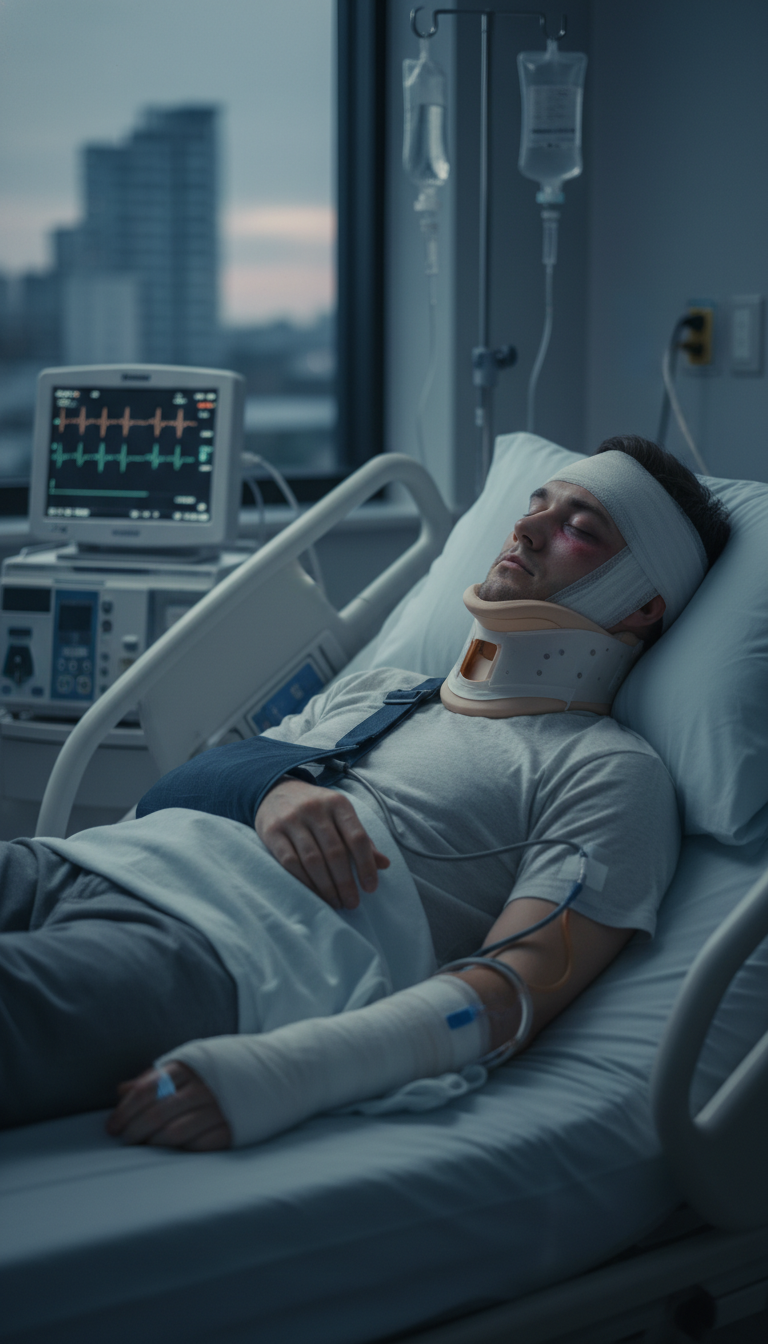
Common Injuries From Self-Driving Truck Crashes
- Brain injuries
- Spinal cord injuries and paralysis
- Injuries from cab or cargo compression
- Compound fractures
- Internal bleeding
- Loss of limbs
- Burns from post-crash fires or fuel ignition
- Lacerations and deep wounds
- Mental and emotional trauma
- Death from catastrophic crashes
Building the Evidence
- Legal Obligation — The defendants owed a duty of safe operation, design, or maintenance.
- Breach — A duty was violated.
- A Direct Link — The failure produced the wreck and the harm.
- Quantifiable Losses — Measurable economic and non-economic harm.
What Strengthens an Autonomous Truck Case
- Sensor data (lidar, radar, camera)
- System decision logs
- Vehicle event data recorder (EDR) information
- All onboard video
- Code change logs
- Internal validation records
- Remote control and monitoring data
- Records of repairs and inspections
- Driver logs and human operator records
- Internal company documents on known defects or risks
- Technical expert reconstruction
Recovery for Victims
- Past and future medical expenses
- Ongoing rehabilitation expenses
- Lost wages and loss of earning power
- Property damage
- Non-economic damages
- The toll on daily life
- Damages for impact on relationships
- Survivor damages when the wreck was fatal
- Exemplary damages in cases of known risks or reckless deployment
Oklahoma’s Statute of Limitations
You typically have two years from the date of the crash to file (Okla. Stat. tit. 12, § 95). Product liability claims against manufacturers follow the same two-year limit. Time matters more in these cases because sensor data, video, and system logs can be overwritten or deleted within days.
How McKay Law Approaches Self-Driving Truck Cases
We move quickly to demand preservation of all electronic and physical evidence, bring in qualified AV and technical experts, examine the entire AV system, identify all liable parties and insurance coverage, and build each file for the courtroom from the start.
Common Questions
Q: Who is liable when a self-driving truck causes a crash?
A: Liability typically spans several companies in the technology stack.
Q: What does it cost to hire McKay Law?
A: Zero upfront. We only get paid if we win.
Q: Was a human driver in the truck?
A: Varies by deployment. Some autonomous trucks have safety drivers; others run fully driverless on designated corridors.
Q: Can I sue a tech company like Aurora or Waymo Via?
A: Definitely possible. If their technology caused or contributed to the crash, they can be held liable under product liability and negligence theories.
Q: Should I give a recorded statement to the trucking or tech company’s insurer?
A: Don’t. Talk to a lawyer first.
Q: How long do these cases take?
A: Usually longer than traditional crash cases. Expect extended timelines given the complexity.
Q: What is the deadline to file?
A: Two years from the date of the crash (Okla. Stat. tit. 12, § 95). Act fast — sensor data and system logs disappear quickly.
Self-Driving Truck Accident Claims in Stillwater, OK
Driverless big rigs are operating commercially on routes through OK right now. When one of these vehicles is involved in a crash, the liability questions multiply fast. A Stillwater autonomous truck accident lawyer is critical for these claims.
What Counts as a “Self-Driving” Truck?
“Autonomous” isn’t a single thing. Industry-standard automation tiers describe what the truck actually does:
- Partial Automation: Combined steering and acceleration but a human driver must monitor everything.
- Eyes-Off Driving in Limited Conditions: Conditional self-driving on specific routes, but the driver must respond to handover requests.
- Level 4 — High Automation: The system handles everything within its operational design domain. This is where commercial driverless freight currently lives.
- Unrestricted Self-Driving: Not deployed commercially anywhere.
Who Can Be Held Liable?
Liability is the legal minefield these claims navigate. Multiple parties may share fault.
The Autonomous Vehicle Technology Company
The maker of the autonomous driving system can face software liability. Sensor failure all open the door to direct claims against the developer.
The Truck Manufacturer
Separate from the software sits the chassis manufacturer. Brake failures can trigger liability against the truckmaker the same way they would in a standard trucking case.
The Trucking or Logistics Company
The carrier operating the truck can be sued for using the autonomous system outside its operational design domain. Wrecks in unmapped areas are common scenarios.
The Remote Operator or Safety Driver
Teleoperation is part of certain deployments. If the off-site monitor made an error, they and their employer can share liability.
The Mapping and Data Providers
HD maps power autonomous driving. Outdated mapping sometimes pull mapping companies into the case.
Other Drivers
And sometimes an ordinary motorist might bear most of the blame.
The Evidence Problem Is Completely Different
Massive Data Logs
Autonomous trucks generate enormous amounts of data — sensor inputs from lidar, radar, and cameras, software logs. Getting hold of these logs requires fast legal action.
Proprietary Algorithms
The AV company will fight discovery with protective order requests. A capable lawyer fights for access through proper court procedure with appropriate protective orders.
Expert Witnesses Are a Different Breed
Successful claims require machine learning specialists, not just the standard crash expert.
Federal vs State Regulation Adds Another Layer
Rules vary by jurisdiction. Federal agencies set some standards, while states control operations and licensing. Breaches of federal or state requirements strengthen the case.
What Damages Can Be Recovered?
Because autonomous trucks are typically large commercial vehicles, losses tend to be significant: hospitalization and surgical costs, career-ending injury claims, pain and suffering, wrongful death in fatal crashes, and punitive damages where the carrier disregarded safety warnings.
Lawyer Fees
Counsel charges nothing until you win. These cases require firms that can fund expert testimony and complex discovery to be paid back from the recovery.
Move Fast on Evidence
Software versions get updated and replaced. Filing deadlines still run. Getting a lawyer involved right away starts the evidence-preservation process — often the difference between a winning case and one that can’t be proven.
McKay Law Is Your Stillwater Advocate After A Self-Driving Truck Accident
Autonomous trucks were promoted to the public as the future of safer highways, but when the technology fails — and it does — the outcomes can be devastating. A 80,000-pound self-driving rig that cannot process a lane change, construction zone, or stopped vehicle becomes a lethal force on wheels, and the victims are almost always the people in the passenger vehicles. At McKay Law, we are ready to take on these novel cases, where liability can stretch across the carrier, the autonomous driving software developer, the truck manufacturer, the sensor and lidar suppliers, the safety driver if one was on board, and the company that trained the AI system itself. We work with software engineers, robotics experts, data analysts, and accident reconstruction specialists to pull the black box data, sensor logs, and code records that tell the real story of what went wrong.
The companies behind self-driving freight have tremendous backing and a strong reason to preserve their technology’s reputation — which is exactly why you need a firm that won’t be outmatched. When you come into the McKay Law family, we take on the corporations, the tech vendors, and their armies of attorneys on your behalf so you can put your energy into healing. We pursue full compensation for traumatic injuries, surgeries and intensive care, long-term rehabilitation, future medical needs, lost earnings and reduced earning capacity, vehicle replacement, the emotional trauma of surviving a crash like this, and — in the most devastating cases — the losing a loved one. Call us without waiting at (866) 679-9651 or contact us online to set up your free consultation and put a fierce advocate between you and the companies that failed you.
Video Testimonials






