The First Hour Belongs to Whoever Moves Fastest
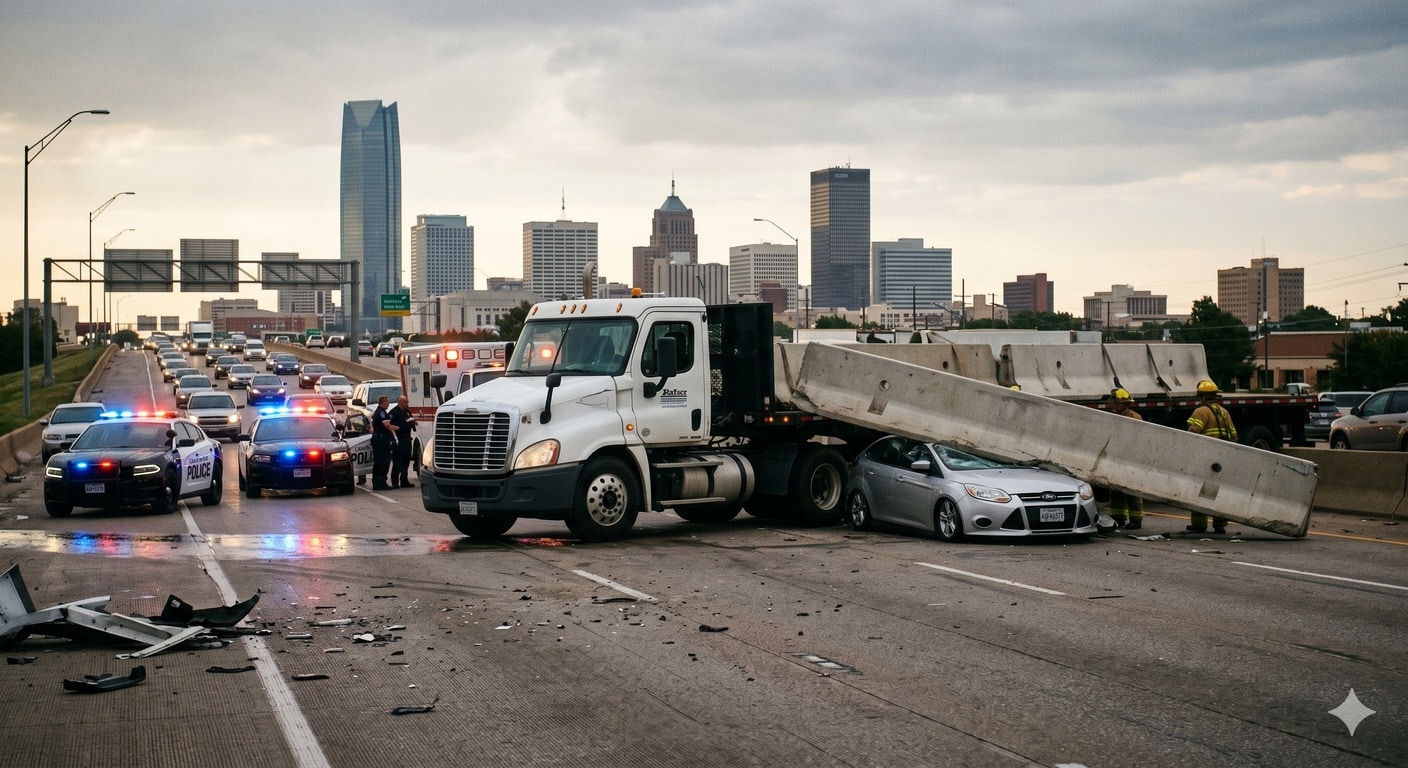
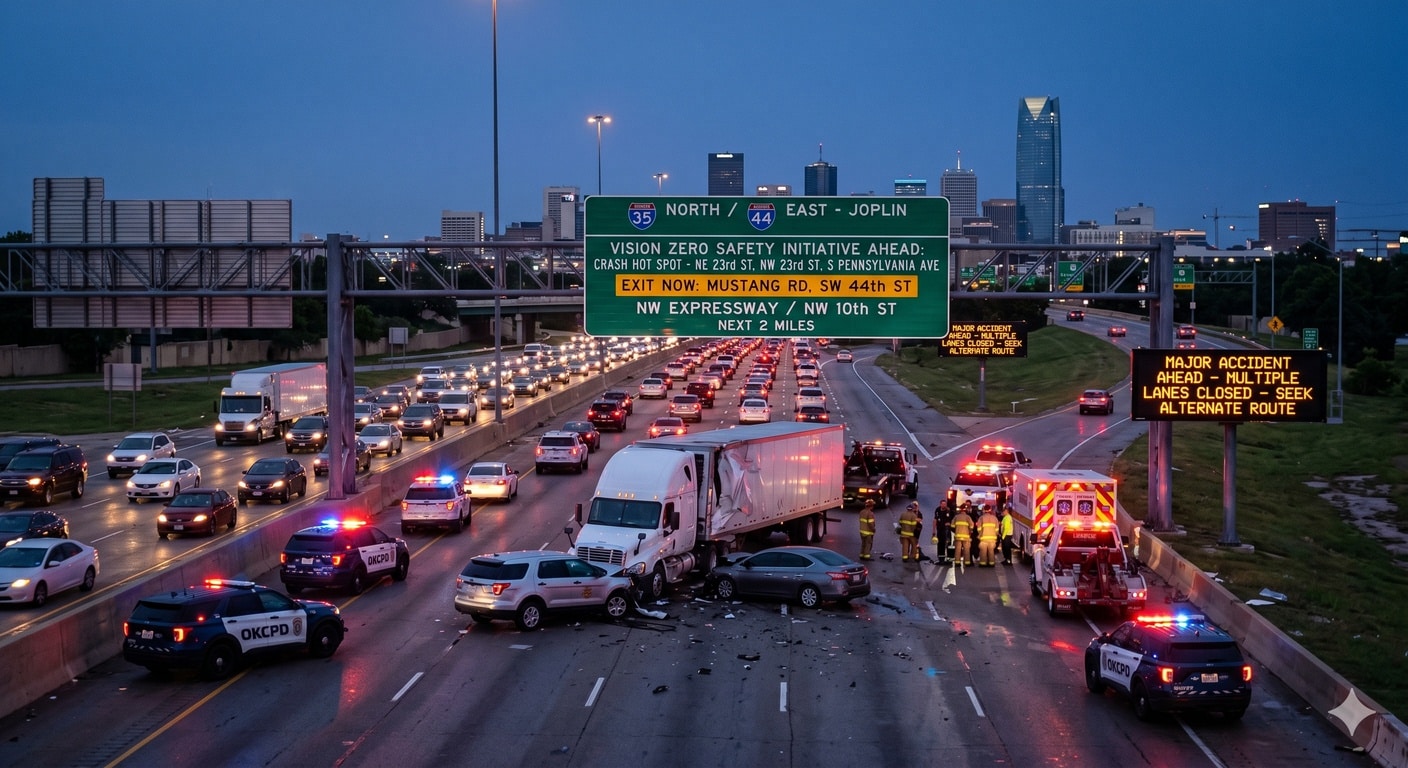
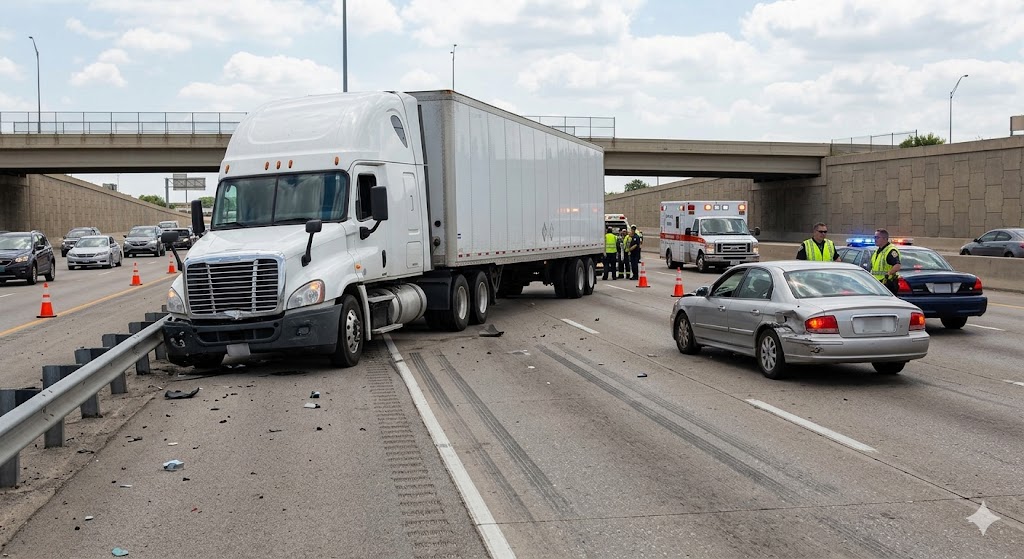
It happens in a heartbeat on I-40 west of downtown Oklahoma City. A long-haul tractor-trailer drifts out of the right lane near the Crosstown merge, and eighty thousand pounds of steel and freight meets a four-thousand-pound sedan that never had a chance to brake. Physics does the rest. The people in the smaller vehicle absorb almost all of the force, and in the time it takes to dial 911, an ordinary Tuesday commute becomes the worst day of a family’s life.
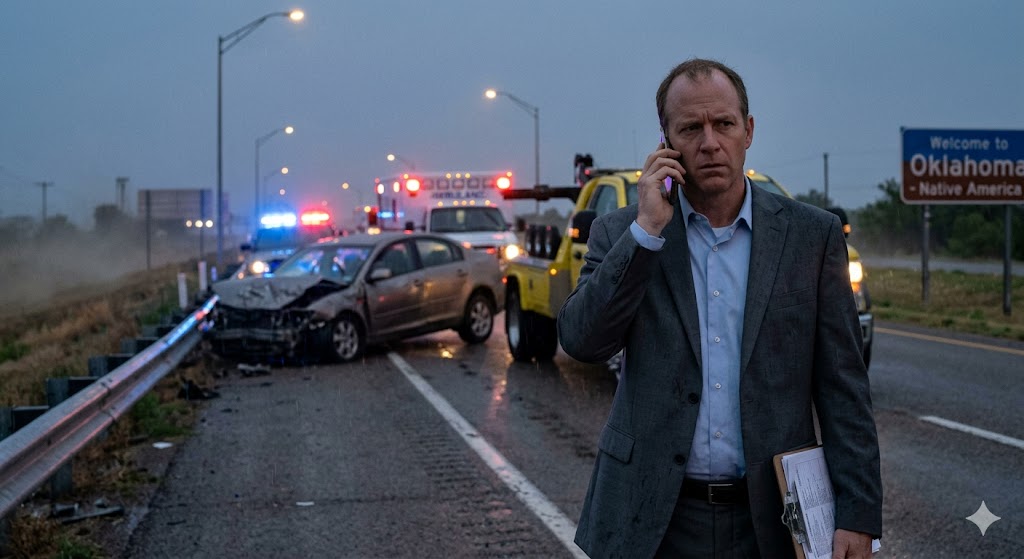
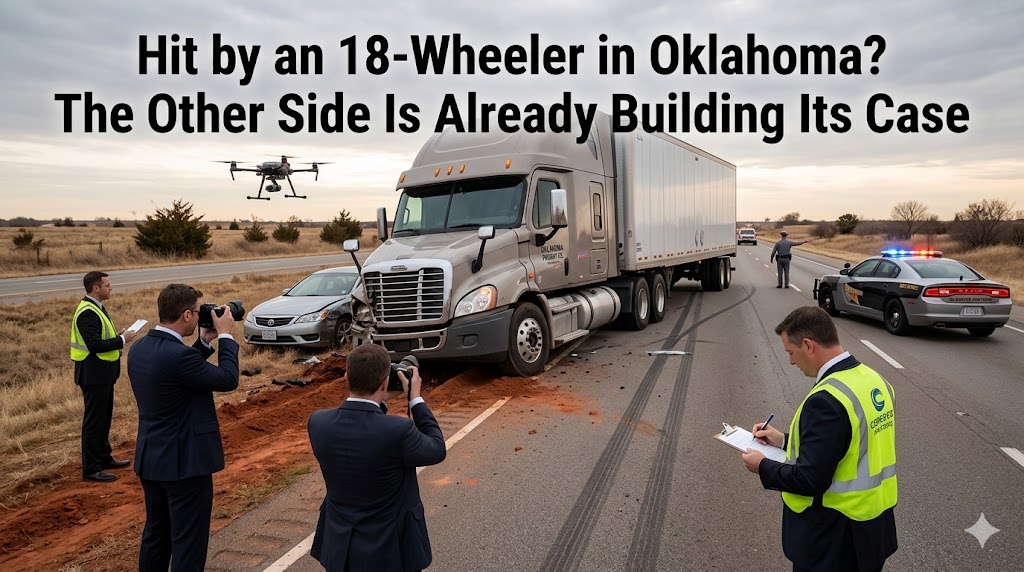
Here is what most people don’t know about that hour. While the injured are still being cut out of the wreckage, a second crew is already mobilizing — not paramedics, but the trucking company’s. Within hours, the carrier’s insurer can have investigators, accident reconstructionists, and defense lawyers standing on the shoulder of that highway, photographing skid marks, downloading data, and quietly assembling the version of events they want a jury to believe someday.
You’re headed to the emergency room. They’re headed to court. That head start is the whole game — and it’s the reason a truck case is nothing like a fender-bender.
The Adversary: The Rapid-Response Defense Team
The opponent after an Oklahoma truck crash is not the rattled driver who climbed down from the cab. It’s the machinery behind that driver: a motor carrier and its insurer with a rehearsed playbook for exactly this moment.
That playbook has a name in the industry — the rapid-response team. Its job is not to find the truth. Its job is to control the evidence and shrink the payout. It works because the most important proof in a truck case is electronic and perishable: the driver’s hours-of-service logs, the engine control module that recorded speed and braking, the dashcam and telematics feed, the maintenance records. Left alone, much of that data can be overwritten or “lost” within days — and the company that controls it has every incentive to let that happen before anyone asks for it.
So the carrier moves first, the data quietly disappears, and months later the injured family is told there’s simply “no evidence” the truck did anything wrong. The entire strategy depends on you being too hurt, too overwhelmed, and too late to stop it.
What This Article Promises
This is the playbook McKay Law uses to beat the rapid-response team at its own game — the same approach behind more than $100 million recovered for injured clients, now focused on Oklahoma’s highways. By the end, you’ll understand why a truck accident is a fundamentally different and larger case than a car wreck, every company that can be held responsible, the federal rulebook that turns a violation into proof of negligence, the electronic evidence you have to lock down immediately, and the deadlines that quietly end claims before they start. No theory. Just the mechanics.
Key Takeaways
- A truck case is not a car case. Federal regulations, multiple corporate defendants, and time-sensitive electronic evidence make it a different animal — and usually a far larger claim.
- More than one company is on the hook. The driver, the motor carrier, the broker, the cargo loader, the maintenance shop, and equipment manufacturers can all share liability.
- The insurance is bigger for a reason. Federal law requires interstate freight haulers to carry $750,000 to $5 million in coverage — money that doesn’t exist in a typical car crash.
- Federal violations are evidence. Breaking the trucking safety rules — driving over the hours limit, skipping inspections, falsifying logs — can be powerful proof of negligence.
- The clock that matters most is measured in days. Oklahoma gives you two years to file suit, but the electronic black-box data can vanish within days unless a lawyer demands its preservation.
- The first call should be fast. The sooner the evidence is locked down, the harder it is for the other side to rewrite what happened.
The Direct Answer, Then the Evidence
Is an Oklahoma truck accident claim worth more than a standard car-accident claim — and harder to win? In most serious cases, yes on both counts. A truck case is bigger because of who can be sued and how much insurance is in play, and harder because the responsible companies fight back immediately. Here is the evidence chain that wins it.
Step 1: Understand why a truck case is a different animal
A fully loaded tractor-trailer can weigh up to 80,000 pounds — roughly twenty times a passenger car. When the two collide, the laws of physics fall entirely on the smaller vehicle, which is why truck crashes produce a disproportionate share of catastrophic and fatal injuries. In 2022, federal regulators recorded more than 5,800 fatal crashes involving large trucks nationwide, and in Oklahoma large trucks have figured in roughly one in seven of the state’s fatal collisions in recent reporting. These cases are governed not just by Oklahoma negligence law but by an entire federal rulebook — and that changes everything about how they’re built.
Step 2: Find every defendant
In a car wreck, you usually have one driver and one insurance policy. A truck crash is a web. Depending on the facts, the parties who can be held accountable include the driver, the motor carrier that employed and dispatched them, the broker who arranged the load, the shipper or cargo loader who packed it, the maintenance or repair shop that serviced the rig, and the manufacturer of a failed tire, brake, or coupling. Each defendant means another insurance policy — and federal law requires interstate freight carriers to carry far more coverage than an individual motorist, generally $750,000 for general freight and up to $5 million for hazardous materials (49 CFR Part 387), limits set back in 1980 and never adjusted for inflation. Identifying every responsible company is often the difference between a claim that’s capped at a driver’s minimum policy and one that reaches the resources to actually cover a lifetime of care.
Step 3: Use the federal rulebook as your evidence
Commercial trucks operate under the Federal Motor Carrier Safety Regulations, enforced by the Federal Motor Carrier Safety Administration (FMCSA). Those rules dictate how long a driver can be behind the wheel, how rigs must be inspected and maintained, who is qualified to drive, and how carriers must screen for drugs and alcohol. This matters enormously: when a carrier breaks one of these rules — exceeding the hours-of-service limits, pushing a fatigued driver past 70 hours, skipping a required brake inspection, falsifying a logbook — that violation becomes some of the strongest evidence of negligence a case can have. Driver fatigue alone is a factor in a large share of fault-based truck crashes, precisely because deadlines tempt carriers to bend the very rules written to prevent it.
Step 4: Lock down the evidence before it’s overwritten
This is where cases are won or lost in the first week. The proof that decides a truck case is electronic and fragile: the electronic logging device (ELD) hours data, the engine control module — the truck’s “black box” — that captured speed, throttle, and braking in the seconds before impact, the dashcam and telematics feed, the dispatch and trip records, and any traffic-management camera footage (often retained for only a few weeks). Without prompt legal action, much of this can be erased on the carrier’s normal retention schedule — or its abnormal one. The countermove is a spoliation letter: a formal demand that the company preserve every byte of it, sent before the rapid-response team has finished its cleanup. The faster that letter goes out, the more truth survives.
Step 5: Beat the clock
Two deadlines run at once, and they run at different speeds:
- The legal deadline: Oklahoma’s statute of limitations for an injury lawsuit is generally two years from the date of the crash (Okla. Stat. tit. 12, § 95). A wrongful-death claim is likewise generally two years, measured from the date of death.
- The evidence deadline: Days. The ELD data, the black box, and the camera footage don’t wait two years for you to feel ready. They can be gone before the bruises fade.
Miss the legal deadline and the court can dismiss even an airtight case. Miss the evidence deadline and you may never be able to prove the airtight case you had.
Step 6: Know what full value looks like
Because a truck case reaches deeper insurance and corporate defendants, it can pursue the full scope of what a catastrophic injury actually costs: all past and future medical care, lost wages and lost earning capacity, pain and suffering, disfigurement, and the human losses a serious crash inflicts. Catastrophic outcomes — a traumatic brain injury, an amputation, a spinal injury, or a fatal wreck — drive the largest claims. And where a carrier’s conduct was grossly negligent, Oklahoma law allows punitive damages meant to punish and deter, on top of everything else.
On the Ground in Oklahoma City and Tulsa
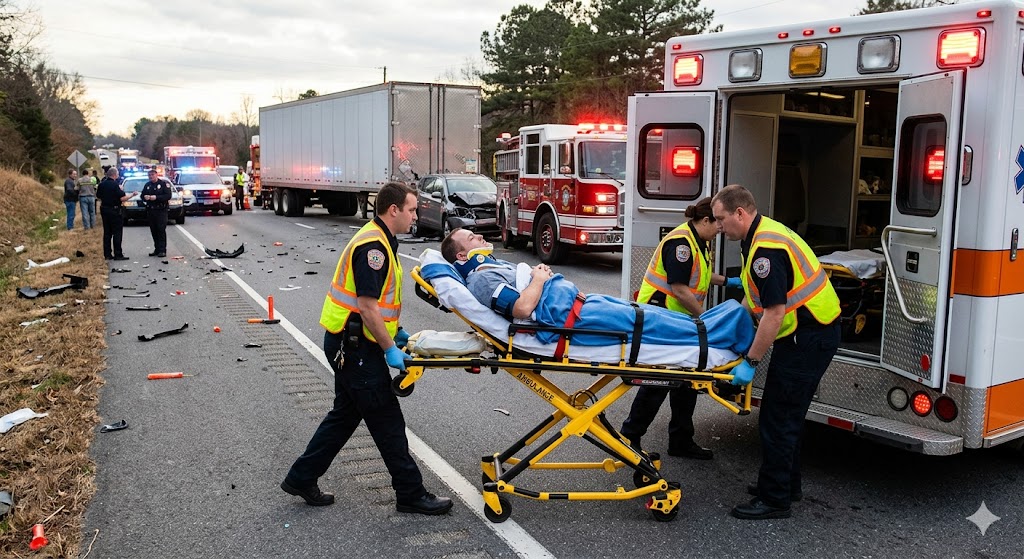
Oklahoma is built for freight, which is exactly why it’s dangerous. Oklahoma City sits at the crossroads of three interstates — I-35, I-40, and I-44 — one of the busiest highway convergences in the southern United States, and the Oklahoma Department of Transportation consistently records the metro’s highest crash density along those corridors. I-40 is the state’s main east-west trucking artery, carrying loads between Amarillo and Little Rock straight through the industrial heart of the city; the Turner Turnpike stretch of I-44 toward Tulsa runs heavy with commercial traffic day and night; and rural routes like State Highway 9 have drawn national attention for truck-crash danger.
When these wrecks turn catastrophic, the injured land at the region’s trauma centers — OU Health and SSM Health St. Anthony in Oklahoma City, Saint Francis and Hillcrest in Tulsa — while the case itself gets filed in the district court where the crash happened. Trucking defendants are often out-of-state carriers with national counsel, which makes knowing the local courts, the local interchanges, and the local crash patterns a real advantage. McKay Law put offices in both metros to be on the ground for it:
- Oklahoma City: 201 Robert S. Kerr Ave., Suite 700, Oklahoma City, OK 73102 — (405) 222-0000
- Tulsa: 5401 S. Harvard Ave., Suite 103, Tulsa, OK 74135 — (918) 236-0000
- Statewide, 24/7: Request a free case evaluation or call (866) 679-9651
Frequently Asked Questions
Why can’t I just file with the truck driver’s insurance like a normal car wreck? You can, but it usually leaves most of the money on the table. The driver is often the least-funded defendant. The real coverage sits with the motor carrier and the commercial-vehicle policies behind it — and reaching those requires proving the company’s liability, not just the driver’s.
The trucking company already called me with a settlement offer. Should I take it? Be very cautious. An early offer that arrives before you know the extent of your injuries — or before the black-box data is even reviewed — is almost always a fraction of the claim’s real value. Once you sign a release, the case is over, even if your medical bills later explode.
What kinds of truck cases does McKay Law handle? The full range, from 18-wheeler and semi-truck crashes to tanker and box-truck collisions, including jackknifes, underride and override crashes, tire-failure and fatigue cases, and fatal wrecks. You can review the firm’s case results and its broader Oklahoma injury practice areas to see the scope.
How long do I have to act? Oklahoma generally allows two years to file suit, but treat the real deadline as immediate. The electronic evidence that proves fault can disappear within days, so the safest move is to talk to a lawyer who can send a preservation demand right away.
What does it cost to find out if I have a case? At McKay Law, nothing up front. Truck cases are handled on a contingency basis: the firm advances the costs of investigation, accident reconstruction, and litigation, and you owe an attorney’s fee only if there’s a recovery.
This article is general legal information for Oklahoma motorists and is not legal advice. Every case turns on its own facts, and laws change. No outcome is guaranteed, and prior results do not predict future results. For advice about your specific situation, speak with a licensed Oklahoma attorney.
About the Author
Lindsey McKay — Managing Partner, McKay Law (Oklahoma) · Oklahoma Bar No. 36895
Lindsey McKay leads McKay Law’s Oklahoma personal injury practice from the firm’s Oklahoma City and Tulsa offices. McKay Law built its reputation representing seriously injured accident and wrongful-death clients and has recovered more than $100 million in verdicts and settlements over the course of its history. The firm brought that approach to Oklahoma — maximum medical treatment before settlement, immediate investigation and evidence preservation, and a guaranteed weekly client update — to represent victims of truck, commercial-vehicle, and motor vehicle crashes across the state. Lindsey McKay is licensed to practice law in Oklahoma (Bar No. 36895) and is admitted before the Oklahoma state courts.
Injured by a commercial truck in Oklahoma? Contact McKay Law for a free, no-obligation case review — Oklahoma City (405) 222-0000 · Tulsa (918) 236-0000 · 24/7 statewide (866) 679-9651.