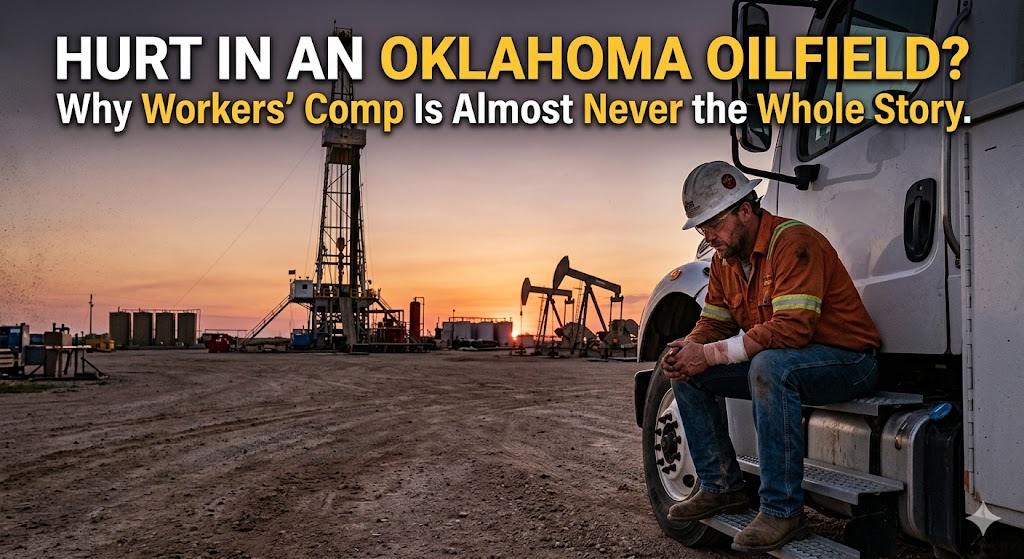
The 4 a.m. Call That Changes Everything
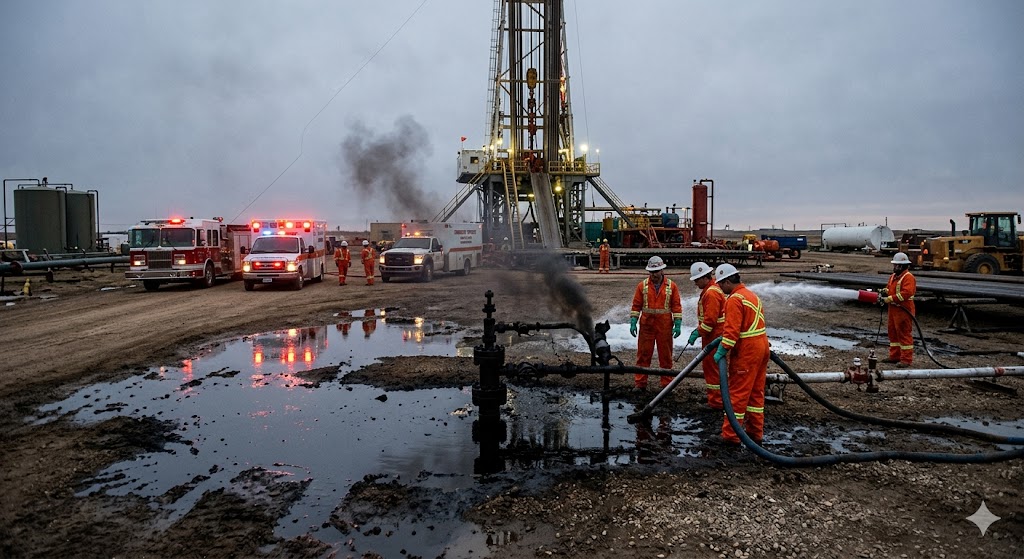
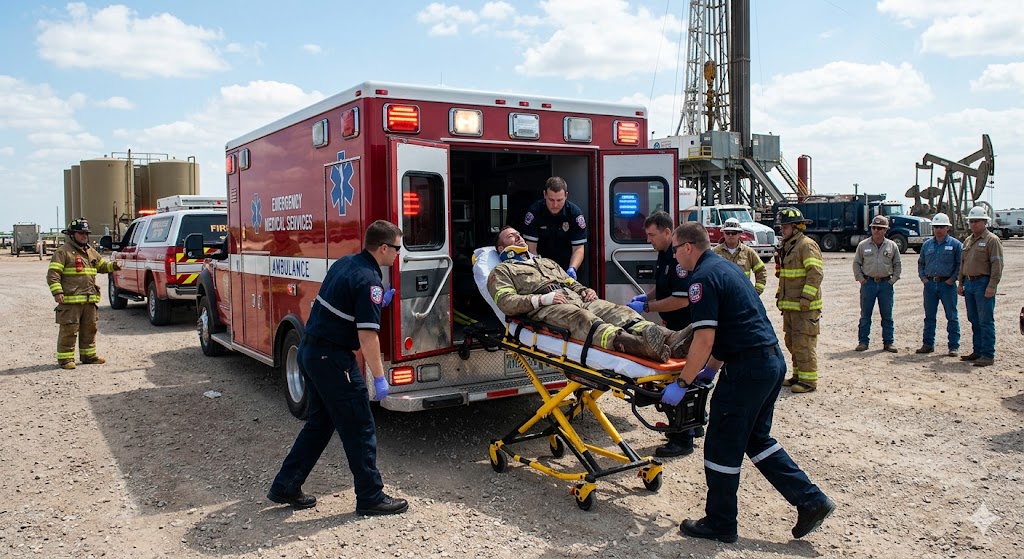
It usually starts in the dark. A derrick crew in the Anadarko Basin, two hours west of Oklahoma City, working a tripping operation under floodlights while the rest of the state sleeps. Somebody is into hour eleven of a twelve-hour tower. A pressure line that should have been replaced last quarter lets go. Steel moves faster than a human can. And in the space between one breath and the next, a worker who clocked in healthy is on a medivac flight to OU Medical Center, and a family’s entire future quietly tilts on its axis.
By the time the sun comes up over Tulsa, the phone calls have already begun. A claims adjuster. A safety supervisor with a clipboard and a sympathetic voice. A form to sign. And buried inside all that practiced concern is a single, expensive assumption the injured worker is never invited to question: this is just a workers’ comp case.
It almost never is.
The Adversary: The “Exclusive Remedy” Trap
The opponent in an Oklahoma oilfield injury isn’t a person. It’s a system — and the insurance carriers who profit from you misunderstanding it.
That system is built on a phrase called “exclusive remedy.” Oklahoma workers’ compensation is no-fault insurance: get hurt on the job and you’re generally entitled to medical care and a slice of your lost wages no matter who caused the accident. The trade-off, the part the adjuster doesn’t lead with, is that in exchange for those benefits you typically give up the right to sue your own employer.
Carriers love this trade because it caps their exposure. Workers’ comp does not pay for pain and suffering. It does not pay for loss of enjoyment of life. It replaces only a fraction of your wages, and it would very much prefer you believe that the comp check is the ceiling on what your shattered back is worth.
Here’s what the system is counting on you not knowing: your employer is rarely the only company on a well site. And every other company out there plays by entirely different rules.
What This Article Promises
This is the playbook McKay Law has used to recover more than $100 million for injured clients — now applied to Oklahoma’s oilfields. By the end, you’ll understand exactly how Oklahoma law lets a hurt oilfield or industrial worker pursue compensation far beyond a comp check, who can be held responsible, what evidence wins these cases, and the deadlines that quietly destroy claims before they ever begin. No theory. Just the mechanics.
Key Takeaways
- Workers’ comp is usually the floor, not the ceiling. It covers medical bills and partial wages but pays nothing for pain and suffering or full lost earnings.
- The real money is often in a “third-party” claim. If a company other than your employer contributed to your injury, Oklahoma law generally lets you sue that company for full damages — in addition to collecting comp.
- Common third parties on a well site: equipment manufacturers, drilling and service contractors, maintenance vendors, well operators, and trucking companies.
- Two clocks are ticking. Most comp claims must be filed within one year; most third-party injury lawsuits within two years of the injury. Miss either deadline and the claim can be barred forever.
- You usually don’t have to choose. A worker can pursue a comp claim and a third-party lawsuit at the same time.
- Evidence disappears fast. The line that failed, the maintenance logs, the contractor’s records — all of it can vanish within days unless someone acts to preserve it.
The Direct Answer, Then the Evidence
Can an injured Oklahoma oilfield worker recover more than workers’ compensation? In most serious cases, yes — through a third-party negligence claim. Here is the evidence chain that gets you there.
Step 1: Understand what comp actually gives you (and what it withholds)
Oklahoma’s Administrative Workers’ Compensation Act provides no-fault benefits: medical treatment for the work injury and temporary or permanent disability payments that replace part of your wages. Death benefits exist for surviving families. That’s meaningful help — and it’s deliberately limited. Comp pays nothing for the human cost of the injury: the pain, the sleepless nights, the career you can no longer do, the life you can no longer live the way you did. Accepting comp also generally means you cannot turn around and sue your employer for those losses. The carrier knows this. It’s the entire point of the system from their side of the table.
Step 2: Find the third party
This is where oilfield cases break open. A modern well site is a crowd. Your employer might be a single service company, but working alongside your crew on any given day are equipment manufacturers, drilling contractors, casing and cementing vendors, wireline outfits, the operator who owns the well, and the trucking companies hauling everything in and out. Some of those injuries also happen on the worksite itself — a construction-style accident, a falling object, or another premises hazard created by a company other than your employer.
Under Oklahoma law, when a company other than your employer causes your injury through negligence, you can generally bring a separate personal injury lawsuit against that company. A defective pressure system from a manufacturer. A maintenance vendor who skipped a service. A contractor whose crew ignored a safety procedure. Each of those is a potential defendant who never bought the protection of the exclusive-remedy bar — and against whom you can pursue the full range of damages comp refuses to touch.
Step 3: Collect what comp can’t
A third-party claim opens doors workers’ comp keeps locked: full lost earnings and lost earning capacity, the complete cost of past and future medical care, and — critically — compensation for pain, suffering, disfigurement, and the loss of the life you had before. In catastrophic cases — severe burns, amputations, traumatic brain injuries, or a fatal accident — those categories dwarf the comp benefits.
Step 4: Know the exceptions that pierce employer immunity
Even your employer isn’t always untouchable. Oklahoma recognizes that an employer can lose the shield of exclusive remedy in narrow circumstances — for example, if the employer failed to carry the workers’ comp coverage the law requires, or if the injury resulted from the employer’s willful, deliberate intent to harm. These are demanding standards, but on the right facts they matter enormously.
A word of honest caution: not every other company counts as a “third party.” Some contractors can qualify as a statutory or “intermediate” employer and share the same immunity. Figuring out who is genuinely exposed requires investigating the contracts and the relationships between the companies on site — which is precisely the work that turns a comp-only outcome into a full-value recovery.
Step 5: Beat the clock
Two deadlines, two different rules:
- Workers’ compensation: Notify your employer of the injury promptly — Oklahoma generally expects written notice within 30 days — and the formal claim (the CC-Form-3) must be filed with the Oklahoma Workers’ Compensation Commission within one year of the injury for most accidental injuries (85A O.S. § 69).
- Third-party personal injury lawsuit: Oklahoma’s statute of limitations is generally two years from the date of injury (Okla. Stat. tit. 12, § 95).
File late and the door slams. Insurers will move to dismiss an untimely claim with prejudice — meaning forever — even when the medical records prove a devastating injury. The clock does not care how badly you were hurt.
Step 6: Preserve the evidence before it’s gone
Federal workplace-safety data has long shown that oil and gas extraction is among the most dangerous work in America, with injury rates far above the typical workplace. That danger is exactly why the proof is fragile. The failed equipment gets repaired or scrapped. Maintenance logs get “updated.” Witnesses scatter to the next job in another county. Winning a third-party case means locking down accident-reconstruction evidence, equipment, service records, and testimony immediately — often within days, before the responsible company’s version of events hardens into the official one.
On the Ground in Oklahoma City and Tulsa
This isn’t abstract for anyone working the Sooner State’s energy economy. Oklahoma sits at the heart of the SCOOP and STACK plays, and the rigs, pipelines, and service yards that feed them run from the Anadarko Basin to the Arkoma. The hazards travel the same corridors the crews do — I-35 and I-40 through the Oklahoma City metro, I-44 up to Tulsa — where oilfield trucks share the road around the clock.
When the worst happens, the injured land at familiar places: OU Health and SSM Health St. Anthony in Oklahoma City; Saint Francis and Hillcrest in Tulsa. The workers’ comp claim gets filed with the Oklahoma Workers’ Compensation Commission downtown. And the third-party lawsuit — the one that actually values a life-altering injury — gets filed in the district court where the accident happened. Knowing the local courts, the local operators, and the local defense playbooks is not a luxury in these cases. It’s leverage.
McKay Law brought its practice to Oklahoma to be on the ground for exactly this work:
- Oklahoma City: 201 Robert S. Kerr Ave., Suite 700, Oklahoma City, OK 73102 — (405) 222-0000
- Tulsa: 5401 S. Harvard Ave., Suite 103, Tulsa, OK 74135 — (918) 236-0000
- Statewide, 24/7: Request a free case evaluation or call (866) 679-9651
Frequently Asked Questions
Do I have to choose between workers’ comp and a lawsuit? Usually not. In Oklahoma you can collect workers’ compensation benefits and pursue a third-party lawsuit against a negligent non-employer at the same time. They are separate claims with separate rules. (Note: if you recover from a third party, the comp insurer may seek reimbursement for some benefits it paid — another reason to coordinate both claims with counsel.)
My supervisor said the accident was my fault. Does that end it? No. Workers’ comp is no-fault, so your benefits generally don’t depend on blame. And in a third-party claim, Oklahoma’s comparative negligence rules can still allow recovery even if you were partly at fault — your award is reduced by your share, but it isn’t automatically erased.
How long do I have to act? Two deadlines run at once. Most comp claims must be filed within one year of the injury, and notice to your employer should go out within about 30 days. Most third-party injury lawsuits must be filed within two years. The safest move is to talk to an attorney within days, not months — partly because of the deadlines and partly because evidence vanishes.
What’s my oilfield injury case worth? There’s no honest one-size answer; it depends on the severity of the injury, the medical and wage losses, who was negligent, and how strong the evidence is. The real point is that a third-party claim can be worth dramatically more than comp alone, because it reaches damages — pain, suffering, full lost earnings — that comp simply ignores.
Does it cost anything to find out if I have a case? At McKay Law, no. The firm works oilfield and workplace injury cases on a contingency basis: it advances the costs of investigation, experts, and litigation, and you owe an attorney’s fee only if there’s a recovery. You can review the firm’s case results and its full range of Oklahoma injury practice areas to see the kinds of cases it handles.
This article is general legal information for Oklahoma workers and is not legal advice. Every case turns on its own facts, and laws change. No outcome is guaranteed, and prior results do not predict future results. For advice about your specific situation, speak with a licensed Oklahoma attorney.
About the Author
Lindsey McKay — Managing Partner, McKay Law (Oklahoma) · Oklahoma Bar No. 36895
Lindsey McKay leads McKay Law’s Oklahoma personal injury practice from the firm’s Oklahoma City and Tulsa offices. McKay Law built its reputation representing seriously injured accident and wrongful-death clients and has recovered more than $100 million in verdicts and settlements over the course of its history. The firm expanded into Oklahoma to bring that same approach — maximum medical treatment before settlement, aggressive investigation of every responsible party, and a guaranteed weekly client update — to oilfield, workplace, and motor vehicle injury victims across the state. Lindsey McKay is licensed to practice law in Oklahoma (Bar No. 36895) and is admitted before the Oklahoma state courts.
Injured in an Oklahoma oilfield or workplace accident? Contact McKay Law for a free, no-obligation case review — Oklahoma City (405) 222-0000 · Tulsa (918) 236-0000 · 24/7 statewide (866) 679-9651.