The Sound After the Sound
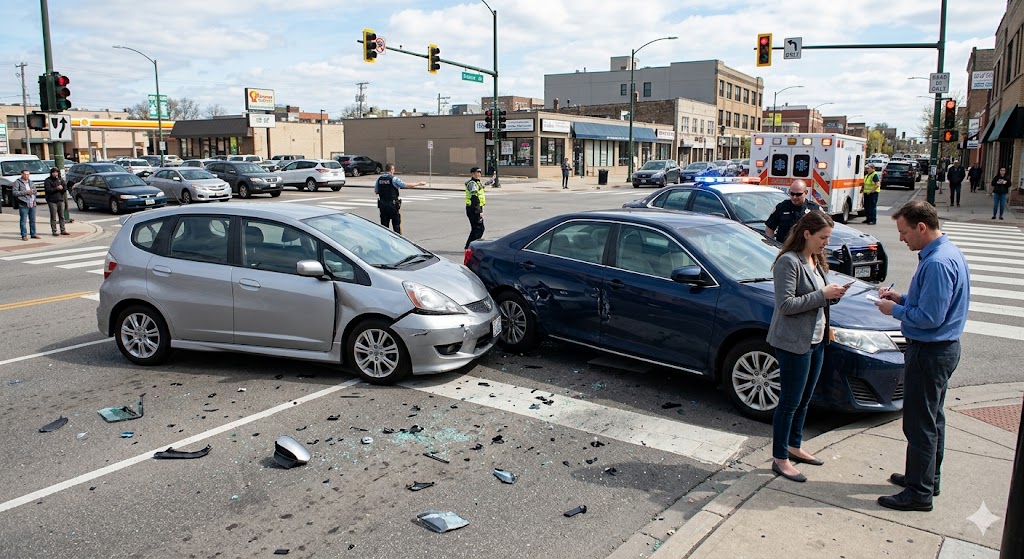
You remember the light turning green. You remember easing into the Tulsa intersection on an ordinary errand. What you don’t remember is the pickup that ran the red — only the impact that spun your car sideways, the airbag, the strange quiet that follows a crash, and the slow realization that your neck won’t turn the way it did a minute ago.
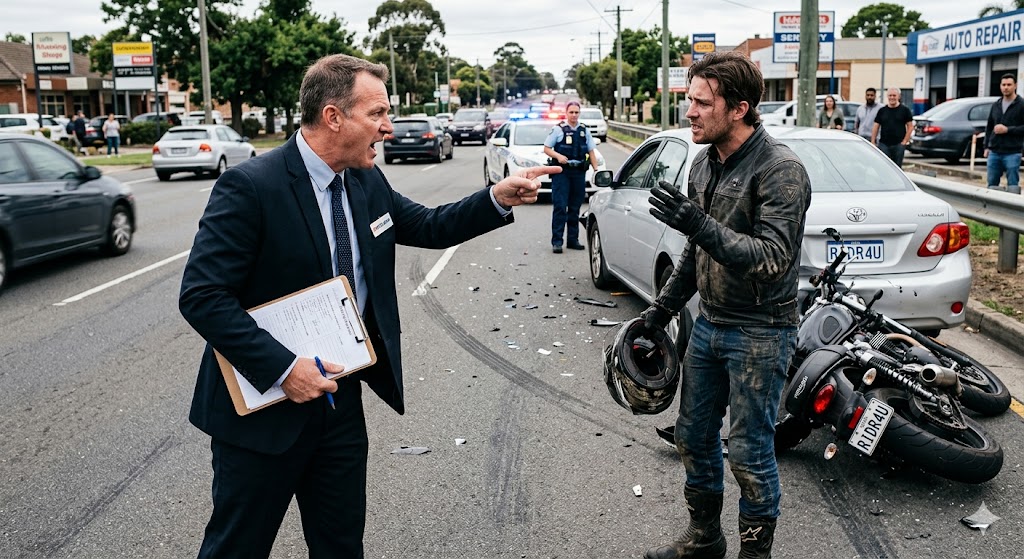
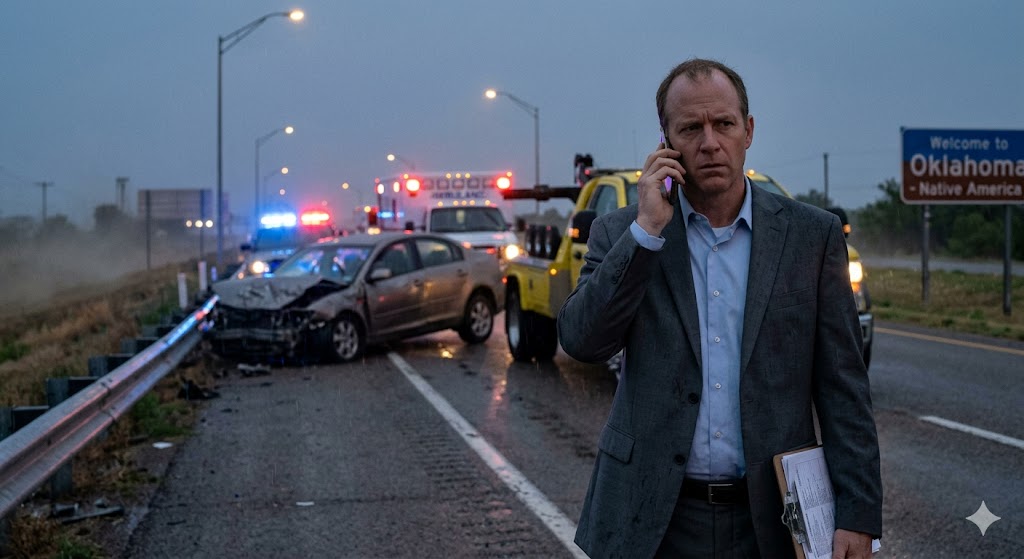
The next morning, while you’re still deciding whether that ache is “see a doctor” bad, your phone rings. The voice is warm and unhurried. They’re so sorry this happened. They just need to ask a few quick questions for the file, maybe record the call “for accuracy,” and they may even have a number in mind to make this all go away fast.
That call feels like help. It is the opposite of help. The friendly voice belongs to the other driver’s insurance company, and everything about that conversation — the sympathy, the speed, the recorded questions — is engineered to cost you money.
The Adversary: The Adjuster
The opponent after an Oklahoma car crash is rarely the other driver. It’s the claims adjuster working that driver’s policy, and that adjuster has one professional objective: close your claim for the smallest amount possible.
The adjuster’s toolkit is subtle. First comes the recorded statement, where an offhand “I’m okay” or “I guess I wasn’t really watching” can be replayed months later to slash your recovery. Then comes the quick offer — a check that arrives before you know whether that ache is whiplash or a herniated disc, timed to land while you’re anxious about bills and before anyone has added up what the injury will really cost. And humming underneath all of it is Oklahoma’s comparative-negligence rule, which the adjuster will use to argue that you were partly to blame — because every percentage point of fault they pin on you is a percentage point they don’t have to pay.
The whole approach depends on you negotiating alone, in the dark, against a professional who does this all day. The clock is running while you do.
What This Article Promises
This is the playbook McKay Law uses to take the adjuster’s leverage away — the same approach behind more than $100 million recovered for injured clients, applied to Oklahoma’s roads. By the end, you’ll understand exactly how Oklahoma’s at-fault system works, the comparative-fault trap the insurer will try to spring, why the other driver’s policy is often too thin to cover a real injury, what your car accident claim is actually worth, and the deadlines that quietly end claims for good. No theory. Just the mechanics.
Key Takeaways
- Oklahoma is an at-fault state, not no-fault. The driver who caused the crash — and their insurer — is responsible for your damages.
- Partial fault can cost you everything. Under Oklahoma’s comparative-negligence rule, your recovery drops by your share of fault, and if you’re found more than 50% at fault you get nothing.
- The state minimum coverage is thin. Oklahoma requires only 25/50/25, and a large share of drivers carry no insurance at all — which is why your own UM/UIM coverage matters so much.
- Never give a recorded statement before talking to a lawyer. It is the adjuster’s single most effective tool for reducing your claim.
- There’s no cap on pain and suffering. Oklahoma places no statutory limit on non-economic damages in injury cases.
- You have two years — but act far sooner. Evidence fades, memories blur, and early missteps with the adjuster are hard to undo.
The Direct Answer, Then the Evidence
Should you just settle the claim with the insurance company yourself? For a true fender-bender with no injuries, maybe. For anything involving a real injury, almost never — because the rules are built for the adjuster to use against you. Here is the evidence chain that levels the field.
Step 1: Know what “at-fault” actually means
Oklahoma is a fault (tort) state, not a no-fault state. That means there’s no automatic personal-injury benefit from your own policy after every crash; instead, the person who caused the wreck is legally responsible, and you pursue compensation from that driver and their liability insurer (or, in some cases, your own coverage). Establishing who was at fault — and to what degree — is therefore the entire ballgame. It’s also exactly where the insurer goes to work.
Step 2: Understand the comparative-negligence trap
Oklahoma follows modified comparative negligence under Okla. Stat. tit. 23, § 13. In plain terms: you can still recover if you were partly at fault, but your award is reduced by your percentage of blame — and if your share is greater than the other party’s (more than 50%), you recover nothing at all. If your claim is worth $100,000 and the insurer convinces a jury you were 20% responsible, your recovery falls to $80,000. If they can push your share past 50%, it falls to zero.
This is why the adjuster works so hard to assign you fault, and why that “quick recorded statement” is so dangerous. A few stray words about glancing at your phone or “maybe” speeding can be converted directly into a discount on your claim. Protecting against unfair fault assignment is one of the most valuable things a lawyer does in an Oklahoma car case.
Step 3: Find out whether there’s enough insurance
Oklahoma’s minimum liability coverage is 25/50/25 — $25,000 for bodily injury per person, $50,000 per accident, and $25,000 for property damage. Those numbers vanish quickly against an ER visit, surgery, and weeks of lost work. Worse, Oklahoma consistently ranks among the states with the most uninsured drivers; by various estimates, roughly a quarter of motorists carry no coverage at all. That’s why uninsured/underinsured motorist (UM/UIM) coverage is so important: insurers must offer it, though drivers can decline it in writing, and it’s often the only real source of recovery after a crash with an underinsured or hit-and-run driver. One of the first things a lawyer does is map every available policy — the at-fault driver’s, your own, and sometimes others.
Step 4: Know what your claim is really worth
A serious injury claim reaches well beyond the property damage. It includes past and future medical care, lost wages and lost earning capacity, and non-economic damages — pain, suffering, disfigurement, and loss of enjoyment of life — which Oklahoma does not cap by statute. Catastrophic outcomes such as a traumatic brain injury, a spinal injury, or a fatal crash drive the largest claims, and even a “soft tissue” injury like whiplash can mean months of treatment the first offer never accounts for. The gap between the adjuster’s opening number and the claim’s true value is where representation pays for itself.
Step 5: Protect the evidence — and your own words
Two kinds of evidence decide a car case. The first is the proof of what happened: the police crash report, scene and vehicle photos, witness names, and any traffic or dash-camera footage, which can be overwritten within weeks. The second is the proof of your injury: prompt, consistent medical treatment. Gaps in care — the week you “toughed it out” — get argued as proof you weren’t really hurt. And then there are your own statements: decline the recorded interview, don’t post about the crash on social media, and don’t accept or sign anything until you understand the full extent of your injuries. A signed release ends the claim, even if your condition worsens later.
Step 6: Beat the clock
Oklahoma’s statute of limitations for a car-accident injury lawsuit is generally two years from the date of the crash (Okla. Stat. tit. 12, § 95); a wrongful-death claim is likewise generally two years, measured from the date of death. Two years can feel like plenty while you negotiate — until it isn’t. Miss it and the court can dismiss even a strong case outright. Separately, most Oklahoma crashes must be reported to law enforcement, and that official report becomes a backbone of your claim.
On the Ground in Oklahoma City and Tulsa
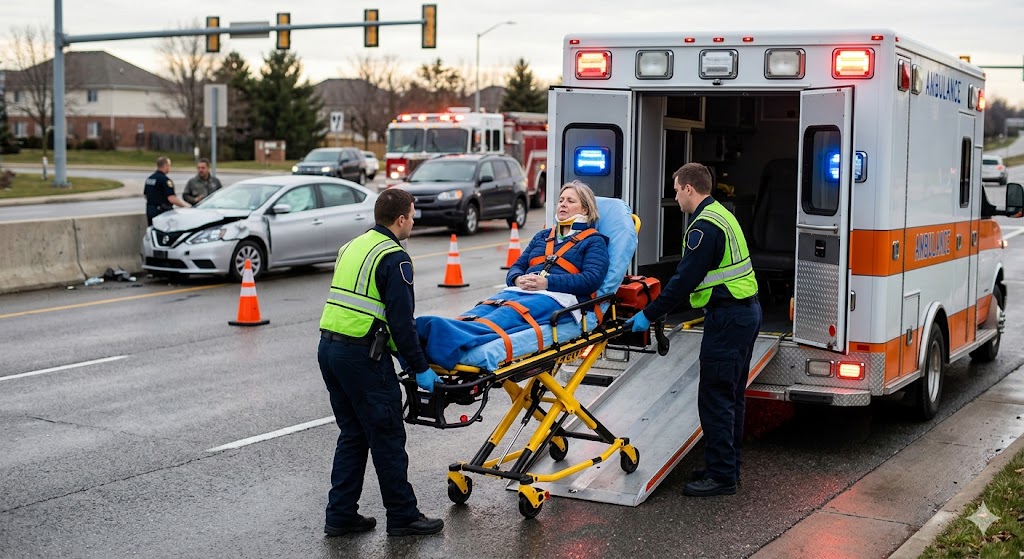
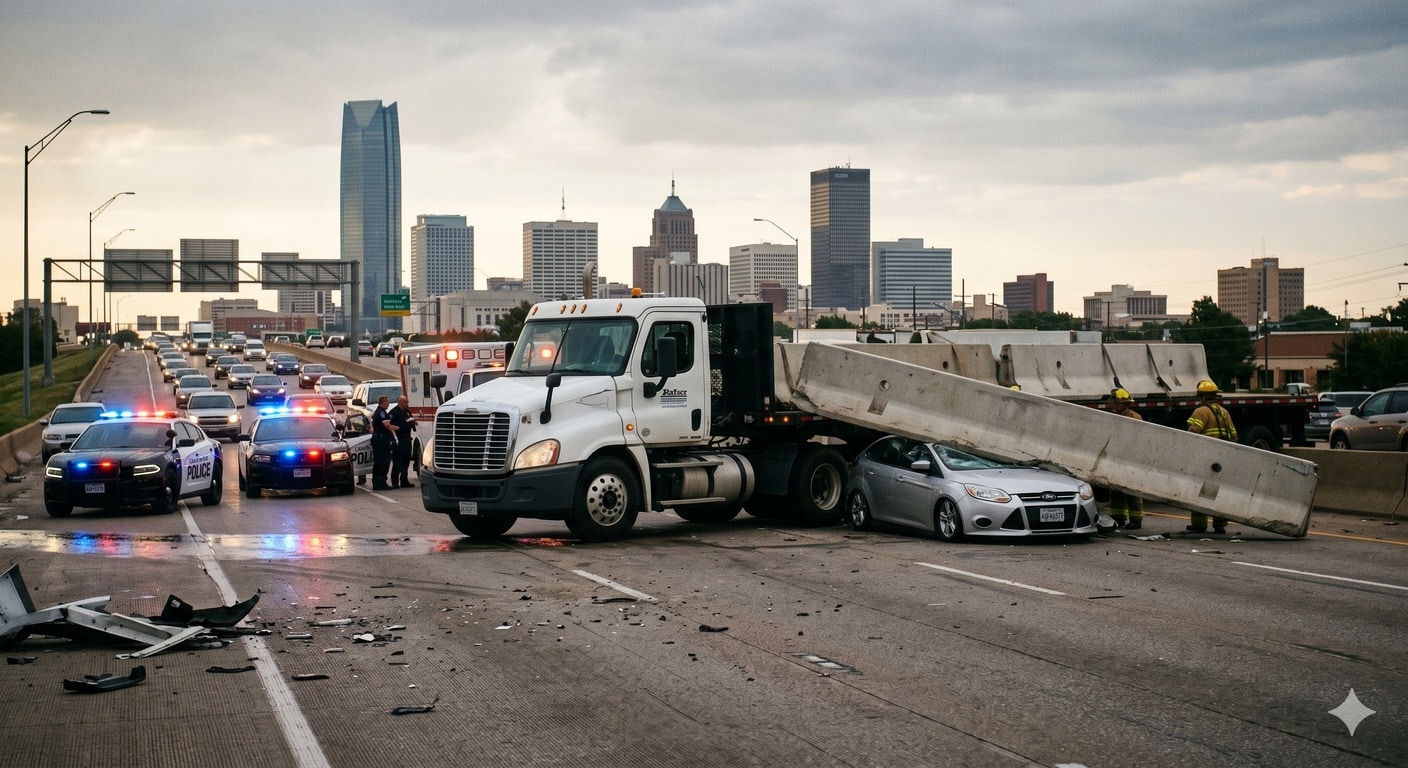
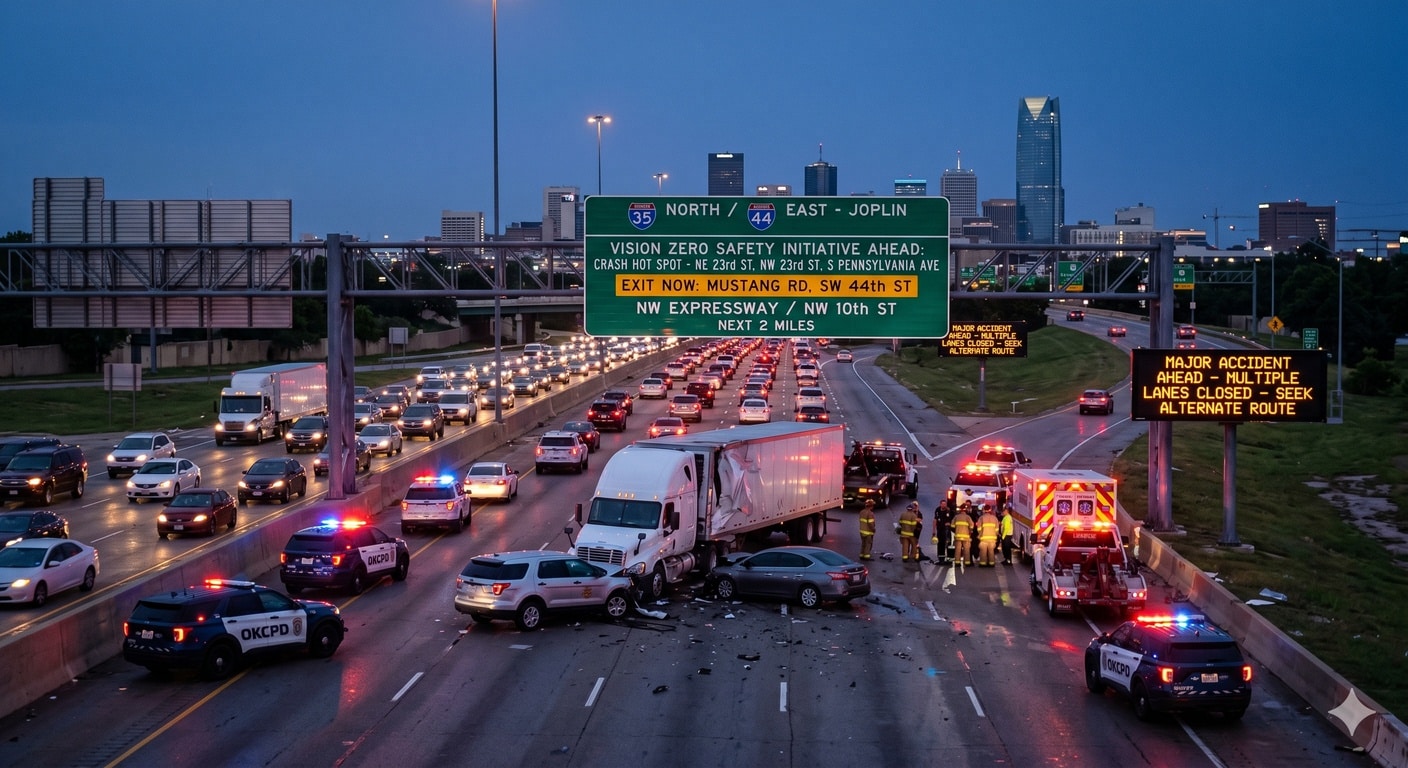
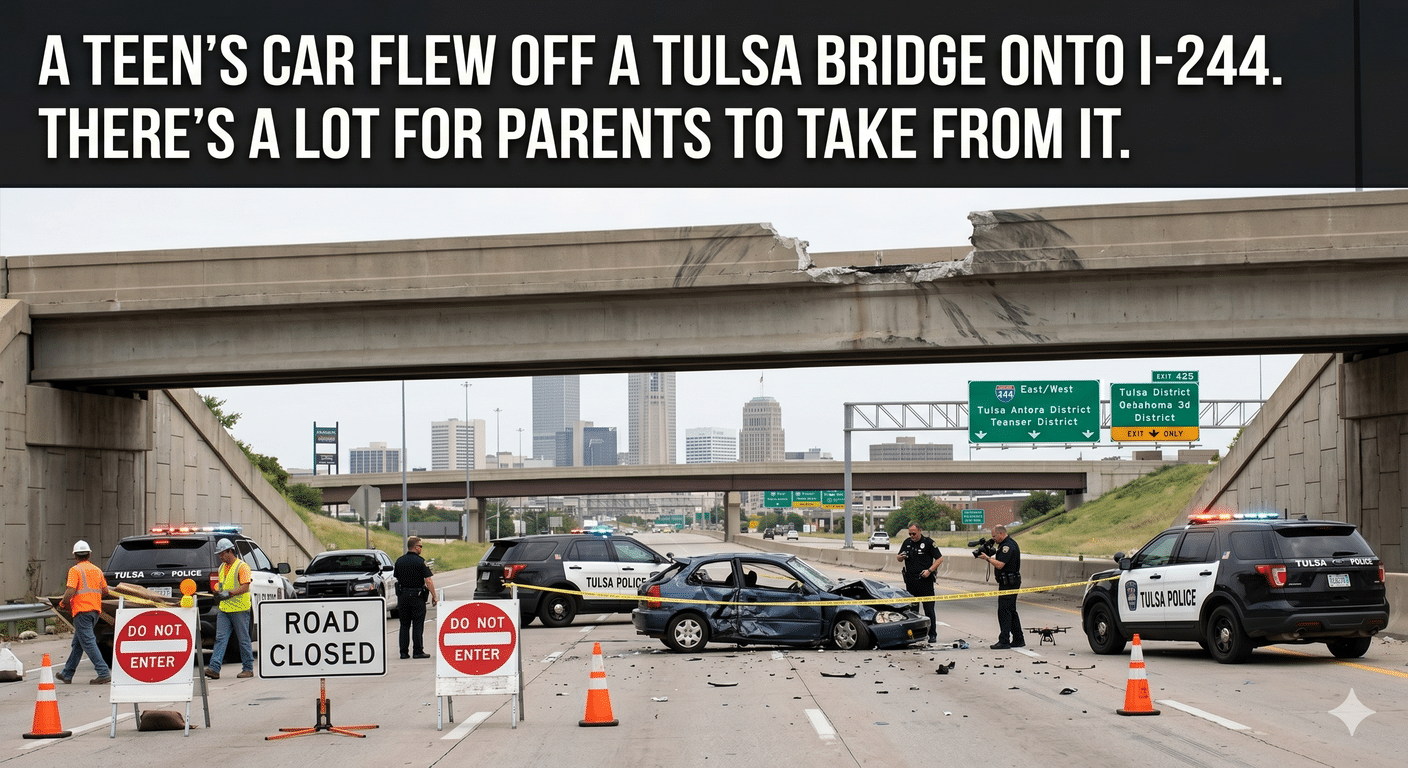
Oklahoma’s two big metros generate the lion’s share of the state’s crashes, and the geography is no accident. Oklahoma City sits where I-35, I-40, and I-44 converge — one of the busiest interchanges in the region — and the Oklahoma Department of Transportation consistently logs the metro’s highest crash density along those corridors and the surface intersections that feed them. Tulsa’s mix of expressways and dense arterials produces the same pattern: high-speed rear-end collisions on the highways and brutal T-bone crashes at city intersections.
After a serious wreck, the injured land at the region’s trauma centers — OU Health and SSM Health St. Anthony in Oklahoma City, Saint Francis and Hillcrest in Tulsa — while the claim moves through the at-fault driver’s insurer and, if it doesn’t settle fairly, into the district court where the crash happened. If you hit a wall with an insurer, the Oklahoma Insurance Department regulates carriers and helps consumers with complaints. McKay Law keeps offices in both metros to handle these cases close to home:
- Oklahoma City: 201 Robert S. Kerr Ave., Suite 700, Oklahoma City, OK 73102 — (405) 222-0000
- Tulsa: 5401 S. Harvard Ave., Suite 103, Tulsa, OK 74135 — (918) 236-0000
- Statewide, 24/7: Request a free case evaluation or call (866) 679-9651
Frequently Asked Questions
The adjuster seems nice and wants a recorded statement. Is that a problem? Yes. A recorded statement is the adjuster’s most useful tool, because innocent-sounding answers can be replayed later to assign you fault or minimize your injury. You’re not required to give one to the other driver’s insurer. Politely decline and talk to a lawyer first.
They already offered me money. Why not just take it? Because early offers usually arrive before anyone knows what the injury will actually cost. Once you sign the release, the claim is closed for good — even if you need surgery or miss far more work than expected a month later. The first number is a starting point, not a fair value.
What if the other driver had no insurance, or fled the scene? This is exactly what uninsured/underinsured motorist coverage is for. If you carry UM/UIM, your own policy may cover a crash caused by an uninsured, underinsured, or hit-and-run driver. Reviewing your coverage is one of the first steps.
What kinds of crash cases does McKay Law handle? The full range — rear-end and T-bone collisions, multi-car pileups, motorcycle and rideshare wrecks, and larger truck and commercial-vehicle crashes. You can review the firm’s results and its full Oklahoma injury practice areas to see the scope.
What does it cost to find out if I have a case? Nothing up front. McKay Law handles car-accident cases on a contingency basis: the firm advances case costs and you owe an attorney’s fee only if there’s a recovery.
This article is general legal information for Oklahoma motorists and is not legal advice. Every case turns on its own facts, and laws change. No outcome is guaranteed, and prior results do not predict future results. For advice about your specific situation, speak with a licensed Oklahoma attorney.
About the Author
Lindsey McKay — Managing Partner, McKay Law (Oklahoma) · Oklahoma Bar No. 36895
Lindsey McKay leads McKay Law’s Oklahoma personal injury practice from the firm’s Oklahoma City and Tulsa offices. McKay Law built its reputation representing seriously injured accident and wrongful-death clients and has recovered more than $100 million in verdicts and settlements over the course of its history. The firm brought that approach to Oklahoma — maximum medical treatment before settlement, aggressive investigation of fault, and a guaranteed weekly client update — to represent people injured in car, truck, and other motor vehicle crashes across the state. Lindsey McKay is licensed to practice law in Oklahoma (Bar No. 36895) and is admitted before the Oklahoma state courts.
Hurt in a car accident in Oklahoma? Contact McKay Law for a free, no-obligation case review — Oklahoma City (405) 222-0000 · Tulsa (918) 236-0000 · 24/7 statewide (866) 679-9651.