

“Labor Omnia Vincit” McKay Law
Henryetta, OK Slip-and-Fall Accident Lawyer
Slip and fall incidents happen in an instant—but the injuries can last a lifetime. When negligent maintenance in Henryetta, OK allows hazardous conditions to persist, customers and guests suffer the consequences—and you may be entitled to significant recovery. McKay Law fights for slip-and-fall victims throughout OK, going after the parties who let dangerous conditions go unaddressed. Slip-and-fall accidents can happen in a wide range of settings—supermarkets, malls, public buildings, residential properties, and commercial establishments. Typical hazards include recently waxed floors, water tracked in from outside, produce on grocery store floors, broken pavement, loose mats, and unsecured rugs. The law requires property owners to maintain safe conditions and warn visitors of known hazards—but proving they breached that duty isn’t always simple. To win, your attorney must demonstrate notice of the hazard, the owner’s failure to act, and a direct link to your harm. That’s why our Henryetta premises liability lawyers deliver results. We act quickly to lock in proof—obtaining surveillance footage before it’s erased, securing incident reports, identifying witnesses, photographing the scene, and documenting the hazardous condition. Many businesses overwrite surveillance footage within 7 to 30 days, so calling an attorney early is critical. Falls can cause broken hips, fractured wrists, shoulder injuries, herniated discs, traumatic brain injuries, spinal damage, knee injuries, and serious lacerations—especially serious for seniors, who often never fully regain pre-fall function. Big-box retailers and their legal teams love to claim you should have seen the hazard—we don’t let them get away with it. All of our premises liability claims is handled on a contingency fee basis—no attorney fees unless we win. Recoverable damages include hospital costs, rehabilitation, lost income, future medical needs, and the lasting impact on your daily life. Don’t let a property owner off the hook for unsafe conditions. Reach out to McKay Law right away for a complimentary case evaluation with a Henryetta, OK premises liability attorney who will fight to hold the negligent property owner accountable.
Settlements Won
0
+
Million Dollars Won
0
+
Google 5 Star Reviews
0
+
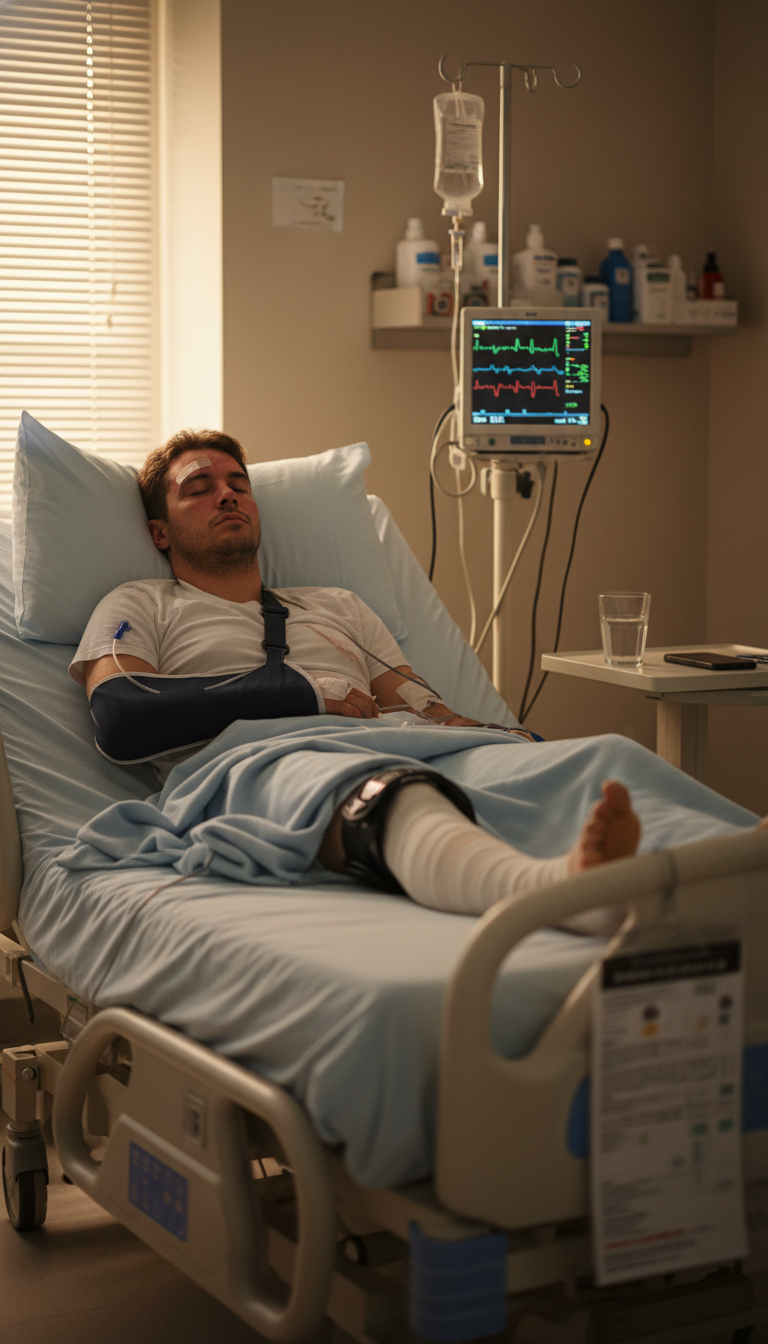
Slip-and-Fall Incident Lawyer in Henryetta, OK | McKay Law
Understanding Slip-and-Fall Claims
People tend to brush off slip-and-fall incidents — yet the injuries they cause are frequently severe and permanent. Fractures, head trauma, spinal injuries, and joint damage are routine results, particularly among elderly victims. When unsafe conditions on someone else’s property lead to a fall, Oklahoma law allows the victim to seek compensation. McKay Law represents slip-and-fall victims in Henryetta and in surrounding communities.
Common Causes of Slip-and-Fall Accidents
- Wet or slippery floors
- Uneven or damaged flooring
- Rugs that bunch or slide
- Obstructed pathways
- Inadequate illumination
- Missing or broken handrails
- Sidewalk defects
- Weather-related hazards
- Potholes and parking lot hazards
- Stair defects
- Unmarked dangerous conditions
Typical Slip-and-Fall Injuries
- Traumatic brain injuries and concussions
- Hip injuries, especially in older adults
- Broken wrists and arms
- Lumbar and cervical injuries
- Ligament and cartilage damage
- Shoulder injuries
- Lower extremity damage
- Face and jaw trauma
- Muscle and ligament damage
- Post-fall PTSD
- Death from severe injuries, especially in the elderly
Oklahoma’s Visitor Classification System
Oklahoma premises liability law uses three visitor classifications, and the property owner’s duty depends on which applies:
- Business Invitees — guests of businesses, restaurants, hotels, etc. — owed the strongest legal protection.
- Licensees — guests in homes or non-customer visitors — owed protection from known dangers.
- Uninvited Persons — people on the property without permission — owed minimal legal protection.
Building the Evidence
- Unsafe Condition on the Property — a hazardous condition existed.
- The Owner Knew or Should Have Known — the owner either knew or had reasonable opportunity to know.
- Negligent Response — the owner didn’t fix it, warn about it, or block it off.
- Causation — the dangerous condition caused your fall and injuries.
- Concrete Harm — medical bills, lost income, pain and suffering, and other compensable losses.
Evidence That Wins Slip-and-Fall Cases
- Video of the fall and the hazard
- Photos of the hazard
- Store accident reports
- Testimony from people who saw the fall or the hazard
- Inspection records
- History of similar incidents
- Evidence the property violated applicable codes
- Medical records
- Expert testimony on safety standards
- Your shoes and clothes from the fall
Common Locations for Slip-and-Falls
- Retail grocery
- Big-box retailers and department stores
- Eateries
- Hotels and motels
- Rental properties
- Commercial offices
- Outdoor and indoor parking
- Public facilities
- Educational institutions
- Quick-stop businesses
- Clinics and hospitals
- Residential property
Who Pays
- The property owner
- The lessee
- The property manager
- The service provider
- Contractors working on the property where construction created the danger
- A public authority in cases involving city or state property
The Defense Playbook
- Claiming you should have seen the danger
- Pointing to your shoes or distractions
- Arguing they didn’t have time to find or fix it
- Pushing for early recorded statements
- Pointing to prior injuries
- Pushing fast offers
- Failing to preserve surveillance
How Shared Fault Works in Oklahoma
Under Oklahoma law, fault can be shared (Okla. Stat. tit. 23, § 13). You can still recover compensation as long as you are 50% or less at fault, with damages reduced by your fault percentage. Defeating “you should have watched where you were going” defenses is a key part of our job.
Recovery for Slip-and-Fall Victims
- Past and future medical expenses
- Surgery and rehabilitation costs
- Physical therapy
- Lost wages and loss of earning power
- Pain and suffering
- The toll on daily activities
- Damages for impact on relationships
- Permanent impairment
- Survivor damages when the fall was fatal
Filing Deadline
You typically have two years from the date of the fall to file (Okla. Stat. tit. 12, § 95). Quick action is critical because critical video is routinely deleted on rolling cycles.
How McKay Law Approaches Slip-and-Fall Cases
We move quickly to demand preservation of all camera footage, pull records showing notice, document the hazard with photos, measurements, and expert analysis, work with treating doctors, and treat each matter as trial-ready.
Frequently Asked Questions
Q: I fell in a store but didn’t report it. Can I still file a claim?
A: Yes, but it’s harder. Don’t wait — surveillance footage gets deleted on rolling schedules.
Q: What does it cost to hire McKay Law?
A: Zero upfront. We only get paid if we win.
Q: What if the store says the spill was “obvious” and I should have avoided it?
A: Standard insurance argument. This defense often fails when the full circumstances come out.
Q: Should I give the store’s insurance company a recorded statement?
A: Don’t. Call us first.
Q: How much is a slip-and-fall case worth?
A: Case value varies based on injury severity, surgery, work loss, and lasting damage. Cases with surgery and lasting disability are worth substantially more.
Q: What if I fell on government property?
A: Different rules apply. Notice must be given within one year, and damages are capped.
Q: What is the deadline to file?
A: Two years from the date of the fall (Okla. Stat. tit. 12, § 95). Falls on government property follow different timelines. Don’t wait — key evidence vanishes.
Compensation After a Slip-and-Fall in Henryetta, OK
Slip-and-fall cases get treated as embarrassing, minor, or frivolous. None of that reflects reality. They cause more nonfatal injuries than any other accident type. A local premises injury attorney knows how to overcome the stigma.
Slip vs. Trip — They Aren’t the Same
The terminology gets used interchangeably, but the medical findings differ.
Slips
Result from a foot sliding out from under the body. People typically land on their back or hip. Frequent culprits include polished tile.
Trips
Occur when a forward step gets blocked. The fall is forward and often abrupt. Typical sources include cracked or uneven sidewalks.
The Hidden Severity of Fall Injuries
Falls produce a surprisingly wide range of serious injuries:
- Fractured femoral necks — especially dangerous for older adults.
- TBIs from head impact when the back of the head hits the ground during a backward slip.
- Wrist and elbow fractures from catching the body with outstretched arms.
- Disc herniations from sudden axial loading.
- Knee injuries from twisting falls.
- Shoulder dislocations and rotator cuff tears from bracing with the hand.
What You Have to Prove
Falling on someone’s property doesn’t guarantee a claim. The claim has three pillars:
The Property Owner Owed You a Duty
This depends on why you were on the property. Invitees (customers, business visitors) are owed the highest duty of care. Social guests are owed a lesser duty. Trespassers have the weakest position.
The Owner Knew or Should Have Known About the Hazard
Notice is the key fight. Actual notice is straightforward but rare. Reasonable awareness is more common. A spill sitting for an hour may establish the duty was breached.
The Hazard Caused the Injury
You can’t just have fallen on the property — you must have fallen because of the hazard. This sounds obvious but gets contested.
What Insurers Argue (and How Lawyers Push Back)
“You Should Have Seen It”
Open-and-obvious defense gets raised in nearly every case. The doctrine has limits, depending on the facts — distractions in a store setting can undercut the argument.
“Comparative Fault”
Insurers argue you weren’t watching where you were going. OK’s comparative fault rules allows recovery if you weren’t predominantly at fault.
“There’s No Evidence the Hazard Existed Long Enough”
Quick evidence-gathering counters this. Surveillance footage can prove constructive notice.
Critical Steps After a Fall
Report It Before You Leave
Make sure the property creates a record. The store may later claim you never reported anything.
Photograph the Hazard Immediately
The hazard often disappears before anyone investigates. Pictures of everything around you become irreplaceable evidence.
Identify Witnesses
Names and contact info of bystanders provides the independent corroboration you’ll need.
Get Medical Attention the Same Day
Even feeling fine, adrenaline masks fall injuries. Early evaluation anchors the claim.
Damages in Slip-and-Fall Cases
Claims pursue emergency room and hospital bills, physical therapy and rehabilitation, lost wages during recovery, career-impacting limitations, loss of enjoyment of life, and effects on partners and dependents where applicable.
What These Lawyers Charge
Premises liability lawyers charge nothing unless they win. Case evaluations cost nothing.
Time Matters
Stores often delete video within 30 days or less. Witnesses lose details. Conditions get fixed. Reaching out to counsel promptly keeps the claim alive before OK’s statute of limitations becomes the next problem.
McKay Law Is Your Henryetta Advocate After A Slip-and-Fall Accident
One wrong step on a wet floor or cracked surface can upend your life in seconds. Fractured wrists, torn ligaments, concussions, and back injuries are common consequences of falls, and they often strike hardest in older adults, parents juggling small children, and workers on the job. Property owners have a legal duty to keep their premises reasonably safe — but big-box retailers often cut corners on inspections, ignore spilled liquids, leave hazards unmarked, and let broken handrails, cracked sidewalks, and torn carpeting go unrepaired. At McKay Law, we examine exactly what created the hazard you fell on, who knew about it, how long it had been there, and why nothing was done. We wait for nothing to lock down surveillance footage, incident reports, cleaning logs, and witness statements before they disappear.
Insurance carriers love to point the finger in slip-and-fall cases — claiming you weren’t watching where you were going, that the hazard was “open and obvious,” or that your shoes were the real problem. We push back hard. When you join the McKay Law family, we handle the property owner, the management company, the cleaning contractor, and every insurer involved while you focus on physical therapy. We seek compensation for ER visits, surgeries, ongoing rehabilitation, mobility aids, prescription costs, lost income, future medical expenses, and the pain, anxiety, and fear that follow a serious fall. Contact us now at (866) 679-9651 or reach out online to book your free consultation and have a firm that takes these cases seriously backing you up.
Video Testimonials






