

“Labor Omnia Vincit” McKay Law
Lone Grove, OK T-Bone Accident Lawyer
Broadside crashes are among the deadliest types of car wrecks on Lone Grove, OK roads—because doors and side panels offer minimal protection. When a vehicle slams into the side of another, the consequences can be fatal. McKay Law fights for T-bone accident victims throughout OK. Side-impact wrecks usually involve intersection failures—resulting from red light violations, failure to yield, distracted driving, and impaired drivers. Establishing who’s responsible demands experienced legal work—video evidence, on-scene testimony, and crash reconstruction. Our Lone Grove intersection accident attorneys act fast to secure proof before witnesses scatter. Side-impact injuries include traumatic brain injuries, spinal cord damage, broken ribs, internal organ damage, pelvic fractures, and wrongful death—with the side closest to the impact suffering the worst harm. We pursue full compensation including medical bills, future care, lost wages, lost earning capacity, pain and suffering, and wrongful death damages. Insurers love to shift responsibility to the victim in T-bone cases—we don’t let them deflect from the at-fault driver’s negligence. Every T-bone accident case is handled on a contingency basis—no fees unless we recover. Call McKay Law now for a free consultation with a Lone Grove, OK side-impact collision attorney who will hold the at-fault driver and their insurer accountable.
Settlements Won
0
+
Million Dollars Won
0
+
Google 5 Star Reviews
0
+
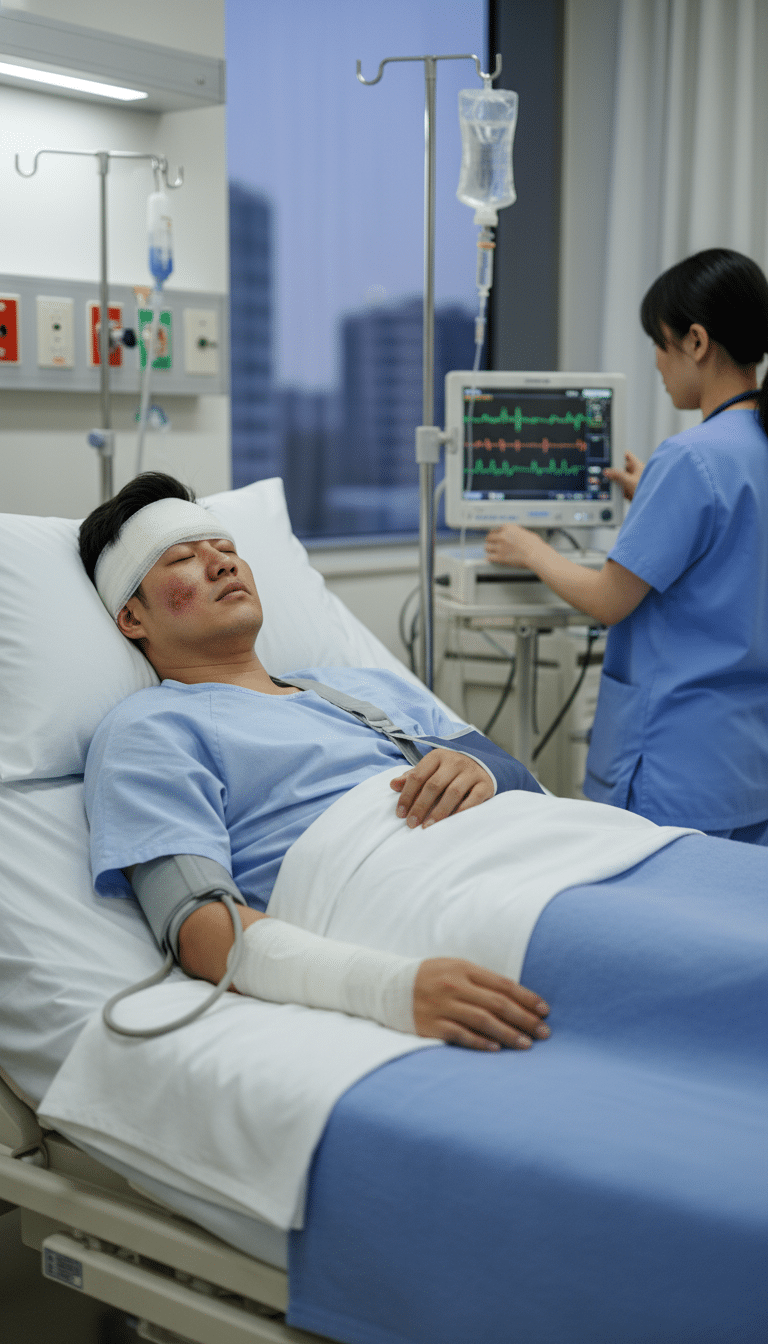
T-Bone Crash Attorney in Lone Grove, OK | McKay Law
What Is a T-Bone Accident Claim?
Side-impact wrecks rank among the most dangerous crashes on the road. Compared to head-on or rear-end crashes, side impacts offer almost no crumple zone or protection. Side curtain airbags reduce but don’t eliminate the danger. Our firm fights for T-bone accident victims in Lone Grove and in surrounding communities.
Why T-Bone Crashes Happen
- Red light violations
- Failing to stop at stop signs
- Yield violations
- Driver inattention at intersections
- Drunk or impaired driving
- Excessive speed
- Misjudging gaps in traffic
- Aggressive maneuvers
- Falling asleep at the wheel
- Poor visibility
- Defective traffic signals
Typical Side-Impact Injuries
- Brain injuries
- Spine injuries
- Injuries from cabin intrusion
- Broken ribs
- Damage to internal organs
- Pelvic fractures
- Major leg bone breaks
- Shoulder, arm, and hand injuries
- Glass-related injuries
- Cervical strain
- Wrongful death
The Physics of Side-Impact Collisions
- Far less crumple zone than front or rear
- Less distance for force to dissipate
- Common at intersections, where speeds are often high
- Push-into-traffic secondary impacts
- Airbags reduce but don’t eliminate harm
- More dangerous than rear-impact wrecks
Who’s at Fault in Side-Impact Crashes
Liability in side-impact crashes usually turns on who had right of way:
- Whoever violated traffic signals or signs typically bears liability
- Yield violations typically establish fault
- Both drivers may share fault in some cases
- Third parties may share liability when defective signals, road design, or other factors contributed
Oklahoma’s Modified Comparative Fault Law
Fault can be shared under Oklahoma law (Okla. Stat. tit. 23, § 13). You can still recover if you are 50% or less at fault, with your award reduced by your percentage of fault.
What Strengthens a T-Bone Case
- Police accident reports
- Video of the crash
- Eyewitness accounts
- Phone usage records
- Black box data
- Photographs of the scene, damage, and injuries
- Crash scene physical evidence
- Documentation of light operation
- Engineering reconstruction
- Medical records
Who Can Be Held Liable
- The driver who ran the light or failed to yield
- An employer if the driver was on the job
- The car owner in cases of negligent entrustment
- A road authority in charge of negligently designed intersections
- Companies servicing traffic signals
- Alcohol vendors when overservice played a role
Elements of Your Claim
- A Duty of Care — There was a duty to obey signals and yield.
- Breach — The defendant violated traffic laws.
- That the Conduct Caused the Crash — The traffic violation caused the collision and your injuries.
- Concrete Harm — The full financial and personal toll.
Recovery for Victims
- Past and future medical expenses
- Lifetime care costs
- Lost income and loss of earning power
- Vehicle and property loss
- Physical and emotional suffering
- Diminished quality of life
- Damages for impact on relationships
- Wrongful death damages in fatal crashes
- Punitive damages when warranted
Time Limits to Be Aware Of
Oklahoma generally gives 2 years from the date of the crash to file (Okla. Stat. tit. 12, § 95). GTCA claims trigger one-year notice requirements.
How McKay Law Approaches T-Bone Cases
We act fast to preserve all available video evidence, pull traffic signal documentation, engage crash reconstruction specialists, coordinate with treating providers, and treat each matter as trial-ready.
Frequently Asked Questions
Q: Who’s at fault in a T-bone crash?
A: Usually the driver who ran the light, stop sign, or failed to yield.
Q: What does it cost to hire McKay Law?
A: Zero upfront. No fee unless we recover.
Q: What if the other driver claims I ran the light?
A: Common dispute — we handle it. Intersection cameras, witnesses, EDR data, and reconstruction usually settle the question.
Q: Should I give the insurance company a recorded statement?
A: Never. Refer them to your attorney.
Q: Can a defective traffic signal be the cause?
A: Yes, in some cases. Government and contractor liability is possible when signals fail.
Q: What is the deadline to file?
A: 2 years from the date of the crash (Okla. Stat. tit. 12, § 95). Government claims require one-year notice.
Recovering Damages From a T-Bone Collision in Lone Grove, OK
Side-impact wrecks have one of the highest fatality rates of any crash type. The crash configuration is uniquely punishing. When a vehicle gets hit on the side, only inches of metal and glass stand between the person and the other car. An attorney experienced with intersection collisions understands the unique injury patterns and liability questions.
Why T-Bone Crashes Cause Such Serious Injuries
The vehicle design tells the story. Modern vehicles have impressive front and rear crash protection. Lateral collisions hit the most vulnerable part of the car.
What protects you in a frontal crash doesn’t help you in a side impact:
- No long crumple zone to dissipate energy
- Minimal structure between the occupant and the striking vehicle
- Curtain and side airbags reduce — but don’t eliminate — injury risk
- Lateral forces are harder for the body to absorb
Injury Patterns Specific to T-Bone Crashes
Traumatic Brain Injury
Head impact with vehicle interior structures or experiences violent lateral acceleration. Concussions and worse are common outcomes.
Chest and Rib Injuries
Ribs and the chest wall absorb the impact. Severe chest trauma can puncture lungs.
Pelvic Fractures
Pelvic injuries are common in T-bone crashes. Recovery from pelvic trauma can take many months.
Spinal Cord Injuries
The spine experiences forces it isn’t designed to handle. Paralysis from cervical or thoracic spinal cord damage are common outcomes.
Abdominal Organ Damage
Internal organs can rupture from lateral impact. Liver injuries are common findings.
Lower Extremity Injuries
Lower limb injuries from side-impact crush forces are extremely common.
Establishing Fault in a T-Bone Crash
Different from clearer cases, T-bone fault often requires investigation.
Who Had the Right of Way?
The central question in most T-bones is who had priority. The answer turns on:
- Signs, signals, and pavement markings
- The phase each driver faced
- Which driver entered the intersection first
- Velocity entering the intersection
- Phone use, alcohol, fatigue
Critical Evidence
- Intersection cameras
- Bystander recordings
- Storefront cameras
- Roadway evidence
- Vehicle event data recorder downloads
- Independent eyewitness accounts
- Phone use data
- Police reports and citations
When Fault Is Contested
Many T-bone cases involve both drivers claiming the other ran a light or stop sign. Accident reconstruction frequently make or break the case.
Other Liable Parties
These cases can include additional defendants:
- Public entities for defective intersection design
- Work zone managers when construction-related conditions caused the crash
- Companies operating the vehicles when the at-fault driver was on company time
- Product manufacturers when failed brakes, defective airbags, or other components contributed
Common Insurance Tactics
“It Was Your Fault — You Had the Stop Sign”
Defense counsel routinely tries to pin fault on the injured driver. Without surveillance or witness support, the dispute can hinge on whose story holds up.
Comparative Fault
Even with the other driver primarily at fault, defense counsel asserts comparative negligence for alleged inattention.
Minimizing Injury Severity
Even with severe injuries documented, insurers push to minimize value.
Damages in T-Bone Cases
Because T-bone injuries are typically severe, damages are usually substantial. Recoverable damages include long-term rehabilitation and life-care planning, lost wages and lost earning capacity, accessibility renovations, pain and suffering, survivor damages in fatal cases, and exemplary damages where the at-fault driver’s conduct was egregious.
Attorney Costs
Side-impact crash lawyers charge no upfront fees. First meetings carry no charge.
Move Quickly
Surveillance video has limited retention windows. Scene-level proof need fast preservation. Vehicle data has preservation issues when the totaled vehicle goes to salvage. Eyewitness accuracy fades quickly. Getting an attorney involved promptly triggers the preservation steps. OK’s statute of limitations sets a hard deadline.
McKay Law Is Your Lone Grove Advocate After A T-Bone Accident
T-bone collisions — the kind where one vehicle slams broadside into the other at an intersection — are among the most dangerous crashes on the road because there is almost nothing between the occupant and the impact. Unlike a front or rear collision, where engines, trunks, and crumple zones dissipate energy, a side impact sends force directly into the doors, often producing broken ribs, punctured lungs, pelvic fractures, traumatic brain injuries, and serious spinal damage. These wrecks often happen because someone ran a red light, blew through a stop sign, failed to yield at a turn, or was looking at a phone instead of the road. At McKay Law, we respond rapidly to gather intersection camera footage, nearby business surveillance video, traffic signal timing data, and witness statements before they’re deleted — because in T-bone cases, who had the right of way is everything, and the at-fault driver almost always claims it was the other way around.
The injuries from a side-impact crash commonly require surgery, extended hospital stays, and months or years of rehabilitation, while the at-fault driver’s insurance company works overtime to shift blame onto you. When you become part of the McKay Law family, we shut that down. Our team partners with accident reconstruction specialists, biomechanical engineers, and treating physicians who can demonstrate the jury exactly how the impact occurred, why it caused the injuries you sustained, and what the long-term picture really looks like. We chase full compensation for emergency transport and trauma care, surgeries, ICU and hospitalization, rehabilitation and physical therapy, future medical needs, lost wages and lost earning capacity, vehicle replacement, and the permanent pain and emotional weight of surviving a crash this violent. Phone us without waiting at (866) 679-9651 or reach out online to schedule your free consultation and put a firm that fights to win fighting for you.
Video Testimonials






