

“Labor Omnia Vincit” McKay Law
Glenpool, OK Falling Object Accident Lawyer
Incidents involving falling objects leave victims with serious harm in Glenpool, OK. When merchandise tumbles from store shelves, debris falls from a construction site, or objects drop from above, the injuries are often severe. McKay Law represents falling object accident victims throughout OK. Falling object accidents happen in many settings—big-box retailers, home improvement stores, industrial facilities, multi-story buildings, and commercial properties. Falling object injuries often result from store inventory crashing down, construction materials dropping, building components failing, and unsecured cargo. Those responsible for property and merchandise must, by code to prevent foreseeable falling object risks. When that duty is breached and an accident happens, McKay Law pursues compensation. Falling object injuries are often caused by negligent stocking, missing safety equipment, untrained workers, and shortcuts that prioritize speed over safety. Potential defendants include retail store owners, big-box retailers, warehouse operators, construction companies, general contractors, subcontractors, scaffolding companies, trucking companies, property owners, and product manufacturers. Construction site falling object accidents may give rise to multiple legal pathways—we pursue every avenue for compensation. Our Glenpool premises liability lawyers act quickly to secure proof—surveillance footage before it’s erased, incident reports, witness statements, photos of the scene, prior incident reports, employee training records, safety inspection records, and OSHA documentation in workplace cases. Many businesses overwrite surveillance footage within 7 to 30 days, so time matters. Victims often suffer traumatic brain injuries, skull fractures, spinal cord damage, broken bones, crush injuries, lacerations, internal organ damage, neck injuries, and wrongful death—with even modest objects causing serious harm when falling from significant heights. We recover all available damages including economic and non-economic losses, plus damages for surviving families in fatal cases. Insurers love to claim shared fault—we don’t let them dodge responsibility for negligent storage. All struck-by-object claims is handled on a no-win, no-fee basis—zero upfront cost. Call McKay Law now for a free consultation with a Glenpool, OK falling object accident lawyer who will pursue every dollar your case is worth.
Settlements Won
0
+
Million Dollars Won
0
+
Google 5 Star Reviews
0
+
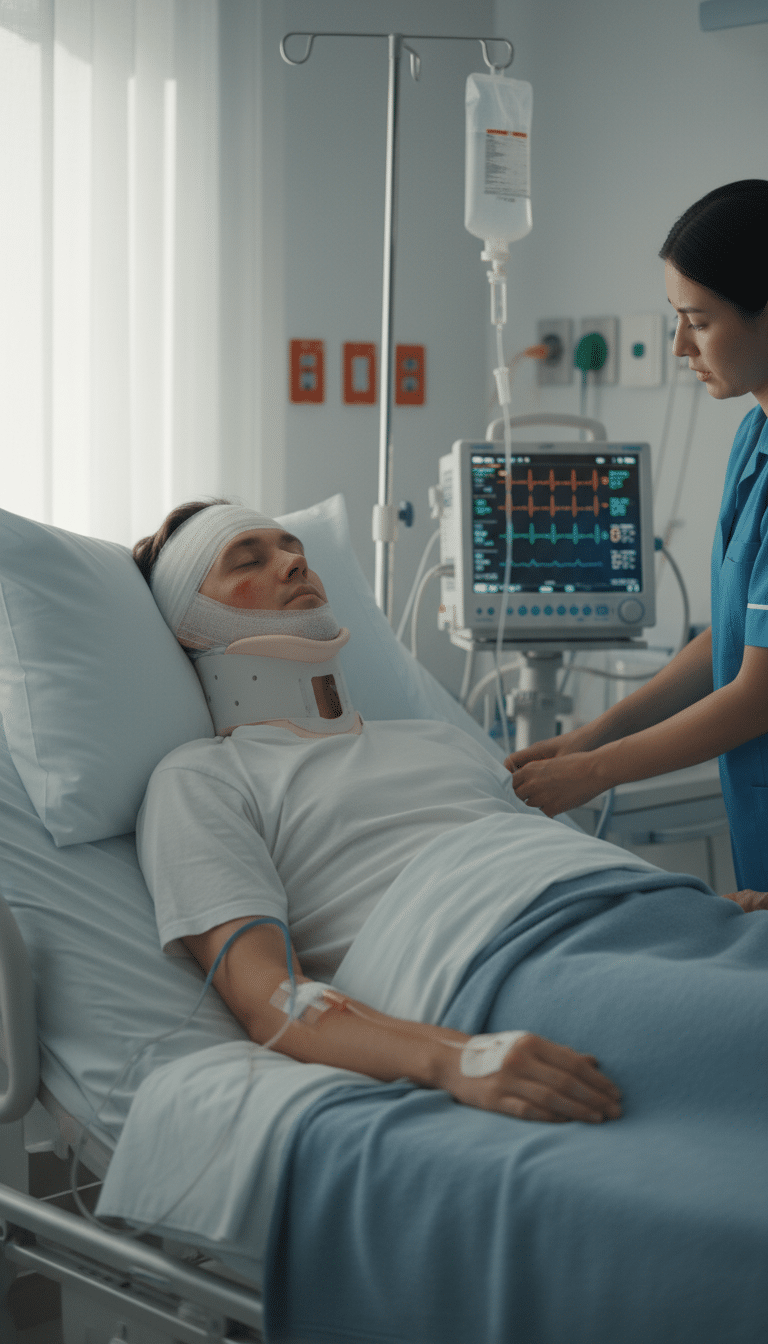
Falling Object Incident Legal Counsel in Glenpool, OK | McKay Law
Understanding Falling Object Accident Claims
Falling objects are a major source of preventable injuries. From boxes falling off store shelves to tools dropped from construction scaffolding, when something falls from above serious injuries can result. Small objects can cause major injuries when they fall from height. Head injuries, broken bones, crush injuries, and even death are typical results. McKay Law advocates for falling object accident victims in Glenpool and in surrounding communities.
What Causes These Incidents
- Bad merchandise stacking
- Overloaded shelves
- Defective racks and shelves
- Improperly secured cargo on trucks
- Falling tools at construction sites
- Material falling from construction sites
- Scaffold failures
- Ceiling tiles or fixtures falling
- Branches and trees falling on people or property
- Sign failures
- Equipment falling from vehicles
- Objects falling from upper floors
- Hardware failures
- Weather-related
Where These Accidents Happen
- Retail stores
- Grocery stores
- Warehouses
- Active construction projects
- Industrial and manufacturing facilities
- Workplaces
- Apartment buildings
- Parking facilities
- Pedestrian areas
- Roads
- Houses and yards
What These Accidents Do to Victims
- Severe head trauma
- Cranial fractures
- Spinal cord injuries
- Neck and back injuries
- Broken bones
- Crushing trauma
- Deep cuts from falling objects
- Eye trauma
- Head injuries
- Internal organ injuries
- Face trauma
- Shoulder and arm injuries
- Death from catastrophic falling object incidents
Potential Defendants
- Owners of the property
- Store owners
- Property managers
- General contractors
- Subcontractors
- Maintenance providers
- Trucking companies
- At-fault drivers
- Product makers
- Public agencies
Store Liability for Falling Items
Retailers are obligated to:
- Stack and store goods safely
- Train staff on stacking
- Inspect shelves regularly
- Use safety devices like shelf strapping
- Avoid overloading shelves
- Warn customers of falling object hazards
- Keep shelving in good condition
Failure to follow safety practices supports liability.
Construction-Related Falling Object Cases
Construction sites must:
- Provide overhead protection for workers and the public
- Use tool lanyards and securing equipment
- Install netting
- Mark safe paths
- Warn the public of overhead work
- Comply with OSHA safety standards
What You Must Prove
- Duty — A legal duty applied.
- Violation of That Duty — The defendant failed to prevent the falling object incident.
- A Direct Link — The breach caused the falling object incident and your injuries.
- Damages — Medical costs, lost income, pain and suffering, and other losses.
What Strengthens a Falling Object Case
- Scene and object photos
- The actual object that fell
- Surveillance and security camera footage
- Accident reports
- Service and inspection logs
- Stacking and stocking practices
- Records of employee training
- Incident history
- Prior complaint records
- OSHA citations and investigations
- Expert analysis of safety standards
- Testimony from people present
- Treatment documentation
Recovery for Falling Object Victims
- Healthcare costs
- Lifetime care costs
- Surgery costs
- Lost wages and loss of earning power
- Property damage
- Non-economic damages
- Diminished quality of life
- Damages for impact on relationships
- Long-term restrictions
- Survivor damages for surviving family
- Punitive damages when warranted
Time Limits to Be Aware Of
You typically have 2 years from the date of the incident to file (Okla. Stat. tit. 12, § 95). Comp claims follow different timelines. Falling object cases demand fast action because surveillance footage is often overwritten and the scene may be cleaned up.
What Working With Us Looks Like
We move quickly to lock down store and site video before it’s overwritten, investigate maintenance, stacking, and inspection practices, document the falling object and scene, pull prior incident and complaint records, work with treating doctors, and prepare every case as if it will go to trial.
FAQ
Q: An item fell off a store shelf and hit me — can I file a claim?
A: Definitely. Stores have a duty to stack and store merchandise safely. Failure creates liability.
Q: What does it cost to hire McKay Law?
A: Nothing. No fee unless we recover.
Q: I was hit by a tool that fell from a construction site — what can I do?
A: Definitely actionable. Construction-related falling object cases involve clear federal safety violations.
Q: Something fell from a truck and hit my car — what’s my claim?
A: Trucking companies are responsible for unsecured cargo.
Q: Who is responsible if a ceiling tile or fixture fell on me?
A: The property owner and maintenance contractor.
Q: Should I give the property owner’s insurance a recorded statement?
A: Never. Call us first.
Q: Should I preserve the object that fell on me?
A: Yes — if possible. Physical evidence of what fell is valuable.
Q: What is the deadline to file?
A: Two years from the date of the incident (Okla. Stat. tit. 12, § 95). Comp claims follow separate timelines.
Compensation After a Falling Object Injury in Glenpool, OK
Objects that fall from height carry energy far greater than their weight alone suggests. A small item dropped from above can cause severe trauma. These cases also involve a distinctive liability framework. An attorney familiar with these specialized claims knows how to navigate the unique legal and physical issues these cases involve.
The Physics That Make These Cases Devastating
Kinetic Energy Scales With Height
Energy at impact rises substantially with fall height.
Because of this physics, even modest objects falling from significant heights deliver force comparable to a much heavier object.
Velocity Reaches Terminal Quickly
Objects accelerate to dangerous speeds rapidly. Even moderate falls deliver substantial energy.
Where the Object Strikes Matters Enormously
Impact location determines the injury. Head impacts can cause traumatic brain injury, skull fracture, or death.
Where Falling Object Accidents Happen
Construction Sites
Construction sites are the most common location for falling object accidents.
Construction site falling object incidents include:
- Tool drops
- Materials falling from scaffolding
- Crane-lifted materials
- Bricks, blocks, and other building materials
- Pipes, conduit, and structural components
- Debris during demolition
- Overhead construction materials
Industrial and Warehouse Settings
Warehouse and industrial settings present significant falling object risks.
Common scenarios include:
- Inventory falling from racking
- Pallet failures
- Tools falling from elevated work areas
- Forklift-related falling object accidents
- Lifted material drops
- Machine component drops
Retail Stores
Retail establishments present falling object risks.
Retail falling object incidents include:
- Items from elevated retail displays
- Falling product displays
- Holiday display incidents
- Ceiling tile drops
- Sign falls
Public Buildings and Structures
Public infrastructure can be sources of falling object accidents.
Public space falling object incidents include:
- Facade failures
- Ceiling tiles in public buildings
- Hanging sign failures
- Tree branches falling on public property
- Falling ice from buildings
- Garage debris
Residential Settings
Falling objects in residential settings include items from high shelves, ceiling drops, tree branches on residential property, and elevated deck failures.
Legal Frameworks for Falling Object Cases
Premises Liability
Where the falling object came from a property owner’s premises, the property owner’s duty of care applies.
The plaintiff must establish:
- The property owner owed a duty of care
- The notice element
- Breach
- Causation between breach and injury
Construction Site Liability
Construction-related falling object claims, several frameworks come into play.
OSHA Violations
OSHA has specific regulations about overhead hazards and falling object protection. Safety violations provide direct evidence of negligence.
Workers’ Compensation Plus Third-Party Claims
On-the-job falling object incidents operate primarily under workers’ compensation. Non-employer third-party claims often exceed workers’ compensation benefits.
Specific Safety Rules
Construction safety frameworks provide expert testimony foundations.
Strict Liability for Inherently Dangerous Activities
In specific contexts, inherently dangerous activity doctrines may govern.
Product Liability
Cases involving defective products, strict product liability may apply.
Negligence Per Se From Code Violations
Building codes, safety codes, and industry standards strengthen the case significantly.
Common Injuries From Falling Objects
Head Injuries
Cranial impact injuries can cause traumatic brain injury. Apparently minor head impacts require careful medical evaluation.
Spinal Cord Injuries
Falling object spine impacts can cause spinal cord injuries.
Fractures
Fractures throughout the body are common.
Soft Tissue Injuries
Various soft tissue injuries are typical.
Death
Falling object fatalities are documented.
Who Can Be Held Liable?
Property Owners
Property owners have the primary duty.
Construction Contractors
Project contractors are typical defendants.
Employers
For workplace incidents, the workers’ compensation system governs. Third-party claims against non-employers extend beyond workers’ comp benefits.
Construction Equipment Operators
Crane operators, scaffolding operators, forklift operators carry exposure for their conduct.
Material Suppliers
Component suppliers can face liability for defective materials or improper packaging.
Maintenance Companies
Companies responsible for building maintenance carry liability for maintenance failures.
Equipment Manufacturers
Manufacturers of cranes, scaffolding, or other lifting and storage equipment face product liability exposure.
Other Trades and Contractors
Adjacent trades can face liability for site-level conduct.
Government Entities
For falling objects on public property may implicate government entities.
Critical Evidence in Falling Object Cases
Site Conditions
Site evidence. Detailed scene documentation build the case foundation.
The Object Itself
The item that fell becomes critical evidence. Tools, materials, components, or whatever fell may need to be preserved.
Equipment Used
Cranes, scaffolding, lifts, forklifts, or other equipment involved needs expert analysis.
Maintenance Records
Equipment maintenance records document equipment history.
OSHA Records and Inspection History
Federal safety records reveal patterns.
Training Records
Safety training records can reveal training deficiencies.
Project Records
Construction project records, plans, schedules expose project-level negligence.
Witness Statements
Other workers, supervisors, contractors, bystanders may make or break the case.
Expert Testimony
Expert witnesses drive the technical case.
Common Insurance Defenses
“The Plaintiff Wasn’t Wearing Required Safety Equipment”
Worker injuries, “You weren’t wearing your hard hat”. Even if accurate, liability may still attach against multiple parties.
“The Falling Object Was Unforeseeable”
“It just fell out of nowhere”. Falling object hazards in construction and similar settings are foreseeable.
“Comparative Fault”
“You contributed too”. How OK handles shared fault allows recovery to continue.
“OSHA Compliance”
Defense argues OSHA compliance. Federal compliance doesn’t necessarily satisfy general negligence duties.
“Workers’ Compensation Bars Recovery”
Employment cases, defense argues workers’ compensation exclusively bars recovery against the employer. Workers’ compensation typically bars employer claims, but third-party claims remain available.
Critical Steps After a Falling Object Accident
Get Immediate Medical Attention
Prompt medical evaluation is essential.
Report the Incident
Report officially. Worker injuries, comply with workers’ comp reporting requirements.
Photograph Everything
Comprehensive documentation.
Identify Witnesses
Anyone who saw the incident may be critical witnesses.
Preserve Physical Evidence
Equipment involved needs to be locked down through legal means.
Document Site Conditions
Site documentation.
Don’t Sign Anything Without Counsel
Quick paperwork should not be signed without legal advice.
File OSHA Complaints if Applicable
Employment incidents, Federal workplace safety reports may be appropriate.
Damages Available
Recoverable losses include include:
- Hospitalization, surgical, and rehabilitation costs
- Lost wages
- Diminished earning capacity
- Loss of enjoyment of life
- Permanent physical changes
- Psychological care
- Spousal damages where applicable
- Wrongful death and survivor damages
- Enhanced damages where safety violations were egregious
Special Considerations for Workplace Cases
Workers’ Compensation Is Just the Starting Point
Workers’ compensation matters. Workers’ comp doesn’t cover everything.
Non-employer third-party claims often dwarf workers’ comp benefits.
The Exclusive Remedy Rule
Workers’ compensation generally bars claims against the employer but doesn’t bar non-employer claims.
Subrogation Issues
Workers’ compensation insurers may have subrogation rights against any third-party recovery need to be addressed.
Attorney Costs
Construction-related injury lawyers charge no upfront fees. Expert costs run high paid by counsel.
Move Quickly
These cases depend on evidence that disappears fast. Physical evidence changes rapidly. Equipment gets used elsewhere. Maintenance records, training records, and project documents need legal preservation action. The legal time limit sets a hard cutoff. Getting an attorney involved promptly positions the case for the substantial recovery these cases can produce.
McKay Law Is Your Glenpool Advocate After A Falling Object Accident
Gravity is merciless — and when a substantial item comes down from above unexpectedly, the victim almost never has a moment to react. Falling object injuries happen on construction sites when tools, debris, or building materials drop from above or scaffolding, in retail stores when poorly stacked merchandise tumbles off high shelves, in warehouses when pallets and boxes move and fall, on city streets when window-washing equipment, signs, or building facing break free, and in houses and apartments when ceiling fixtures, hanging mirrors, or improperly secured furniture come down on top of someone. The injuries that result from these incidents are typically devastating: traumatic brain injuries, skull fractures, spinal cord damage, broken collarbones and shoulders, crushed hands and feet, and internal organ trauma. At McKay Law, we dig into exactly what fell, how it was positioned before it fell, who was tasked for keeping it in place, and what warning the property owner or contractor neglected to post.
These cases commonly bring in multiple defendants — property owners, general contractors and subcontractors, store and warehouse operators, equipment installers, sign and facade maintenance companies, and the manufacturers of substandard brackets, anchors, or shelving. When you partner with the McKay Law family, we waste no time to lock down surveillance footage, OSHA records, inspection reports, store maintenance logs, and the material itself before it can be replaced. We chase the highest possible compensation for emergency response and trauma care, surgeries, hospitalization, ongoing rehabilitation, future medical needs, mobility aids, prescription costs, lost wages, loss of livelihood, the deep pain and suffering of enduring an injury you never saw coming — and in the most heartbreaking cases, the wrongful death of a family member. Contact us right away at (866) 679-9651 or reach out online to book your free consultation and get a firm that is experienced with how to stand up to negligent owners, contractors, and retailers on your side.
Video Testimonials






