

“Labor Omnia Vincit” McKay Law
Coweta, OK Intersection Accident Lawyer
Intersection accidents account for many auto accident fatalities in Coweta, OK. When traffic control devices are disregarded, the consequences are often catastrophic. McKay Law fights for intersection accident victims throughout OK. Intersection wrecks frequently include crashes where one driver ran a signal, missed a stop sign, or made an unsafe turn. Intersection wrecks are often caused by running red lights, blowing through stop signs, failing to yield, making unsafe left turns, distracted driving, speeding, impairment, and misjudging oncoming traffic. Left-turn crashes deserve special attention—with the turning driver typically bearing primary responsibility. Our Coweta car accident attorneys act fast to secure proof—signal phase records, video evidence, eyewitness accounts, and electronic vehicle data. Liable parties may include individual drivers, employers, government entities, and other parties contributing to the crash. Defective traffic control may trigger claims against the responsible government entity—with strict deadlines that make early action critical. Injuries from intersection accidents head trauma, chest injuries, and catastrophic harm—with the worst outcomes in vehicles struck broadside. We fight for every dollar including medical bills, future care, lost wages, lost earning capacity, pain and suffering, and wrongful death damages. Adjusters frequently argue both drivers shared blame—we don’t let them deflect from the at-fault driver’s negligence. All intersection crash claims is handled on a contingency fee basis—zero upfront cost. Call McKay Law now for a complimentary evaluation with a Coweta, OK intersection crash attorney who will hold the at-fault driver and their insurer accountable.
Settlements Won
0
+
Million Dollars Won
0
+
Google 5 Star Reviews
0
+
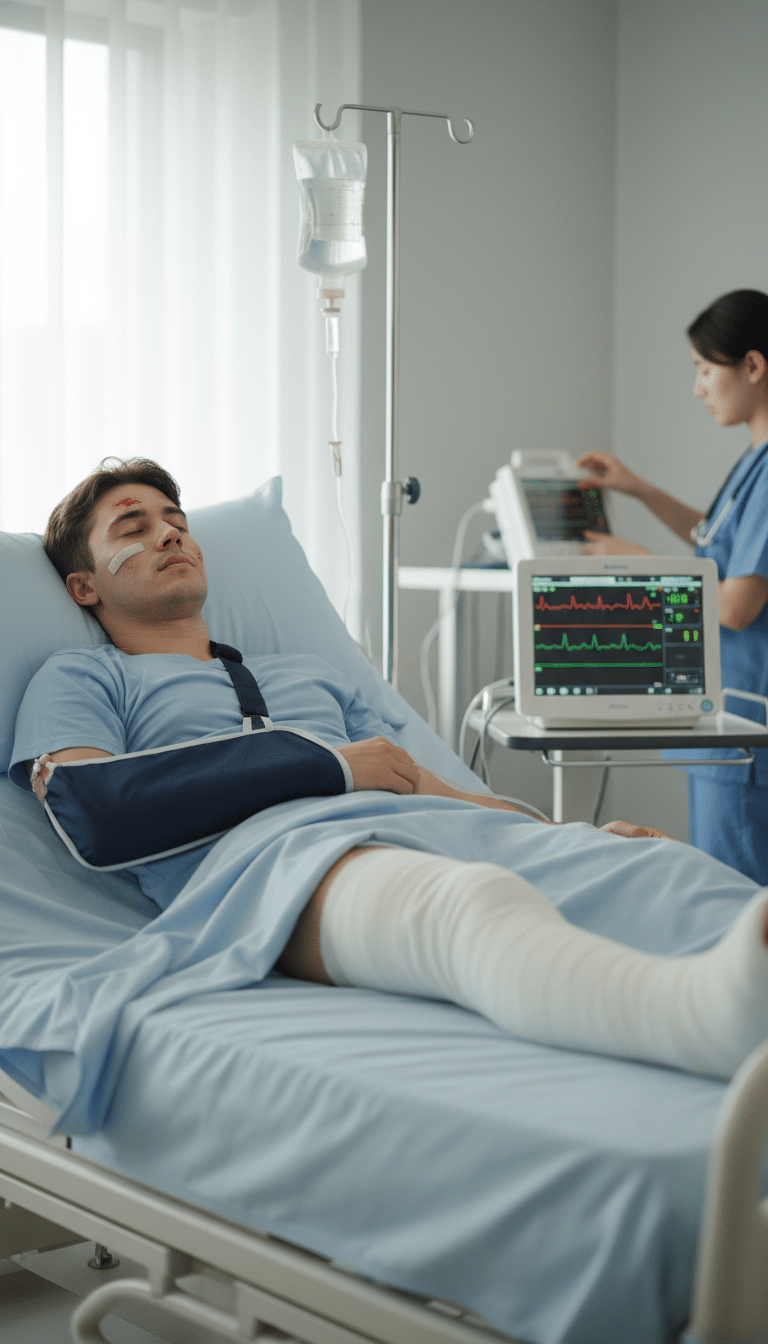
Intersection Wreck Legal Counsel in Coweta, OK | McKay Law
The Basics of Intersection Crash Cases
Intersections are among the most dangerous places on Oklahoma roads. Most crashes happen at or near intersections. When two streams of traffic meet, the potential for crashes multiplies. Failing to follow traffic control devices and yielding rules injure and kill drivers and passengers every day. McKay Law represents intersection accident victims in Coweta and in surrounding communities.
Intersection Crash Types
- T-bone (side-impact) collisions — side-impact at intersections
- Left-turn collisions — turning vehicles striking or being struck by oncoming traffic
- Rear-impact crashes — at intersections during stops
- Front-to-front impacts — at intersections from wrong-way drivers
- Sideswipe crashes — vehicles brushing sides
- Multi-car collisions — multiple vehicles involved at intersections
- Pedestrian and cyclist strikes — at intersections
How These Wrecks Occur
- Running red lights
- Stop sign violations
- Yield violations
- Driver inattention at intersections
- DUI
- Excessive speed at intersections
- Bad gap judgment
- Rushing through intersections
- Falling asleep at intersections
- Sight-line problems at intersections
- Defective traffic signals
- Badly designed intersections
- Construction or work zones
- Adverse weather
- Failure to use turn signals or turn safely
Who’s at Fault at Intersection Crashes
Fault at intersections typically depends on traffic control compliance and right of way:
- The driver who ran a red light or stop sign is usually at fault
- The party who didn’t yield right of way is usually liable
- The left-turning driver is usually at fault in left-turn crashes
- Comparative fault may apply
- Other parties can be at fault where defects or third-party conduct played a role
Right of Way Rules
Oklahoma’s right of way laws:
- Traffic signals — green light has right of way; red light must stop
- Stop sign-controlled intersections — must come to complete stop and yield to traffic with right of way
- Yield-controlled intersections — yielding required
- No control intersections — right-side priority rule
- Left-turn rules — turning left requires yielding
- Pedestrian rules — pedestrians have priority
Typical Intersection Crash Injuries
- Brain injuries
- Spinal cord injuries and paralysis
- Whiplash and neck injuries
- Crushing trauma
- Bone breaks
- Internal organ damage
- Broken ribs and chest injuries
- Major lower-body fractures
- Lacerations and disfigurement
- Post-traumatic stress and psychological injuries
- Fatal injuries
Why Intersection Crashes Are Often Severe
- High speeds at intersections
- Side impacts have less protection than front or rear
- Multiple vehicles often involved
- Vulnerable road users
- No defensive maneuvers
- Angled impacts can spin vehicles into other lanes
Key Evidence
- Police accident reports
- Intersection cameras
- Testimony from people who saw the crash
- Cell phone records
- Vehicle event data recorder (EDR) data
- Visual evidence
- Forensic evidence
- Documentation of light operation
- Accident reconstruction
- Treatment documentation
Who Pays
- The driver who ran the light or failed to yield
- Their employer if the driver was on the job
- The owner of the vehicle where the owner let an unsafe driver use the vehicle
- A road authority liable for traffic control failures
- Traffic signal contractors
- Liquor establishments where overserving contributed
What You Must Prove
- A Duty of Care — All drivers must follow traffic rules.
- Breach — The defendant violated traffic laws.
- That the Conduct Caused the Crash — The traffic violation caused the collision and your injuries.
- Concrete Harm — Economic and non-economic harm.
Damages Available
- Past and future medical expenses
- Ongoing rehabilitation expenses
- Lost wages and reduced earning capacity
- Vehicle and property loss
- Non-economic damages
- Diminished quality of life
- Loss of companionship
- Survivor damages for surviving family
- Exemplary damages where conduct rises above ordinary negligence
Time Limits to Be Aware Of
You typically have 2 years from the date of the crash to file (Okla. Stat. tit. 12, § 95). Cases involving public defendants trigger one-year notice requirements.
What Working With Us Looks Like
We get to work immediately to secure intersection camera footage before it’s deleted, pull traffic signal documentation, engage crash reconstruction specialists, coordinate with treating providers, and prepare every case as if it will go to trial.
FAQ
Q: Who’s at fault when two cars crash at an intersection?
A: Typically whoever ran the light, stop sign, or failed to yield.
Q: What does it cost to hire McKay Law?
A: Nothing. No recovery, no fee.
Q: The other driver claims I ran the light — what do I do?
A: We fight back with evidence. The evidence usually shows who really violated right of way.
Q: I was hit during a left turn — am I at fault?
A: Depends — left turners typically have the burden, but circumstances matter.
Q: Should I give the insurance company a recorded statement?
A: Never. Refer them to your attorney.
Q: Can a defective traffic signal be the cause?
A: Absolutely — signal defects shift fault. We investigate signal timing and maintenance whenever a crash suggests signal failure.
Q: What is the deadline to file?
A: 2 years from the date of the crash (Okla. Stat. tit. 12, § 95). GTCA notice within 12 months for government defendants.
Recovering Damages From an Intersection Collision in Coweta, OK
Roughly 40% of all U.S. crashes occur at intersections. The reason is convergence. Vehicles from different directions cross paths, generating numerous potential collision points. A Coweta intersection accident lawyer brings expertise in this distinctive area of auto accident law.
Why Intersections Generate So Many Crashes
Multiple Traffic Streams Converge
Traffic from multiple directions must coordinate movement through the same point.
This generates multiple conflict points.
Complex Decision-Making
Drivers must process complex information: traffic signals, signs, pavement markings, vehicles in multiple directions, pedestrians, cyclists, road conditions, and their own intended movement.
Mental demands are significant at intersections.
Multiple Vulnerable Road Users
Vulnerable road users converge at intersections, creating multiple types of road users.
Speed Differential
Different vehicles approach at different speeds, creating difficulty.
Types of Intersection Crashes
T-Bone (Side-Impact) Crashes
Side-impact crashes are among the most devastating intersection crashes.
These commonly involve one driver runs a red light or stop sign.
Head-On Crashes
Head-on collisions in intersection scenarios are typically very serious.
Rear-End Crashes
Rear-end crashes at intersections frequently occur.
Sideswipe Crashes
Vehicles striking each other while changing lanes through intersections occur in turning scenarios.
Left-Turn Crashes
Left-turn crashes create a recurring incident type.
Right-Hook Crashes
Right-turn crashes against bicycles or pedestrians specifically affect cyclists.
Pedestrian Crashes
Pedestrian incidents at intersections are particularly devastating.
Multi-Vehicle Crashes
Initial impacts at intersections can trigger chain-reaction crashes involving multiple vehicles.
The Right-of-Way Framework
Most intersection crashes turn on right-of-way analysis.
Traffic Signal Right-of-Way
For signalized intersections, the driver with the green light has right-of-way.
But this isn’t absolute.
Even with green, drivers must drive safely:
- Not to strike pedestrians legally crossing
- Not to enter unsafely
- Yielding to vehicles already proceeding
- Maintaining reasonable speed
Stop Sign and Yield Sign Right-of-Way
For stop-controlled intersections, drivers must fully stop and yield.
For yield-controlled intersections, drivers must slow and yield.
Uncontrolled Intersections
Intersections without signals or stop signs operate on first-arrival rules.
For vehicles arriving at the same time, right-of-way goes to the right.
Left-Turn Right-of-Way
Left-turning drivers must wait for safe gaps in oncoming traffic.
The left-turn yield rule applies regardless of green signal unless a green arrow signal applies.
Pedestrian Right-of-Way
Pedestrians in marked crosswalks have right-of-way.
The specifics vary by jurisdiction.
Establishing Fault in Intersection Cases
Who Had the Right-of-Way?
The central liability question is right-of-way.
Determining right-of-way involves examining:
- Signal status
- Traffic control devices
- Entry sequence
- How fast each vehicle was traveling
- Driver condition
- Device function
Common Causes of Intersection Crashes
Running Red Lights
Drivers running red lights cause many intersection crashes accounts for many serious cases.
Running Stop Signs
Stop sign violations generates many incidents.
Failure to Yield
Yield failures drive many crashes.
Speeding
Speeding through intersections generates serious incidents.
Distracted Driving
Drivers distracted at intersections fail to see other vehicles.
Drunk and Impaired Driving
Substance-impaired drivers drive many intersection crashes.
Inadequate Sight Lines
Obstructed views at intersections can contribute to crashes. Vegetation, structures, parked vehicles, or other obstructions may share liability.
Traffic Signal Malfunctions
Defective traffic control can cause crashes create government liability.
Critical Evidence in Intersection Cases
Traffic Signal Status
Determining whether each driver had a red or green light drives the case.
Determining signal status involves:
- Signal timing records
- Surveillance footage from nearby cameras
- Eyewitness accounts
- Driver accounts
Vehicle Speed Determination
Speed analysis can be established through:
- Skid mark evidence
- Crush damage
- Vehicle electronic data
- Witness observations
Black Box Data
Vehicle event data recorders capture pre-crash data across vehicle activity.
Surveillance and Dashcam Footage
Storefront cameras may capture the entire crash.
Witness Statements
Witnesses may be deciding evidence.
Police Reports and Citations
Crash investigation reports establish key facts.
Issued tickets can provide direct evidence of negligence.
Cell Phone Records
Phone records may establish distraction.
Common Insurance Defenses
“The Other Driver Ran the Light/Sign”
Signal/sign defenses frequently arise.
Credibility-based disputes depend on objective evidence.
“Comparative Fault”
Defense pushes shared-fault arguments.
OK’s comparative fault rules allows recovery to continue.
“Failure to Take Evasive Action”
“You could have avoided this”. Right-of-way doesn’t eliminate the duty to avoid avoidable crashes.
“Sun in My Eyes” / Visibility Defenses
Environmental conditions are leveraged by defense. Conditions don’t necessarily defeat liability.
“Traffic Signal Was Malfunctioning”
Where signal malfunction is alleged, investigation can verify or rebut.
Who Can Be Held Liable?
The Other Driver(s)
At-fault drivers are the main targets of liability.
Other Drivers in Multi-Vehicle Cases
When other drivers also contributed to the crash can face liability.
Government Entities
Road design problems can implicate government entities.
Property Owners
For sight-line obstructions caused by vegetation, structures, or other property conditions generate property owner claims.
Vehicle and Component Manufacturers
Product defect cases can implicate manufacturers.
Maintenance Companies
Service failure contributions can create separate liability.
Critical Steps After an Intersection Crash
Stay at the Scene
Don’t leave.
Call Police Immediately
Police response is typical. Make sure they’re called.
Document Everything Visually
Visual evidence of every relevant detail.
Photograph the Damage
Both vehicles, points of impact, damage patterns.
Identify Witnesses
Other drivers, pedestrians, and bystanders can be the deciding evidence.
Get a Police Report
Insist on official documentation.
Preserve Vehicle Data
With legal action, preserve vehicle data, EDR records, and other electronic evidence.
Don’t Make Statements About Fault
At the crash scene, don’t speculate about fault.
Get Medical Attention Immediately
Prompt medical evaluation anchors the medical claim.
Damages Available
Recoverable losses include:
- Past and future medical expenses
- Earnings affected by injury
- Reduced ability to work
- Vehicle repair or replacement
- Pain and suffering
- Wrongful death and survivor damages
- Exemplary damages where conduct was egregious
Attorney Costs
Lawyers experienced with intersection crashes charge no upfront fees. Free initial consultations are standard.
Move Quickly
Multiple time pressures apply. Video recordings get overwritten on short retention cycles. Traffic signal timing records require formal preservation steps. Black box data may be lost. Witness memories require prompt investigation.
OK’s statute of limitations sets a hard cutoff. Contacting a Coweta intersection accident attorney quickly locks down the critical evidence.
McKay Law Is Your Coweta Advocate After An Intersection Accident
Intersections are where most of a driver’s split-second decisions happen — and where most serious crashes happen as a result. Running red lights, failing to yield on a left turn, blowing through stop signs, misjudging gaps in cross-traffic, and getting distracted at the worst possible moment turn ordinary intersections into the most high-risk spots on the road. The wrecks that result range from severe side-impact T-bones, to head-on collisions with left-turning drivers, to multi-vehicle pile-ups that involve everyone who happened to be at the light when it changed. At McKay Law, we have learned that intersection cases come down to one question: who had the right of way? We waste no time to secure traffic signal timing data, intersection camera footage, surveillance video from nearby businesses, dash cam recordings, eyewitness statements, and the at-fault driver’s cell phone records to establish exactly what happened in the seconds before impact.
The driver who caused the wreck almost always claims it was the other way around — that the light was green, that the stop sign didn’t apply, that the other driver was speeding. Don’t let that narrative stick. When you come into the McKay Law family, our team brings in accident reconstruction specialists, traffic engineers, and treating physicians who can demonstrate the insurance carrier and, if necessary, the jury exactly how the collision occurred. We fight for full compensation for emergency care, surgeries, hospitalization, ongoing rehabilitation, future medical needs, prescription costs, lost income, loss of livelihood, vehicle replacement, the physical and emotional toll of a crash you never saw coming — and in the most sorrowful cases, the wrongful death of someone you cared deeply for. Phone us right away at (866) 679-9651 or contact us online to schedule your free consultation and place a firm that won’t back down fighting for you.
Video Testimonials






