

“Labor Omnia Vincit” McKay Law
McAlester, OK Knee Injury Lawyer
Serious knee trauma are among the most debilitating accident injuries in McAlester, OK. McKay Law fights for knee injury victims throughout OK. Types of knee trauma torn ligaments, meniscus damage, dislocations, broken bones, and chronic knee conditions. Common causes of knee injuries include car accidents (especially dashboard impacts), motorcycle crashes, truck wrecks, slip-and-falls, workplace incidents, and sports collisions. “Dashboard knee” injuries often cause patella fractures, ACL tears, and posterior knee dislocations. Treatment for knee injuries frequently demands long-term care—including ACL reconstruction, meniscus repair, total or partial knee replacement, arthroscopic surgery, and months of physical therapy. Many knee injury victims face permanent limitations ongoing medical needs and lasting impact. These injuries often cause lost earning capacity—particularly in construction, nursing, oilfield work, law enforcement, and firefighting. Adjusters may dispute the severity or accident-causation—labeling injuries “pre-existing” or “degenerative” rather than trauma-related. We don’t let them. We consult with knee specialists to prove the long-term impact. We recover all available damages including surgery and rehabilitation expenses, time off work, reduced earning ability, and the lifetime impact. Future surgeries should be factored into your settlement—making lifetime cost calculations critical. Every knee injury case is handled on a contingency basis—you pay nothing unless we win. Don’t settle before you know the full extent of your future treatment needs. Contact McKay Law today for a no-cost case review with a McAlester, OK orthopedic injury attorney who will pursue every dollar your case is worth.
Settlements Won
0
+
Million Dollars Won
0
+
Google 5 Star Reviews
0
+
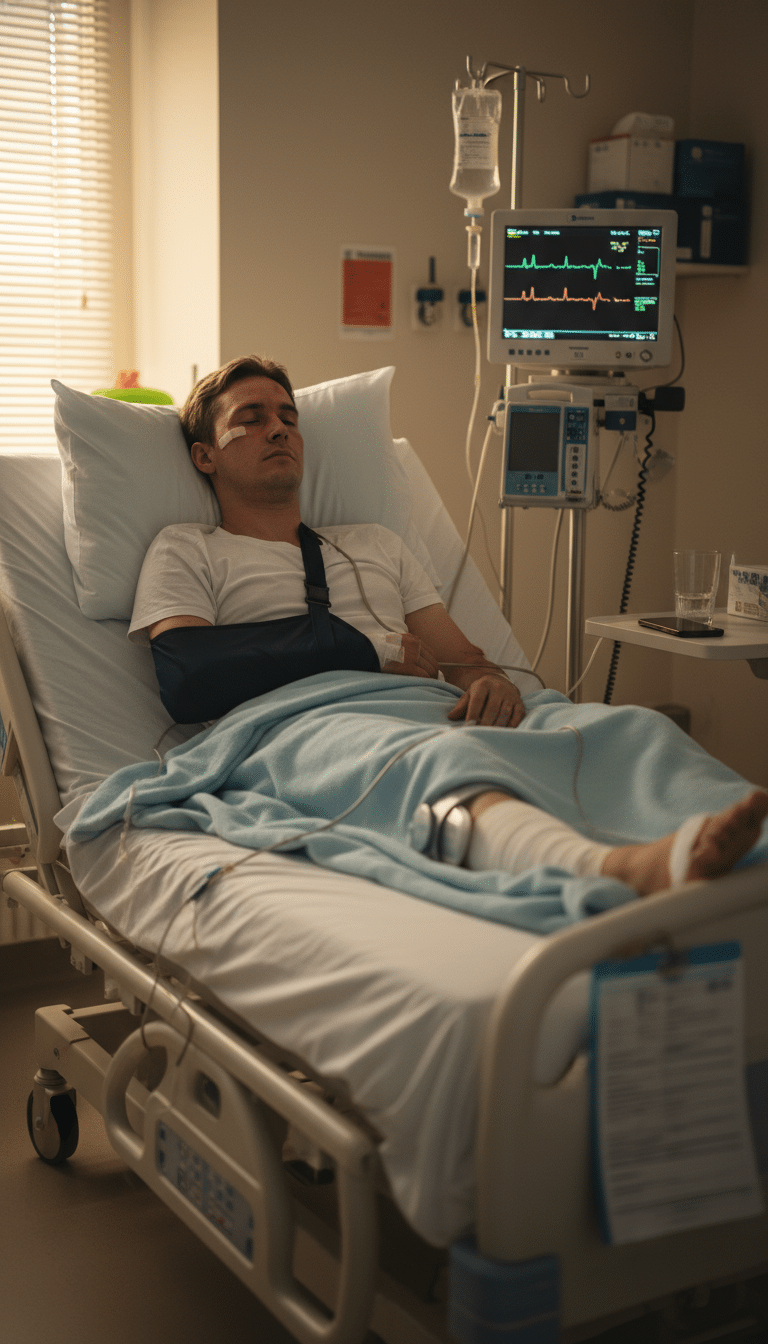
Knee Injury Legal Counsel in McAlester, OK | McKay Law
What Is a Knee Injury Claim?
Knee injuries are among the most disabling injuries in personal injury law. The knee joint is intricate, and damage to any component can cause significant impairment. Ligament tears, cartilage damage, and bone fractures can require surgery and extensive rehabilitation. Despite aggressive treatment, many knee injuries never return to full function. McKay Law represents knee injury victims in McAlester and across the state.
Common Causes of Knee Injuries
- Car, truck, motorcycle, and rideshare accidents
- Knee striking the dashboard during impact
- Slip, trip, and fall accidents
- Workplace accidents
- Athletic injuries
- Equipment failures
- Walking or biking incidents
- Building site incidents
Knee Injuries We Handle
Ligament tears:
ACL tears
Posterior cruciate ligament (PCL) tears
Medial collateral ligament (MCL) tears
Lateral collateral ligament (LCL) tears
Cartilage damage:
Meniscal tears
Articular cartilage damage
Broken bones:
Kneecap fractures
Tibial plateau fractures
Femur knee fractures
Other knee damage:
Dislocated kneecap (patellar dislocation)
Knee dislocations
Tendon tears
Knee bursitis
Traumatic arthritis
Symptoms of Knee Injuries
- Pain in the knee area
- Visible swelling
- Cannot stand or walk on the leg
- Inability to walk
- Limited range of motion
- Knee feeling unstable
- Audible or felt pops
- Visible bruising
- Knee locking
- Knee deformity
- Nerve symptoms
Why Knee Injuries Matter
- Mobility-critical injury
- Most serious knee injuries require surgery
- Long recovery times
- Permanent impairment is common
- Work impact
- Higher risk of joint degeneration over time
- Future joint replacement
- Function impact
Medical Care for Knee Injuries
- X-rays, CT, MRI
- RICE protocol (rest, ice, compression, elevation)
- NSAIDs
- Structured physical therapy
- Cortisone shots
- Bracing
- Crutches
- Scope procedures
- ACL reconstruction
- Meniscus repair or removal
- ORIF for severe fractures
- Knee replacement (arthroplasty)
- Revision surgery
- Extended rehab
Why Insurance Companies Devalue Knee Injury Claims
- Arguing the injury is pre-existing
- Claiming the knee was already damaged
- Surgical necessity disputes
- Low property damage arguments
- Demanding “independent” medical exams
- Pushing fast, lowball settlements
- Social media surveillance
- Arguing recovery should have been faster
Potential Defendants
- At-fault motorists
- Property owners
- Workplaces
- Equipment manufacturers
- Sports or recreational facility operators
- Medical providers in malpractice cases
What You Must Prove
- A Duty of Care — There was a duty of care.
- Breach — The defendant failed to meet that duty.
- A Direct Link — The wrongful act led to the injury.
- Quantifiable Losses — Medical costs, lost income, pain and suffering, and other losses.
What Compensation Looks Like
- Past and future medical expenses
- Surgical expenses
- Joint replacement expenses
- Physical therapy and rehabilitation
- Knee braces and mobility aids
- Lost income and diminished earning ability, particularly if you can’t return to physical labor
- Physical and emotional suffering
- Loss of enjoyment of life
- Loss of companionship
- Long-term restrictions
- Future medical needs
- Exemplary damages in cases of gross negligence
The Long-Term Impact
Even with surgery and rehabilitation, knee injuries frequently leave lasting limitations:
- Reduced mobility for life
- Permanent pain symptoms
- Functional limitations
- Future surgery
- Post-traumatic arthritis
- Inability to perform physical labor
- Higher risk of subsequent falls
- Need for ongoing therapy
Time Limits to Be Aware Of
You typically have two years from the date of the incident to file (Okla. Stat. tit. 12, § 95).
What Working With Us Looks Like
We work closely with orthopedic specialists and rehab providers to document the full extent of the injury, push back against pre-existing condition claims, value the case for both current losses and lifetime impact including possible future knee replacement, and prepare every case as if it will go to trial.
Frequently Asked Questions
Q: I have a torn ACL — how much is my case worth?
A: Major case value. Surgical ACL cases involve major damages.
Q: What does it cost to hire McKay Law?
A: Nothing. No fee unless we recover.
Q: How much is a knee injury case worth?
A: Depends on severity, surgery, lost income, and permanent impact. Severity drives value — surgery and permanent damage significantly increase the case.
Q: My MRI shows a meniscus tear — what’s my case worth?
A: Depends on severity. Severity and treatment drive value.
Q: Insurance says my knee problem is from aging — are they right?
A: Often not. Pre-existing degeneration doesn’t mean the accident didn’t cause your injuries — Oklahoma’s eggshell plaintiff rule applies.
Q: Do I need knee surgery to file a claim?
A: Not at all. Non-surgical claims are valid; the key is proper documentation.
Q: Will I need future knee surgery or replacement?
A: Possibly. Knee replacement is often needed later in life after serious knee injuries.
Q: Should I give the insurance company a recorded statement?
A: Never. Talk to a lawyer first.
Q: What is the deadline to file?
A: 2 years from the date of the incident (Okla. Stat. tit. 12, § 95). Act fast — prompt medical care strengthens claims.
Knee Injury Claims in McAlester, OK
Knee injuries deserve specific attention. The knee is the largest joint in the body and bears most of the body’s weight during many activities. Knee injury affects basic mobility. And the knee’s complex structure means injuries often involve multiple components simultaneously. A local attorney experienced with knee injury claims brings expertise in this specialized injury area.
The Knee’s Unique Anatomy
Multiple Structures Working Together
The knee combines multiple distinct anatomical structures.
Knee anatomy includes:
The Bones
- The femur (thighbone)
- Main lower leg bone
- The fibula (smaller lower leg bone)
- The kneecap
Cartilage
- Cushioning cartilage
- Articular cartilage
Ligaments
- Front cruciate ligament
- PCL
- MCL
- LCL
Tendons
- Front thigh tendon
- Patellar tendon
- Hamstring tendons
Other Structures
- Bursae
- Iliotibial band
- Knee nerves and vessels
Each of these structures can be injured individually.
Combined Injuries
Knee injuries frequently involve multiple structures. Multi-structure combinations are common.
Common Knee Injuries
ACL Injuries
ACL tears are among the most well-recognized knee injuries. ACL tears typically need reconstruction surgery.
ACL reconstruction surgery using tendon grafts to replace damaged ligament. Recovery is lengthy.
Meniscus Tears
Tears of the meniscal cartilage are frequent.
Treatment depends on the specific tear but frequently necessitates arthroscopic intervention.
PCL Injuries
PCL tears can be devastating, commonly resulting from car crash dashboard strikes.
MCL Injuries
Medial collateral ligament injuries frequently heal without surgery.
LCL Injuries
LCL damage can need surgical treatment, particularly when combined with other knee injuries.
Patellar Fractures
Broken kneecaps happen with direct knee impacts. Surgical repair often needed.
Patellar Dislocation
Kneecap dislocation may become recurrent.
Tibial Plateau Fractures
Fractures of the upper tibia are catastrophic. Tibial plateau fractures impact the joint surface.
Distal Femur Fractures
Lower thigh bone fractures in the knee region can be catastrophic.
Articular Cartilage Damage
Joint surface damage accelerates degeneration.
Tendon Injuries
Tendon ruptures are seriously disabling.
Bursitis
Bursitis develops following injury.
Dislocation of the Knee
Knee joint dislocation requires immediate intervention. Can damage major blood vessels and nerves.
Compartment Syndrome
Compartment syndrome requires immediate surgery.
Common Causes of Knee Injuries
Motor Vehicle Accidents
Vehicle accidents frequently cause knee damage.
Common crash-related knee injuries include:
- Impact-related knee damage
- Interior impact
- Twisting trauma
- Crushing damage
Slip-and-Falls and Trip-and-Falls
Falls commonly cause knee injuries. Twisting fall injuries.
Workplace Injuries
Job-related accidents can cause knee damage.
Sports and Recreational Injuries
Recreation cause knee damage.
Pedestrian and Cyclist Accidents
Pedestrian/cyclist injuries produce knee injuries.
Direct Impact Injuries
Direct knee impacts produce specific knee injuries.
Repetitive Trauma
Repetitive strain contribute to knee damage.
Treatment for Knee Injuries
Conservative Treatment
Conservative treatment is sometimes appropriate. This involves Initial conservative measures, Pain management drugs, physical therapy, Brace use, Activity restrictions.
Arthroscopic Surgery
Minimally invasive knee surgery treats many knee injuries. Procedures include meniscal procedures, cartilage procedures, Cruciate reconstruction, removal of foreign bodies.
Open Surgery
Open surgical procedures for major repairs.
Total Knee Replacement
Knee replacement surgery can be appropriate. Often delayed in younger patients.
Partial Knee Replacement
Unicompartmental knee replacement treats specific areas.
Cartilage Restoration Procedures
Cartilage restoration target articular cartilage damage.
Special Considerations for Knee Injuries
Future Surgery Risk
Knee injuries often lead to additional surgery. Initial conservative treatment that fails may necessitate surgery. Surgery that doesn’t fully heal may need revision.
Long-Term Arthritis Risk
Knee injuries significantly increase risk of arthritis. Even after good recovery can result in arthritis years later.
Activity Modification Required
Long-term activity modification is typical. Specific activity restrictions may be permanently restricted.
Career Impact
Knee injuries significantly affect careers requiring physical activity in physically demanding jobs.
Damages in Knee Injury Cases
Knee injury damages can be substantial include:
- Initial emergency care
- Surgical costs (often substantial)
- Surgical facility costs
- Rehabilitation costs
- Future medical care
- Future surgical costs
- Additional surgical costs
- Future knee replacement
- Lost wages
- Diminished earning capacity
- Non-economic damages
- Spousal damages
Common Insurance Defenses
“Pre-Existing Conditions”
Prior knee history. Age-related changes are common, generating pre-existing arguments. Pre-existing conditions don’t bar recovery.
“Surgery Wasn’t Necessary”
“You didn’t need surgery”.
“The Injury Resolved”
Defense argues the injury healed completely. This defense fails when future surgery is anticipated.
“Comparative Fault”
“You contributed to the injury”.
“Improper Treatment”
“You didn’t get proper treatment”.
Critical Steps After a Knee Injury
Get Immediate Medical Attention
Same-day medical evaluation. Even apparently minor knee injuries may indicate more serious injury.
Get Imaging Studies
Initial imaging, then advanced imaging. Imaging is essential for diagnosis and case-building.
Follow Through With Recommended Treatment
Consistent treatment builds the medical record.
Document Functional Impact
Track how the injury affects daily activities and work.
Track Surgical Recovery
For surgical cases, document the full recovery process.
Don’t Sign Releases Without Counsel
The full damages picture takes time to emerge. Settling too early can dramatically undervalue the case.
Attorney Costs
Counsel experienced with knee injury claims work on contingency. These cases require investment in medical experts and life-care planners reimbursed from the recovery.
Move Quickly
Early attorney engagement matters.
Comprehensive ongoing documentation creates the strongest foundation. Filing deadlines sets a hard cutoff.
Engaging counsel right away ensures comprehensive documentation.
McKay Law Is Your McAlester Advocate After A Knee Injury
The knee is one of the most elaborate joints in the body — and one of the most prone to injury when something goes wrong. Torn ACLs, MCL and PCL injuries, meniscus tears, patellar fractures, dislocations, and full ligament ruptures often result from car crashes when the dashboard slams into the knee, slip-and-falls on hard surfaces, workplace incidents, pedestrian strikes, and sports accidents at poorly maintained facilities. The damage is immediate: a knee that collapses when you stand, swells overnight, locks up suddenly, or simply refuses to bear weight. The recovery, on the other hand, is anything but quick — months of physical therapy, surgical reconstruction with hardware that stays in your body, repeated procedures when initial repairs come up short, and a long-term risk of arthritis that can haunt a victim for decades. At McKay Law, we handle knee injury cases by consulting orthopedic surgeons, sports medicine specialists, and physical therapists who can establish the true depth of the damage and what recovery really entails.
Insurance carriers tend to brush aside knee claims by citing pre-existing wear or arguing the injury would have healed on its own — even when the trauma completely altered the joint’s stability and function. When you become part of the McKay Law family, we won’t allow those tactics and build a case that reflects what the injury has truly robbed you. We fight for complete compensation for diagnostic imaging, surgery and reconstructive procedures, surgical hardware, hospitalization, ongoing physical therapy, mobility aids, prescription medications, future medical care including potential additional surgeries and joint replacement, lost income, diminished earning ability for clients in physically demanding jobs, the loss of athletic and recreational activities you previously took part in, and the persistent discomfort and dysfunction a knee injury imposes. Phone us without waiting at (866) 679-9651 or contact us online to schedule your free consultation and put a firm that regards knee injuries with real weight behind you.
Video Testimonials






