

“Labor Omnia Vincit” McKay Law
Broken Arrow, OK Negligent Security Accident Lawyer
Premises liability cases involving criminal attacks are particularly challenging and sensitive in Broken Arrow, OK. When property owners fail to provide reasonable security and someone is assaulted, robbed, or killed, the legal path to justice involves proving what should have been prevented. McKay Law represents negligent security victims throughout OK. These cases are fundamentally different from typical premises liability claims—proving foreseeability, establishing the property owner’s duty, and connecting security failures to the criminal act. These crimes typically occur at residential properties, commercial businesses, hospitality venues, and public gathering places. Negligent security claims frequently include assaults and batteries in poorly lit parking lots, sexual assaults in apartment buildings with broken locks, shootings at venues with inadequate security personnel, robberies at businesses without cameras or alarms, and wrongful death from preventable attacks. Determining liability takes specialized expertise—with foreseeability being the central legal question. Our Broken Arrow inadequate security lawyers investigate every angle—the proof needed to establish what the owner knew and what they failed to do. These cases typically need industry specialists to demonstrate how proper measures would have prevented the attack. Potential defendants include property owners, property management companies, security companies hired to protect the premises, business operators and tenants, hotel and motel franchises, and parent corporations that set security policies. Negligent security cases raise complex insurance questions—multiple policies may apply, including general liability and umbrella coverage, and insurers aggressively defend these claims. Victims often suffer gunshot wounds, traumatic brain injuries from beatings, sexual assault trauma, stab wounds, broken bones, severe psychological injuries including PTSD, and wrongful death. We pursue full compensation including hospital costs, ongoing therapy, missed income, suffering, and survivor damages. Defendants will try to blame only the criminal attacker—you need legal counsel experienced with premises liability litigation. All inadequate security claims is handled on a no-win, no-fee basis—no fees unless we recover. Reach out to McKay Law right away for a complimentary evaluation with a Broken Arrow, OK inadequate security attorney who will identify all sources of compensation.
Settlements Won
0
+
Million Dollars Won
0
+
Google 5 Star Reviews
0
+
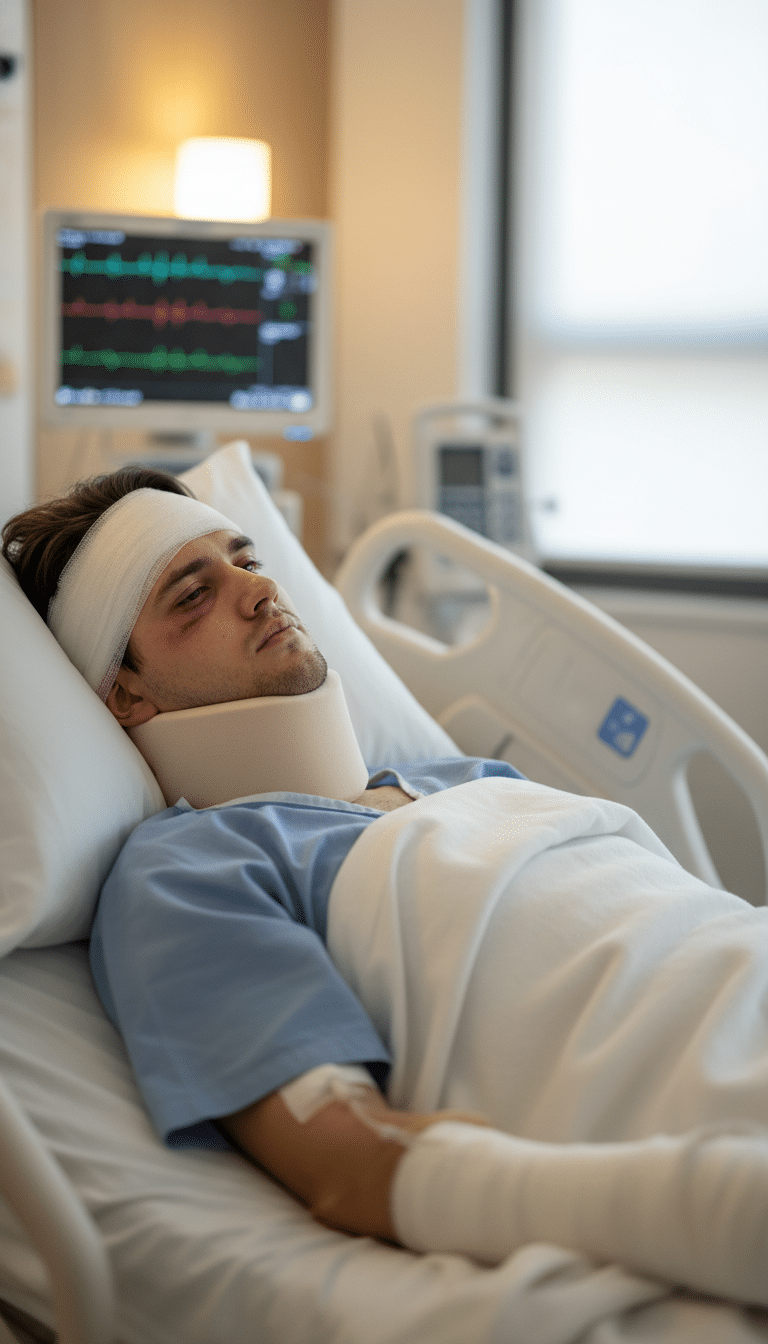
Negligent Security Legal Counsel in Broken Arrow, OK | McKay Law
Understanding Negligent Security Claims
Property owners must take reasonable steps to prevent foreseeable crime. When poor security results in customer or visitor injuries, legal liability can follow. These are negligent security cases. These cases often involve apartments, hotels, retail, and other commercial properties where inadequate security created the conditions for crime. McKay Law advocates for negligent security victims in Broken Arrow and throughout Oklahoma.
Common Property Types
- Apartment complexes
- Lodging
- Shopping centers and malls
- Parking
- Convenience stores and gas stations
- Bars
- Restaurants
- ATM locations
- Banks and financial institutions
- Medical facilities
- Commercial offices
- Entertainment venues
- Public transit and bus stops
- Casinos
- College and school campuses
- Self-storage facilities
- Churches and religious institutions
Common Criminal Acts
- Beatings and assaults
- Sexual assault and rape
- Theft with force or threats
- Carjacking
- Mass shooting incidents
- Firearm assaults
- Knife and edged weapon attacks
- Murder
- Domestic violence
- Drug-related criminal acts
- Gang-related criminal acts
- Hate crimes
- Kidnapping
What Makes Security Inadequate
- Poor lighting
- Broken or defective locks
- Camera failures
- Lack of security guards
- Untrained or inadequate security guards
- Lack of fencing or barriers
- Access failures
- Unmonitored cameras
- Ignoring known risks
- Not warning of known dangers
- Inadequate hiring practices for tenants
- Not removing dangerous tenants
- Poor emergency response
Inadequate Security Standards
Whether security is “adequate” depends on the circumstances:
- Foreseeability of crime
- The nature of the property and surrounding area
- The level of crime in the surrounding area
- Crime type
- Standards for similar businesses
- Cost-effectiveness of additional security measures
Foreseeability of Crime
For these cases to succeed, you must establish that the crime was foreseeable. This can be shown through:
- Prior crime statistics at the property
- Neighborhood crime
- Prior complaints
- Prior incidents
- Industry standards
- Specific threats
- Visible signs of crime (graffiti, drug activity, etc.)
Typical Injuries
- Bullet wounds
- Stab wounds
- Traumatic brain injuries
- Paralysis from violence
- Broken bones
- Damage to internal organs
- Permanent visible damage
- Sexual assault injuries
- Severe psychological trauma
- Sexually transmitted diseases
- Pregnancy from sexual violence
- Permanent disability
- Wrongful death
Who Pays
- Owners of the property
- Apartment complex owners
- Lodging operators
- Retail center operators
- Management firms
- Security firms hired by the property
- Restaurant and bar operators
- Public agencies
- Schools
- Employers
Building the Evidence
- A Duty of Care — The defendant owed a duty to provide reasonable security.
- Breach — Security failures occurred.
- That the Crime Was Foreseeable — The crime was foreseeable based on the circumstances.
- A Direct Link — Inadequate security led to the harm.
- Quantifiable Losses — Economic and non-economic harm.
What Strengthens a Negligent Security Case
- Scene photos
- Video evidence
- Crime reports
- Crime statistics from the property and surrounding area
- Past incidents at the location
- Prior complaints
- Security policies
- Records of security staff and training
- Maintenance history
- Expert testimony on security standards
- Witness statements
- Industry standards
- Medical records
Recovery for Victims
- Past and future medical expenses
- Long-term care and rehabilitation
- Mental health treatment
- Lost income and loss of earning power
- Physical and emotional suffering
- The toll on daily life
- Loss of consortium
- Lasting disability
- Disfigurement
- Survivor damages in fatal cases
- Punitive damages where conduct was reckless or grossly negligent
Sexual Assault Cases
Sexual assault cases have special features:
- Confidential proceedings often possible
- Privacy concerns
- Major damages
- Severe psychological injury damages
- Ongoing medical and mental health care
- Coordination with criminal cases
- Special trauma-informed representation
Filing Deadline
Oklahoma generally gives two years from the date of the incident to file (Okla. Stat. tit. 12, § 95). Different rules may apply for sexual assault cases. For children, the statute may be tolled.
Our Process
We act fast to preserve camera footage, build foreseeability evidence, obtain prior complaints, engage expert security consultants, work with criminal proceedings, protect client privacy in sensitive cases, coordinate with treating physicians and mental health professionals, and treat each matter as trial-ready.
FAQ
Q: I was assaulted at an apartment complex — can I file a claim?
A: Possibly — depends on foreseeability and security failures.
Q: What does it cost to hire McKay Law?
A: Zero upfront. No recovery, no fee.
Q: I was attacked in a parking lot — can the property owner be sued?
A: Yes, if the attack was foreseeable and security was inadequate.
Q: I was sexually assaulted at a hotel — what’s my claim?
A: You may have a strong claim. These cases often involve significant damages.
Q: What does “foreseeable” mean?
A: Reasonably predictable. We prove foreseeability through investigation.
Q: My family member was killed in a violent crime — what can we do?
A: Yes — wrongful death claims are available against negligent property owners.
Q: Should I give the property owner’s insurance a recorded statement?
A: Never. Refer them to your attorney.
Q: Should I preserve evidence at the scene?
A: Yes — when possible. Visual evidence of inadequate security is important.
Q: What is the deadline to file?
A: 2 years from the date of the incident (Okla. Stat. tit. 12, § 95). For minors, the deadline may be tolled until age 18.
Negligent Security Claims in Broken Arrow, OK
These cases combine premises liability with criminal conduct by third parties. The case targets the property owner, not the attacker. The case is against the property owner who failed to provide adequate security. This is its own area of law. A Broken Arrow negligent security attorney knows the specific legal requirements these cases involve.
Why These Cases Are Legally Distinctive
Holding the Property Owner Responsible for Criminal Acts of Others
The defining legal question asks whether owners are responsible for third-party crime.
The general principle is no liability.
Multiple exceptions apply.
The Foreseeability Doctrine
This is the foundational doctrine.
Owner liability attaches when foreseeable criminal conduct.
Foreseeability is typically established through evidence of prior similar incidents.
Special Relationships
Some relationships create heightened duties for security:
- Property owners to tenants
- Innkeepers to guests
- Common carrier-passenger relationships
- Businesses to customers
How Foreseeability Gets Established
Prior Crime on the Property
Previous criminal activity on the property establishes foreseeability directly.
Documentation of prior incidents should include:
- Crimes documented at the property
- Police incident reports
- Owner-received complaints
- Internal security documentation
Crime in the Surrounding Area
Neighborhood crime data can establish foreseeability when the surrounding area has documented crime.
Sources for area crime data include:
- Law enforcement statistics
- Crime data services
- Local crime records
Property Owner’s Knowledge
Evidence the owner knew about crime can establish foreseeability:
- Owner-received documentation
- Resident complaints
- Owner statements
- Insurance documents
Inherent Nature of the Property
Property types with elevated risk:
- Bars and nightclubs
- Late-hour retail
- Multi-family housing
- Crime-area hotels
- Parking lots and parking garages
- ATM and bank locations
- Convenience stores in high-risk areas
Types of Negligent Security Cases
Robbery and Theft
Theft and robbery cases.
Assault and Battery
Physical assault in parking lots, garages, building common areas.
Sexual Assault
Sexual assault cases.
These are among the most devastating negligent security cases.
Shooting Incidents
Shooting cases create distinct case scenarios.
Mass Shooting and Active Shooter Incidents
Mass casualty events generate negligent security claims.
Apartment Complex Violence
Apartment-related crime is a major negligent security category.
Hotel Crime
Lodging-related crime can support negligent security claims.
Parking Lot and Garage Incidents
Parking lot and garage crime is a recurring case category.
Workplace Violence
Employer-related workplace violence.
What Adequate Security Actually Looks Like
Adequacy varies by property type.
Elements of adequate security typically include:
Lighting
Lighting infrastructure.
Insufficient lighting is a frequent contributing cause.
Surveillance Cameras
Functional surveillance camera systems.
Cameras must be:
- Strategically placed
- Working
- Maintained
- Watched where the standard requires
Security Personnel
On-site security, particularly for risk-elevated properties.
Access Control
Entry restrictions.
Locking Systems
Working locks.
Communication Systems
Communication infrastructure, including alarm systems.
Landscaping and Maintenance
Maintenance that addresses security.
Policies and Training
Security procedures, staff training on security procedures, Crisis protocols.
Common Security Failures
Inadequate Lighting
Inadequate lighting for criminals.
Broken or Non-Functional Cameras
Non-functional cameras provide no security benefit.
Inadequate Security Personnel
Inadequate guards considering risk.
Failure to Implement Recommended Security
Implementation failures may face punitive damages.
Failed Access Controls
Inadequate access control systems.
Untrained Security Staff
Untrained security personnel.
Ignored Complaints
Disregarded complaints carry greater exposure.
Damages in Negligent Security Cases
Negligent security damages can be substantial include:
Medical Costs
Trauma center care, Surgery expenses, Inpatient care, Physical and other rehabilitation, ongoing medical care, Psychological care.
Lost Wages and Earning Capacity
Earnings affected by injury and diminished earning capacity.
Pain and Suffering
Pain damages.
Mental Health Damages
PTSD is common after negligent security incidents can be substantial.
Loss of Enjoyment of Life
Loss of enjoyment.
Loss of Consortium
Effects on intimate relationships.
Wrongful Death
For fatal cases.
Punitive Damages
Exemplary damages are particularly common, especially where:
- Owner knowledge with failure to act
- Disregarded recommendations
- Security personnel were complicit or grossly negligent
- Egregious conduct
Who Can Be Held Liable?
Property Owner
The property owner is the primary defendant.
Property Management Company
Property management companies can share liability.
Security Company
Security service providers carry direct liability for inadequate security.
Premises Owners and Operators
Different parties may own and operate the property can share liability.
Franchisors
For franchised establishments (hotels, restaurants, etc.), brand owners may share fault.
Common Insurance Defenses
“The Crime Wasn’t Foreseeable”
Defense’s main argument.
Defense argues the criminal act was unforeseeable. Documentation of prior crime defeats this defense.
“We Provided Reasonable Security”
Security adequacy defenses.
“Security Failures Didn’t Cause the Crime”
“Better security wouldn’t have prevented this”.
“The Plaintiff Was at Fault”
“You contributed to your own harm”.
“The Criminal Is Solely Responsible”
Sole-criminal-responsibility arguments. This argument generally fails because liability can rest on the property owner regardless of the criminal’s responsibility.
Critical Steps After a Negligent Security Incident
Report to Law Enforcement
Insist on law enforcement involvement. Police reports are essential.
Get Medical Attention Immediately
Quick medical attention matters significantly.
Document Everything About the Property
Comprehensive property documentation.
Note Security Failures Observed
Specific security failures observed before, during, or after the incident.
Photograph the Property
Visual evidence of every relevant detail.
Identify Witnesses
Bystanders.
Don’t Wait to Investigate Crime History
Crime history can be researched.
Get Mental Health Treatment
Psychological treatment require professional care.
Don’t Speak With Property Owner Insurers Without Counsel
Property owner insurers contact quickly. Statements without counsel can permanently damage the case.
Attorney Costs
Negligent security attorneys charge no upfront fees. Specialty expertise costs paid by counsel.
Move Quickly
Evidence has preservation windows.
Camera evidence has limited retention.
Personnel changes requiring quick action.
Property owners often change security after incidents, providing evidence of prior inadequacy.
The legal time limit sets a hard cutoff.
Connecting with a Broken Arrow negligent security attorney quickly positions the case for the substantial recovery these cases can produce when properly built.
McKay Law Is Your Broken Arrow Advocate After A Negligent Security Accident
When a attack happens in a parking lot, hotel hallway, apartment complex, or store, the criminal is rarely the only one responsible. Property owners have a legal duty to keep reasonable security for everyone they invite onto their premises — and when they skip that duty, foreseeable crimes happen and innocent people get hurt. Negligent security claims emerge when a property had a track record of prior crimes that should have prompted action, when known hazards like broken locks, dead security cameras, burned-out parking lot lights, missing security personnel, and unsecured access points were left unaddressed, and when reasonable measures — proper lighting, working surveillance, trained guards, access controls — would have stopped the attack. At McKay Law, we manage these cases by uncovering the property’s crime history, prior complaints to management, security audits, police call records, and the owner’s response — or non-response — to known risks. We consult security experts, crime prevention specialists, and former law enforcement to establish exactly what a reasonable owner would have done and why this owner didn’t measure up.
Apartment complexes, hotels, parking garages, shopping centers, bars and nightclubs, ATMs, gas stations, college campuses, and event venues all carry serious legal responsibility for the safety of the people they invite onto their property. When you join the McKay Law family, we pursue compensation that captures the full scope of what was taken from you — physical and emotional. We pursue complete compensation for emergency care, surgeries, hospitalization, ongoing rehabilitation, future medical needs, prescription costs, counseling and psychiatric care for trauma and PTSD, lost wages, reduced future income, the profound fear, anxiety, and emotional aftermath of being assaulted in a place that was supposed to be safe — and in the most sorrowful cases, the wrongful death of a loved one. Contact us without waiting at (866) 679-9651 or reach out online to book your free, confidential consultation and put a firm that regards crimes against innocent victims with the urgency they deserve fighting for you.
Video Testimonials






