

“Labor Omnia Vincit” McKay Law
Skiatook, OK Nerve Damage Injury Lawyer
Nerve damage are among the most challenging injuries to treat in Skiatook, OK. When someone else’s negligence causes nerve damage, you may be entitled to substantial damages. McKay Law advocates for nerve damage injury victims throughout OK. The nervous system controls movement, sensation, and organ function—when nerve injuries occur, the impact extends far beyond the injury site. Common types of nerve damage include damage to motor nerves controlling movement, sensory nerves controlling feeling, and autonomic nerves controlling organ function. Common signs of nerve injuries sensory disturbances, motor weakness, chronic pain conditions, and loss of function. These injuries typically result from car accidents, motorcycle crashes, truck wrecks, slip-and-falls, workplace accidents, surgical errors, defective products, sports collisions, and crush injuries. CRPS involves severe, chronic, often disabling pain—that can spread throughout the body. Care for nerve injuries can be complex, expensive, and sometimes ineffective—and many patients require lifetime medical management. Despite excellent treatment, some patients face lifelong limitations—making accurate documentation and long-term cost projections essential. Our Skiatook nerve damage injury attorneys understand the full impact of nerve injuries—including how these injuries affect work, daily activities, and quality of life. We work with neurologists, neurosurgeons, pain management specialists, physical therapists, and life care planners to demonstrate the lifetime cost of treatment. Objective medical evidence matters—including nerve conduction studies (NCS), electromyography (EMG), MRI imaging, and specialist evaluations. We recover all available damages including hospital costs, ongoing treatment, lifetime medications, lost income, suffering, and the lasting impact on your daily activities. Nerve injuries often end careers in physical occupations—making vocational evaluation essential. Insurance companies often try to minimize nerve damage claims—arguing the injury isn’t real because nerve damage is often invisible. We don’t let them. All nerve injury claims is handled on a contingency basis—zero upfront cost. Don’t settle before you know the full extent of your future needs—nerve damage often has consequences that emerge over time. Call McKay Law now for a no-cost case review with a Skiatook, OK nerve injury attorney who will stand up to the insurance companies on your behalf.
Settlements Won
0
+
Million Dollars Won
0
+
Google 5 Star Reviews
0
+
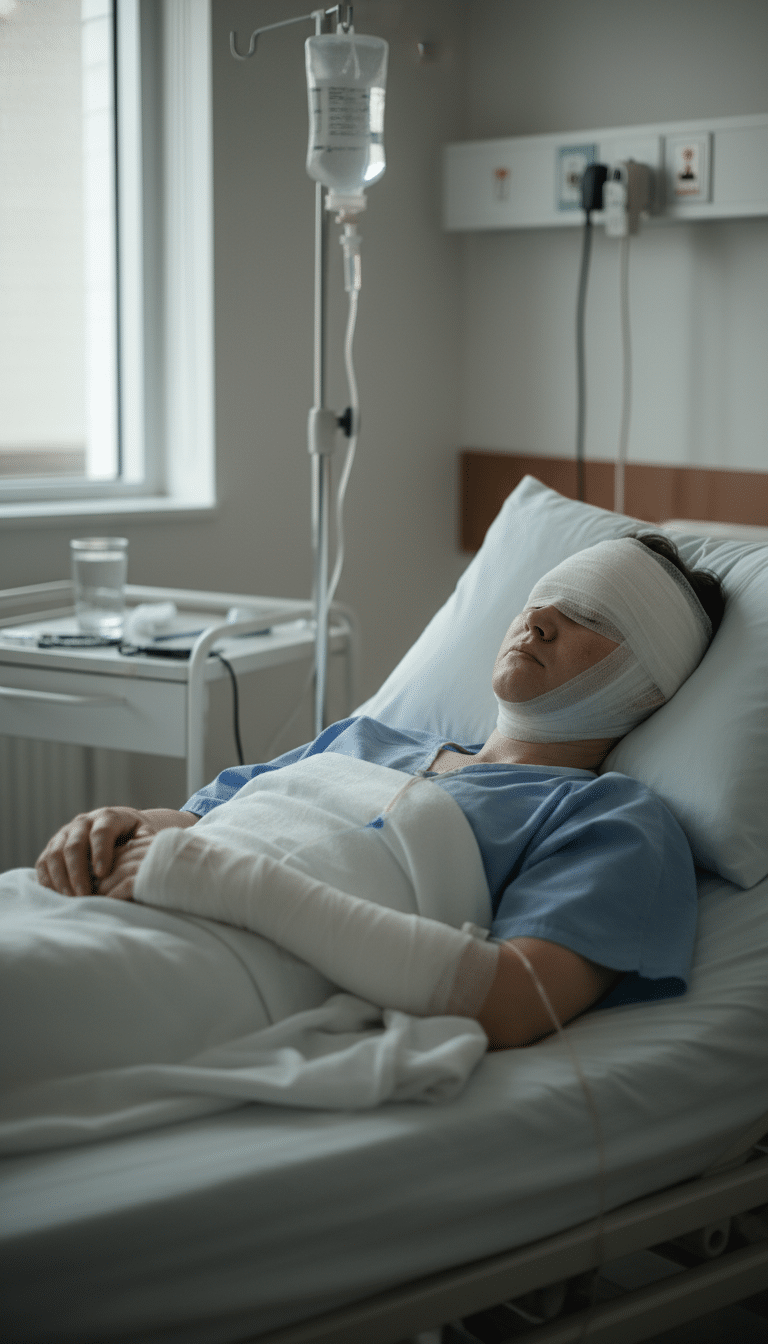
Nerve Damage Injury Lawyer in Skiatook, OK | McKay Law
The Basics of Nerve Damage Cases
Nerve damage produces some of the most devastating long-term consequences. Nerves control everything from movement to internal organ function, and damage to them can cause chronic pain, paralysis, loss of sensation, and loss of function. Unlike most injuries, nerves often don’t fully heal. Many nerve injuries result in lifetime disability. Our firm fights for nerve damage injury victims in Skiatook and in surrounding communities.
How Nerves Work
The nervous system has two parts:
- Central system — brain and spinal cord
- Peripheral Nervous System (PNS) — nerves throughout the body
There are several ways nerves can be injured:
- Pressure-related damage
- Stretch damage
- Severing — nerves cut
- Crushing — nerves crushed
Common Causes of Nerve Damage
- Car, truck, motorcycle, and rideshare accidents
- Falls on unsafe property
- Industrial and construction incidents
- Equipment failures
- Cut injuries
- Crushing trauma
- Compression injuries
- Medical malpractice
- Chemical-related nerve damage
- Electrocution
- Assault and intentional acts
- Injuries during childbirth
- Dog bites and animal attacks
- Construction injuries
Nerve Injury Types
- Shoulder nerve damage — nerves running from neck through shoulder to arm
- Median nerve compression — median nerve damage
- Sciatica — damage to the sciatic nerve running through the lower back and leg
- Peripheral nerve damage — damage to peripheral nerves
- Complex regional pain syndrome (CRPS)/RSD — chronic pain syndrome
- Facial nerve damage — facial nerve pain
- Bell’s palsy from trauma — facial nerve injury
- Spinal cord injuries — spinal cord injuries
- Pinched nerves — nerve compression syndromes
- Cut nerves — nerves cut by trauma
- Crushed nerves — nerves crushed by trauma
Signs of Nerve Damage
- Numb sensation
- Pins and needles
- Burning sensation
- Shooting pain
- Persistent pain
- Loss of strength
- Muscle paralysis
- Coordination loss
- Touch sensitivity
- Cold or hot sensation changes
- Diminished or absent reflexes
- Walking problems
- Difficulty grasping objects
- Loss of bowel or bladder control
- Abnormal sweating
- Skin discoloration
The Unique Severity
- Permanent damage — many nerve injuries are permanent
- Slow healing — nerve recovery is slow
- Persistent pain — chronic pain frequently develops
- Loss of function — loss of function is common
- Quality of life impact — nerve injuries affect daily life dramatically
- Hard to treat — treatments often fail to fully restore function
- Psychological impact — chronic pain leads to depression and anxiety
RSD/CRPS Damages
CRPS, also known as RSD is a particularly devastating nerve condition that develops after injury. CRPS symptoms include:
- Continuous severe pain
- Sensitivity to touch
- Visible skin changes
- Lasting swelling
- Stiffness
- Mobility loss
- Permanent disability common
CRPS cases have major case value.
Common Treatments
- Imaging
- EMG and nerve conduction studies
- Pain control
- PT
- Occupational therapy
- Pain and nerve medication regimens
- Targeted nerve injections
- Spinal cord stimulators
- Surgery to repair nerves
- Nerve grafts
- Therapeutic botox injections
- Psychological treatment for pain
- Lifetime pain management
Why Insurance Companies Devalue Nerve Damage Claims
- Subjectivity arguments
- Disputing damage
- Pointing to prior conditions
- Disputing CRPS diagnosis
- Defense IMEs
- Trying to settle before full extent is known
- Social media surveillance
Who Pays
- Negligent drivers
- Landowners
- Workplaces
- Product manufacturers
- Medical providers in malpractice cases
- Sports or recreational facility operators
- Those who intentionally caused harm
Building the Evidence
- Legal Obligation — The defendant owed a legal duty.
- Violation of That Duty — The duty was breached.
- Causation — The negligence caused your nerve damage.
- Quantifiable Losses — The financial and personal toll.
What Compensation Looks Like
- Healthcare costs
- Chronic pain treatment costs
- Pre- and post-operative care
- PT/OT costs
- Medication expenses
- Lost income and diminished earning ability, when the injury limits future work
- Pain and suffering
- Diminished quality of life
- Loss of companionship
- Permanent impairment
- Mental health treatment costs
- Lifetime medical needs
- Punitive damages in cases of gross negligence
Oklahoma’s Statute of Limitations
You typically have 2 years from the date of the incident to file (Okla. Stat. tit. 12, § 95). Nerve damage can develop slowly, so discovery rule may apply.
What Working With Us Looks Like
We coordinate with the medical team to establish the lasting impact, pursue EMG and nerve conduction studies, fight back against pre-existing condition claims, account for the lasting damage, document chronic pain and CRPS where applicable, coordinate with mental health providers for pain-related psychological damage, and treat each matter as trial-ready.
Common Questions
Q: I have nerve damage that won’t heal — what’s my case worth?
A: Significant. Permanent nerve damage involves major damages including lifetime medical care, lost earning capacity, and pain and suffering.
Q: What does it cost to hire McKay Law?
A: Nothing. No recovery, no fee.
Q: I developed CRPS/RSD after my accident — what damages are available?
A: Substantial damages. CRPS produces substantial damages.
Q: My nerve damage is slowly getting worse — can I still recover?
A: Definitely. Progressive nerve damage from past accidents is fully compensable.
Q: My carpal tunnel started after a workplace incident — what’s my claim?
A: Yes, in many cases. Workplace nerve damage is recoverable through workers’ comp; third-party claims may also apply.
Q: Insurance says my nerve pain is “subjective” and not real — what do I do?
A: Don’t accept that. Objective testing like EMG and nerve conduction studies, along with treating doctor opinions, establish real nerve damage.
Q: Should I give the insurance company a recorded statement?
A: No. Call us first.
Q: What is the deadline to file?
A: Two years from the date of the incident (Okla. Stat. tit. 12, § 95). Discovery rule may extend deadlines for delayed-onset nerve damage.
Q: Will I need future surgery for my nerve damage?
A: Sometimes. Future surgery is sometimes required.
Recovering Damages for Nerve Injuries in Skiatook, OK
Nerve damage cases face a fundamental measurement problem. Nerve symptoms aren’t visible on imaging. Subjective symptoms dominate. Nerve damage manifests in ways that don’t translate to simple measurement. These cases face proof challenges that don’t apply to objectively visible injuries. A Skiatook nerve damage attorney understands the distinctive evidence framework these cases require.
Why Nerve Damage Cases Are Distinctive
The Subjective Symptom Problem
Symptoms can’t be objectively verified easily. Nerve damage manifestations are reported by the patient.
Without visible damage, carriers question the symptoms.
Imaging Often Doesn’t Show Nerve Damage
Standard imaging like X-rays and MRIs frequently miss nerve damage.
Specialized testing provides objective nerve damage evidence. Not every case includes specialized testing.
Symptoms May Develop Over Time
Nerve damage may not be immediately apparent.
This produces temporal causation challenges.
Permanent Nerve Damage Often Cannot Be Repaired
Following nerve injury, recovery is often incomplete.
Damaged nerves may not fully recover.
Categories of Nerve Damage
Peripheral Nerve Damage
Damage to nerves outside the brain and spinal cord represents most nerve damage cases.
Brachial Plexus Injuries
Arm nerve network may be damaged by trauma.
These injuries vary from mild stretching to complete avulsion.
Carpal Tunnel Syndrome
Carpal tunnel syndrome develops from various causes.
Cubital Tunnel Syndrome
Compression of the ulnar nerve at the elbow.
Tarsal Tunnel Syndrome
Tarsal tunnel syndrome.
Sciatica
Sciatic nerve involvement frequently relates to spinal injuries.
Spinal Nerve Damage
Damage to nerve roots often results from spinal injuries.
Radiculopathy
Nerve root irritation creates radiating symptoms.
Cranial Nerve Damage
Brain-stem nerve damage can occur with head trauma.
Cranial nerve injuries include:
- Facial nerve injury
- Optic nerve injury
- Trigeminal nerve damage (facial pain or numbness)
- Other nerve injuries
Autonomic Nerve Damage
Autonomic damage. Autonomic nerve damage impacts heart rate.
Complex Regional Pain Syndrome (CRPS)
Complex regional pain syndrome is among the most challenging pain conditions.
CRPS can develop after injuries and causes:
- Severe pain
- Visible color alterations
- Temperature variations
- Swelling
- Skin changes
- Hair and nail differences
- Motion limitations
This condition produces severe pain.
Common Causes of Nerve Damage
Motor Vehicle Accidents
Auto accidents commonly cause nerve damage.
Workplace Injuries
Lifting injuries, falls at work, repetitive strain generate nerve cases.
Slip-and-Fall Injuries
Falls can cause nerve damage.
Medical Negligence
Medical procedures gone wrong drives many nerve injury cases.
Common medical malpractice nerve damage scenarios include:
- Operative nerve injury
- Anesthesia nerve damage
- Failure to diagnose conditions causing nerve damage
- Medication-related nerve damage
Defective Products
Product-related nerve damage.
Repetitive Trauma
Repetitive stress injuries can cause cumulative nerve damage.
How These Cases Get Built
Comprehensive Medical Evaluation
Comprehensive neurological assessment by a qualified neurologist or neurosurgeon.
Specialized Testing
Electromyography (EMG)
Electromyographic testing evaluates muscle electrical signals.
Nerve Conduction Studies
Nerve conduction studies (NCS) test nerve signal transmission.
MRI
MRI imaging document underlying causes of nerve injury.
CT Scans
CT scans reveal structural issues.
Treating Physician Testimony
Treating physicians support the case medically.
Expert Medical Testimony
Independent expert testimony establishes causation.
Functional Capacity Documentation
Real-world impact documentation becomes critical.
Patient Pain Journals
Pain tracking build the damages narrative.
Mental Health Treatment Records
Chronic nerve pain frequently causes mental health complications. Psychological care records support the comprehensive damages case.
Damages in Nerve Damage Cases
Recoverable losses can include include:
Medical Costs
- Diagnostic costs
- Specialty testing (EMG, NCS, imaging)
- Surgical interventions (if applicable)
- Pain management treatment
- Pharmaceutical costs
- Physical rehabilitation
- Occupational therapy
- Pain specialists
- Mental health treatment
- Long-term medical needs
Lost Wages and Earning Capacity
Career impact. Income impact claims are significant.
Pain and Suffering
Nerve pain is among the most difficult pain to bear.
Long-term pain damages generate major damages.
Loss of Enjoyment of Life
Effects on daily activities and quality of life.
Mental Health Damages
Depression, anxiety, and other mental health consequences are recoverable.
Loss of Consortium
Spousal damages.
Wrongful Death
In fatal nerve damage cases.
Punitive Damages
Punitive damages in appropriate cases may apply.
Long-Term Considerations
Permanent Nature of Nerve Damage
Many nerve injuries are permanent. Even with treatment, permanent symptoms are common.
Future Medical Care
Lifetime medical care is common.
Future medical care may involve:
- Lifetime pain medication
- Periodic specialist consultations
- Continuing therapy
- Procedural pain management interventions
- Ongoing psychological care
Permanent Career Impact
Many patients can’t return to their pre-injury careers, particularly for physically demanding work.
Quality of Life Impact
Daily life with nerve damage drives significant non-economic damages.
Common Insurance Defenses
“It’s All in Your Head”
Defense argues nerve symptoms are exaggerated or fabricated.
Counter requires specialized testing showing objective findings.
“Pre-Existing Conditions”
Prior medical issues. Aggravation is compensable.
“Causation Problems”
Causation challenges.
“The Plaintiff Doesn’t Need This Much Treatment”
“You don’t need all this treatment”.
“Functional Recovery Will Occur”
“It will get better”.
“The Plaintiff Was at Fault”
Plaintiff fault arguments.
Critical Steps After an Incident That May Cause Nerve Damage
Get Specialized Medical Evaluation
Neurological consultation is critical.
Get Specialized Testing
Neurological testing provides documentation.
Document All Symptoms in Real Time
Track all symptoms contemporaneously.
Track Functional Impact
Track functional changes.
Get Mental Health Care
Pain affects psychology. Psychological care matters significantly.
Don’t Sign Releases Without Counsel
Long-term consequences are typical. Quick settlement typically leaves money on the table.
Attorney Costs
Lawyers experienced with nerve damage claims work on contingency. Specialty expertise is essential and expensive reimbursed from the recovery.
Move Quickly
These cases need early documentation.
Symptoms develop and document themselves over time.
Neurological testing provides documentation.
Future medical care projections take time to develop.
Filing deadlines sets a hard cutoff.
Connecting with a Skiatook nerve damage attorney quickly positions the case for the substantial recovery these injuries support.
McKay Law Is Your Skiatook Advocate After A Nerve Damage Injury
Nerves are the wiring that tie every part of your body to your brain — and when that wiring is severed in an accident, the consequences are profoundly disruptive. Nerve injuries result from car crashes, falls, workplace accidents, dog bites, surgical errors, crush injuries, and any traumatic event that involves sudden force or compression to the spine, limbs, or extremities. The symptoms range from debilitating: burning pain that won’t let up, numbness and tingling that disrupts sleep, muscle weakness that affects basic tasks like gripping a pen or buttoning a shirt, loss of sensation in hands and feet, paralysis of specific muscle groups, and complex regional pain syndrome that can plague a victim for years. At McKay Law, we handle nerve damage cases by teaming up with neurologists, pain management specialists, electromyography experts, and occupational therapists who can capture the precise nerves involved, the extent of the damage, and what daily life now looks like for our client.
Insurance carriers are quick to reduce nerve injury claims because the damage is hidden from most basic imaging studies — but EMG and nerve conduction studies, MRI imaging, and the consistent testimony of treating physicians can reveal the harm in ways adjusters can’t talk their way out of. When you partner with the McKay Law family, we won’t allow those tactics. We fight for full compensation for diagnostic testing, neurological treatment, surgical nerve repair when possible, pain management procedures, ongoing physical and occupational therapy, prescription medications and pain pumps, adaptive equipment, future medical needs, time away from work, lost earning capacity for clients whose careers depend on fine motor control or physical capability, the loss of activities and independence your condition has taken, and the profound pain and suffering that accompanies a nerve injury. Call us today at (866) 679-9651 or get in touch online to set up your free consultation and bring a firm that takes nerve damage as seriously as you do fighting for you.
Video Testimonials






