

“Labor Omnia Vincit” McKay Law
McAlester, OK Structural Defect Accident Lawyer
When construction defects cause injury, the consequences are often catastrophic. In McAlester, OK, McKay Law represents victims injured by construction defects, design flaws, and dangerous building conditions. These incidents are never truly “accidents”—they’re the result of negligence, cut corners, or defective design. When the defect leads to harm, the law provides a path to compensation. Typical structural failure cases include deck collapses at apartment complexes, balcony failures at restaurants and bars, stairway collapses, railing breakaways, and construction-related building failures. These failures are often caused by improper design or engineering, substandard construction materials, code violations, shortcuts during construction, lack of inspection, deferred maintenance, water damage and rot, corrosion, defective products like fasteners and connectors, and improper modifications by property owners. Structural defect cases are more complex than basic property claims—liability often extends across multiple parties. The property owner, general contractor, subcontractor, architect, engineer, building inspector, product manufacturer, materials supplier, and property management company may bear liability for your injuries. Our McAlester construction defect injury attorneys dig deep into every aspect of your case. We partner with construction experts, engineering specialists, and inspection professionals to pinpoint the cause and the culpable parties. We move fast to preserve key proof—the failed structure or components themselves, construction plans and blueprints, building permits and inspection records, maintenance logs, photographs and video, witness statements, and prior complaints. Evidence in structural defect claims disappears fast—the longer you wait, the more evidence is lost forever. Harm caused by building failures are typically severe—TBIs, multiple fractures, life-altering disabilities, permanent disfigurement, and tragic fatalities. Property owners, contractors, manufacturers, and their insurers will work hard to deflect blame—often pointing fingers at each other to avoid accountability. We don’t let them. Every structural defect case is handled on a contingency fee basis—zero upfront cost, period. Recoverable damages include emergency care, long-term medical needs, lost income, pain and suffering, and damages for surviving family members. Don’t let the responsible parties off the hook. Call McKay Law now for a free consultation with a McAlester, OK building collapse attorney who will fight to hold every responsible party accountable.
Settlements Won
0
+
Million Dollars Won
0
+
Google 5 Star Reviews
0
+
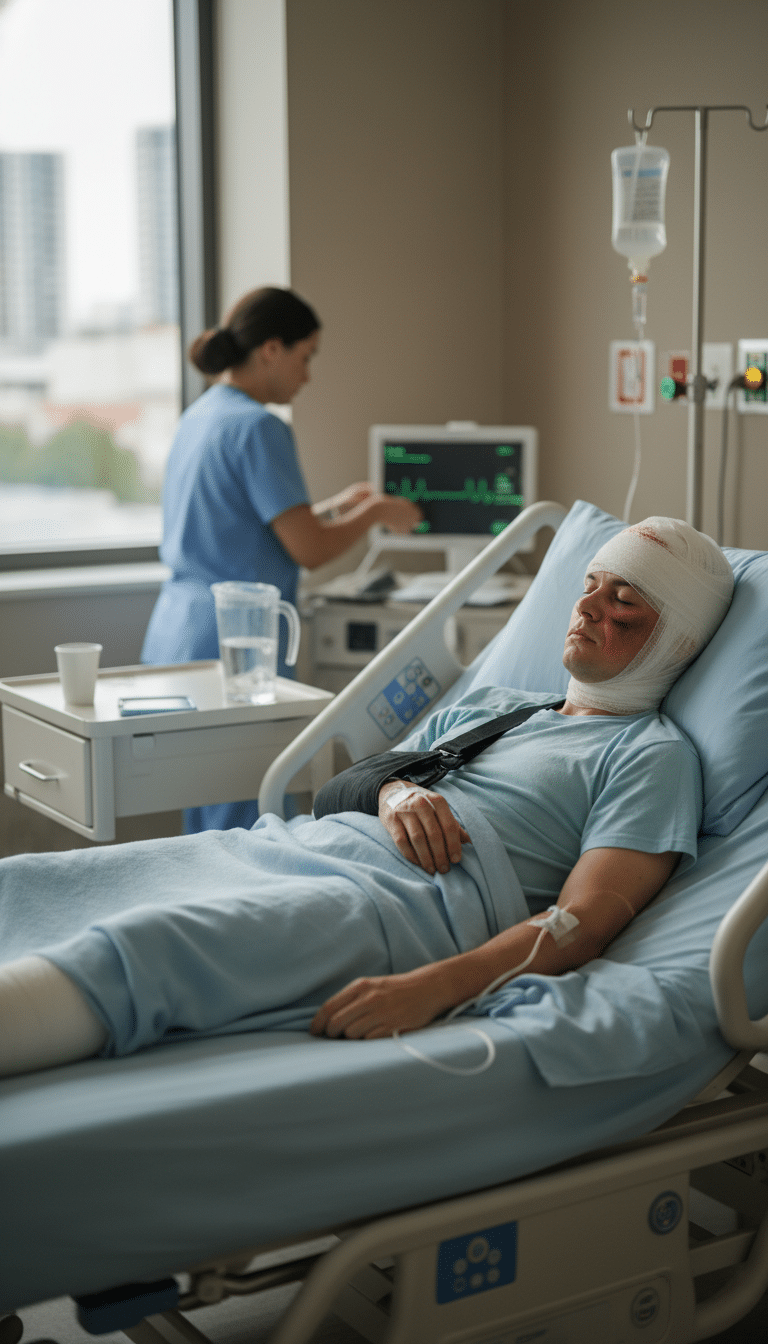
Structural Defect Failure Legal Counsel in McAlester, OK | McKay Law
Understanding Structural Defect Accident Claims
When something that’s supposed to hold you up suddenly doesn’t, the results can be catastrophic. Most structural collapses give victims no chance to react, causing devastating injuries with no time to brace. When negligence in engineering, building, or maintenance played a role, the law gives victims a path to recovery. Our firm fights for structural defect victims in McAlester and in surrounding communities.
Types of Structural Failures
- Deck and balcony failures
- Failing stairways
- Floor failures
- Failing roofs
- Wall and ceiling failures
- Settling and foundation issues
- Defective railings
- Lift and escalator defects
- Failing scaffolding
- Bleacher and grandstand collapses
- Parking structure failures
- Pedestrian bridge collapses
Why Structures Fail
- Defective design and engineering
- Faulty workmanship
- Bad materials
- Building code violations
- Lack of inspection and maintenance
- Water intrusion
- Termite and pest damage
- Rusted metal supports
- Exceeding load capacity
- Aging structures
- Unauthorized modifications
- Failure to comply with engineering specifications
Common Injuries From Structural Defect Accidents
- Brain injuries
- Permanent paralysis
- Crush injuries
- Multiple fractures
- Internal bleeding
- Loss of limbs
- Severe cuts
- Suffocation or asphyxiation
- Mental and emotional trauma
- Wrongful death
Potential Defendants
Multiple parties may share responsibility:
- The property owner
- The property manager
- The general contractor in newer constructions or recent renovations
- Subcontractors whose work caused the failure
- Design professionals responsible for the design
- The material manufacturer
- Code inspectors who failed to identify defects
- Service providers whose poor work led to failure
- A public authority in charge of negligently maintained public structures
Common Locations for Structural Defect Accidents
- Multi-family housing
- Hospitality properties
- Office buildings
- Food service establishments
- Stadiums and arenas
- Schools and universities
- Active construction
- Shopping centers
- Parking structures
- Houses
- Bridges and pedestrian walkways
How Premises Liability Law Applies
Oklahoma premises liability law uses three classifications, with property owners owing the highest duty to invitees. When a building component collapses, the legal duty owed depends on visitor status.
Construction Defect Statute of Repose
Oklahoma has a statute of repose for construction defect claims. Under Okla. Stat. tit. 12, § 109, construction defect claims must be filed within 10 years of substantial completion. This is in addition to the two-year personal injury statute of limitations. The two deadlines together demand prompt legal action.
What You Must Prove
- Duty — A duty of care applied.
- Negligent Conduct — Conduct fell below the standard.
- That the Defect Caused the Failure — The breach led to the collapse and the harm.
- Damages — The full financial and personal toll.
Key Evidence in These Claims
- Scene and damage documentation
- Physical evidence of the structure
- Design documents
- Building permits and inspection records
- Construction contracts and records
- Maintenance and repair records
- Prior complaints or warning signs
- Code requirements at the time of construction
- Expert engineering analysis
- Forensic material analysis
- Witness statements
- Records linking injuries to the failure
What Compensation Looks Like
- Past and future medical expenses
- Ongoing rehabilitation expenses
- Lost wages and diminished earning ability
- Property damage
- Physical and emotional suffering
- Loss of enjoyment of life
- Loss of consortium
- Wrongful death compensation for surviving family
- Punitive damages when warranted by the conduct
Time Limits to Be Aware Of
The deadline in Oklahoma is 2 years from the date of the incident to file a personal injury claim (Okla. Stat. tit. 12, § 95). Construction defect cases have an additional time limit: construction-related claims must be filed within 10 years of substantial completion (Okla. Stat. tit. 12, § 109).
How McKay Law Approaches Structural Defect Cases
We get to work immediately to secure the scene before cleanup destroys evidence, bring in licensed engineering experts, pursue every defendant from owner to manufacturer, obtain building records, coordinate with treating providers to build a complete medical record, and build each file for the courtroom from the start.
FAQ
Q: Who is responsible when a balcony, deck, or staircase collapses?
A: Often multiple parties. The owner, contractor, designer, and materials supplier can all bear responsibility.
Q: What does it cost to hire McKay Law?
A: Nothing. No recovery, no fee.
Q: What if the building was constructed years ago?
A: Time matters. Construction-related claims must usually be filed within 10 years of completion.
Q: Should I give the property owner’s insurance company a recorded statement?
A: Never. Talk to a lawyer first.
Q: Should anyone preserve the failed structure?
A: Yes — immediately. Tell the property owner and insurer in writing not to remove or repair anything until evidence is secured.
Q: How long do structural defect cases take?
A: Often extended. Expect extended timelines given the complexity.
Q: What is the deadline to file?
A: 2 years from the date of the incident (Okla. Stat. tit. 12, § 95), along with a 10-year limit on construction defect claims (Okla. Stat. tit. 12, § 109). Don’t wait — evidence preservation is critical.
Recovering Damages From a Building or Structure Collapse in McAlester, OK
Structural failures happen with little warning. Victims usually suffer catastrophic injuries. These cases involve a chain of potential defendants. A local lawyer experienced with construction defect injuries builds the case through expert analysis.
What Counts as a Structural Defect Accident?
Structural defect cases involve injuries caused by a breakdown somewhere in the structure’s lifecycle of a fixed structure or building component.
Common Failures Behind These Claims
- Elevated platform collapses
- Staircase collapses or step failures
- Falling ceilings
- Handrails giving way
- Floor collapses
- Concrete deck collapses
- Slope failures
- Truss failures
- Scaffold collapses
- Crane and lift failures
Why These Cases Hinge on Expert Investigation
Different from most premises cases, structural defect claims are won and lost on engineering analysis. Without engineering analysis, the defendants will simply blame each other.
The investigation typically involves:
- Forensic structural engineers
- Specialists in the failed material
- Construction standards specialists
- Trade-specific consultants
- Soil and foundation experts where applicable
The Long Chain of Potential Defendants
The liability picture can include many defendants, each potentially responsible for a different aspect of the failure.
The Property Owner
Owners have a duty to maintain their property in safe condition. If they had notice of red flags about the structure, liability attaches.
The Property Manager
If a third-party manager handles operations, the manager can share liability for not catching the developing problem.
The General Contractor
For relatively new structures (within the applicable OK statute of repose), the general contractor who built the structure can face construction defect claims.
Subcontractors
The actual trade that did the failed work — framers, concrete contractors, ironworkers, masons, or others — can be individually responsible.
The Architect or Design Professional
When the failure traces to a design flaw, the engineer of record may be sued for design defect.
Materials Manufacturers
When the failure originates in defective materials, the product manufacturer can face design defect or manufacturing defect claims. Bad rebar, defective trusses, or faulty connectors are common culprits.
Inspectors
Property inspectors who certified the structure can be on the hook when they gave a clean report on a defective structure.
Government Entities
If the structure is government-controlled, public entities can be defendants. Government tort claims follow special procedures that require careful compliance.
Statutes of Repose Add Pressure
Beyond the typical filing deadline, there’s an outer limit on construction-related claims that bars claims after a set number of years from completion. Once the statute of repose runs, the claim is gone — even if injury just happened.
Critical Evidence in Structural Defect Cases
Preservation of the Failed Structure
The collapsed or failed component must be preserved. The natural response is to remove debris and repair. A preservation demand needs to be sent fast.
Building Plans, Permits, and Inspection Records
The building’s record shows what was approved. Building department files often reveal what went wrong.
Maintenance Records
The owner’s maintenance history can reveal what the owner knew.
Photographs and Forensic Documentation
Detailed photography of the failure captures evidence that disappears.
Damages in These Cases
Reflecting how serious these accidents tend to be, damages are often substantial. These claims pursue long-term rehabilitation and life care, past and future income loss, home modifications, non-economic damages, wrongful death in fatal cases, and punitive damages where the conduct was egregious.
Attorney Fees
Structural defect attorneys work on contingency. These cases require significant investment in expert witnesses paid back from the eventual settlement or verdict.
Get Started Immediately
Few claims are as evidence-dependent as these. Critical evidence vanishes within days. Getting a lawyer involved without delay frequently decides the outcome before anyone steps into a courtroom. Both legal deadlines reinforce the need for fast action.
McKay Law Is Your McAlester Advocate After A Structural Defect Accident
Buildings, stairways, balconies, decks, and walkways are supposed to hold up under the weight of everyday life — but when a developer skips steps, a contractor skips the building code, or an owner allows a property fall into disrepair, the outcomes can be horrific. Collapsed balconies, failing handrails, crumbling staircases, falling ceiling fixtures, defective decking, and structurally unsound floors drive thousands of people to the hospital every year with broken bones, spinal injuries, head trauma, and crush injuries. At McKay Law, we investigate exactly what failed and why, working with structural engineers, building code experts, and forensic architects to nail down every defect that caused your injury. We follow responsibility back through the chain of parties involved — the property owner, the property management company, the general contractor, the subcontractors, the architects and engineers who signed off on the design, and the manufacturers of any defective building materials.
These cases happen fast because evidence disappears fast — debris gets cleared, repairs get made, and responsible parties race to make the failure look like an isolated incident rather than a pattern of disregard. When you come into the McKay Law family, we move immediately to preserve the scene, secure inspection records, obtain permit histories, and lock down the evidence before anyone has a chance to clean it up. We pursue compensation for emergency response and trauma care, surgeries, hospitalization, ongoing rehabilitation, future medical needs, mobility aids and home modifications, lost paychecks, diminished earning capacity, and the physical and emotional suffering that comes with surviving a structural failure that should have never happened. Call us right away at (866) 679-9651 or reach out online to arrange your free consultation and bring a firm that knows how to take on builders, owners, and their insurers fighting for you.
Video Testimonials






