

“Labor Omnia Vincit” McKay Law
Purcell, OK Multi-Car Accident Lawyer
Multi-vehicle pileups are particularly chaotic and dangerous in Purcell, OK. When one collision triggers a chain reaction, the legal challenges grow exponentially. McKay Law advocates for multi-car accident victims throughout OK. These crashes are fundamentally different from two-car wrecks—each driver pointing fingers while insurers fight over who pays. These crashes typically result from sudden stops triggering chain rear-end collisions, distracted driving, speeding in heavy traffic, drunk or drugged driving, poor weather like fog or ice, tailgating, and initial accidents that block traffic. Common types include chain reactions in heavy traffic and multi-car intersection wrecks. Determining fault demands experienced legal work—with liability potentially shared across several parties. Our Purcell multi-car accident attorneys move fast to preserve evidence—the proof needed to establish exactly what happened and who’s responsible. Complex pileups demand expert analysis to recreate the chronology of the crash. Liable parties may include every driver and entity whose negligence contributed to your injuries. Pileups raise complex insurance questions—multiple policies may apply, total damages may exceed available coverage, and insurers often dispute their share. Victims often suffer TBIs, multiple fractures, paralysis, and fatalities. We pursue full compensation including hospital costs, ongoing treatment, missed income, suffering, and survivor damages. Each defendant’s insurer will try to minimize their share—you deserve representation that won’t be overwhelmed by complexity. Every multi-car accident case is handled on a contingency fee basis—no fees unless we recover. Call McKay Law now for a free consultation with a Purcell, OK multi-vehicle crash attorney who will hold every negligent driver and entity accountable.
Settlements Won
0
+
Million Dollars Won
0
+
Google 5 Star Reviews
0
+
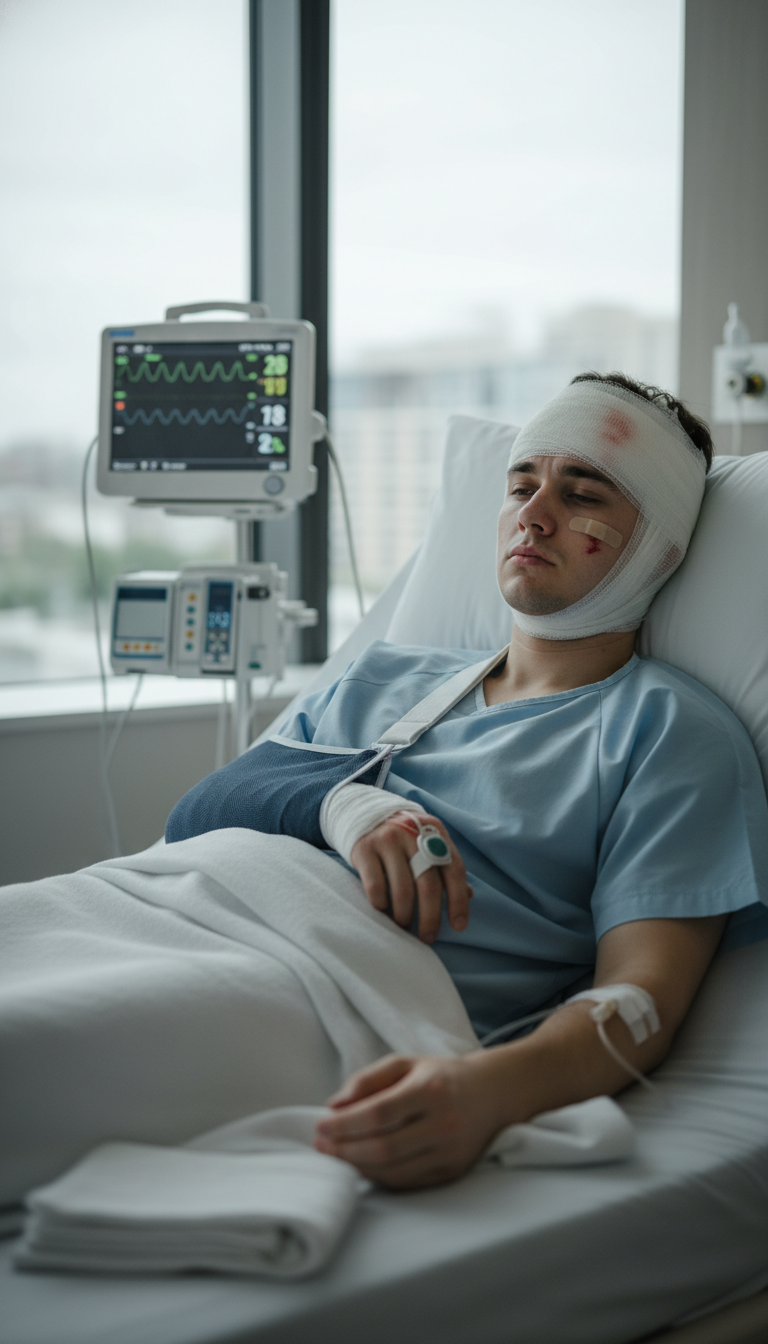
Multi-Car Wreck Lawyer in Purcell, OK | McKay Law
What Is a Multi-Car Accident Claim?
Multi-vehicle crashes involve three or more cars, typically creating chain-reaction collisions. These cases are especially complicated because liability is often divided, coverage from multiple insurers must be coordinated, and figuring out causation requires comprehensive investigation. Common locations: highways in traffic, weather-related pileups, and high-speed roads. Our firm fights for multi-car accident victims in Purcell and in surrounding communities.
How These Wrecks Occur
- Driver inattention
- Excessive speed
- Following too closely
- Unsafe lane changes
- Drunk or impaired driving
- Drowsy driving
- Aggressive driving
- Weather conditions
- Limited sight conditions
- Sudden traffic stops
- Work zone traffic
- Mechanical defects
- Potholes, debris, or surface failures
- Failure to use hazard lights
- Secondary crashes
Multi-Car Crash Types
- Domino effect crashes — chain of rear-end impacts
- Multi-vehicle pileups — many vehicles involved, often in fog or low visibility
- Highway pileups — freeway pileups
- Multi-vehicle intersection crashes — multi-vehicle wrecks at intersections
- Bad-weather wrecks — major weather-related crashes
- Construction-related multi-car wrecks — work zone pileups
Typical Multi-Car Crash Injuries
Multi-car crashes produce different injuries based on impact, from minor to catastrophic:
- Soft-tissue neck damage
- Back and spinal cord injuries
- Brain injuries
- Crushing trauma
- Compound fractures
- Damage to internal organs
- Lacerations and facial damage
- Traumatic amputations
- Burn injuries
- Mental and emotional trauma
- Death from catastrophic crashes
Liability in Multi-Vehicle Wrecks
Fault determination is multi-faceted:
- Fault may be divided
- Initial cause may be one driver
- Subsequent crashes may involve multiple drivers
- Comparative fault applies among defendants
- Product liability potential
- Road conditions can contribute
- Weather can be a factor
Shared Fault Among Multiple Parties
Comparative fault under Oklahoma law (Okla. Stat. tit. 23, § 13). For multi-vehicle wrecks:
- Liability divides among defendants
- Your recovery survives unless you bear most of the fault
- Your fault reduces your award
- Each defendant pays their share of the damages
- Multiple insurer coordination required
Building the Case
Comprehensive investigation is essential:
- Police accident reports
- Witness statements from all available witnesses
- Photographs and video
- Surveillance and traffic camera footage
- Vehicle event data recorder data
- Expert crash analysis
- Cell phone records
- Impairment testing of all drivers
- Documentation of conditions
- Road records
Potential Defendants
- Multiple at-fault drivers
- Companies of commercial drivers
- Manufacturers
- Mechanics whose work failed
- Public agencies
- Trucking companies
- Alcohol vendors
What You Must Prove
- Legal Obligation — There were duties owed.
- Breach — Duties were breached.
- That the Conduct Caused the Crash — The breach led to the crashes and harm.
- Concrete Harm — The full financial and personal toll.
What Compensation Looks Like
- Past and future medical expenses
- Lifetime care costs
- Lost wages and reduced earning capacity
- Vehicle and property loss
- Pain and suffering
- Loss of enjoyment of life
- Damages for impact on relationships
- Wrongful death damages for surviving family
- Punitive damages in cases of DUI, gross negligence, or extreme recklessness
Coordinating Multiple Insurance Policies
Multi-car crashes require coordination of multiple insurance policies:
- Each at-fault driver’s auto insurance
- Employer policies for commercial drivers
- UM and UIM coverage
- MedPay and PIP
- Health insurance coordination
- Personal and commercial umbrella coverage
Filing Deadline
Oklahoma generally gives two years from the date of the crash to file (Okla. Stat. tit. 12, § 95). Government cases require notice within one year.
How McKay Law Approaches Multi-Car Cases
We act fast to find every layer of insurance, identify each defendant’s fault share, engage reconstruction specialists, preserve electronic evidence, identify all liable parties, defeat fault apportionment attempts, and build each file for the courtroom.
FAQ
Q: How is fault determined in a multi-car crash?
A: Through comprehensive crash investigation. Multiple evidence sources establish each driver’s fault.
Q: What does it cost to hire McKay Law?
A: Nothing. We only get paid if we win.
Q: I was in the middle of a multi-car pileup — can I recover?
A: Absolutely. Multiple drivers may share fault, and you can recover from each at-fault driver under their insurance.
Q: My damages exceed one driver’s insurance — what then?
A: Multiple defendants and your own UM/UIM coverage may apply.
Q: The other drivers are blaming each other — who pays?
A: We sort this out. Comparative fault analysis will establish each driver’s responsibility.
Q: Should I give the insurance companies recorded statements?
A: Never. Call us first.
Q: What is the deadline to file?
A: Two years from the date of the crash (Okla. Stat. tit. 12, § 95). GTCA notice within 12 months for government defendants.
Compensation After a Multi-Vehicle Crash in Purcell, OK
Multi-car accidents present problems other crashes don’t. It isn’t just the number of vehicles. It’s that fault gets fragmented across multiple parties, each driver has their own insurance company with its own incentives, and the limited insurance available has to be allocated among multiple injured parties. A local attorney experienced with multi-vehicle crashes knows how to navigate the multi-party fault analysis.
Why Multi-Vehicle Crashes Are Their Own Category
Fragmented Fault
Two-car cases have clear fault analysis.
Multiple drivers share fault, often in complex proportions.
Several drivers may contribute to fault, with varying percentages depending on their conduct.
Multiple Insurance Companies
Each driver has their own insurance company.
Multiple insurer involvement creates:
- Cross-insurer fault blaming
- Insurers minimizing their drivers’ fault
- Each insurer trying to allocate maximum fault to other drivers
- Multi-party settlement complexity
Multiple Plaintiffs Competing for Coverage
Multi-vehicle crashes typically involve multiple injured parties.
Each insurance policy has limited coverage. Multiple victims compete for finite coverage.
This results in:
- Coverage division among victims
- Speed-to-settle incentives
- Coverage interpleader cases
- UIM coverage importance
Chain Reactions and Causation Analysis
Pile-ups frequently involve chain reactions.
Causation analysis becomes complex:
- Initial-crash responsibility
- Could later drivers have avoided their crashes with better driving?
- Were there independent intervening events?
Common Types of Multi-Vehicle Crashes
Chain-Reaction Rear-End Crashes
The most common multi-vehicle crash type.
Rear-end chain reactions producing a chain of crashes.
Common patterns include:
- Brake-failure chain reactions
- Initial-crash chain reactions
- Conditions creating multiple crashes
Highway Pile-Ups
Major multi-vehicle highway crashes may include many vehicles.
These frequently occur in:
- Visibility-related pile-ups
- Weather-related pile-ups
- Construction-related crashes
- Highway pile-ups
Intersection Multi-Vehicle Crashes
Intersection crashes often involve multiple vehicles.
Common patterns include one driver running a red light causing a chain reaction.
Multi-Vehicle Crashes Involving Trucks
Crashes involving commercial trucks can be particularly catastrophic.
Multi-Vehicle Crashes in Construction Zones
Construction zone crashes frequently involve multiple vehicles.
The Comparative Fault Analysis
Multi-vehicle crashes turn on comparative fault analysis.
Pure vs. Modified Comparative Fault States
Different states have different rules:
- Plaintiff recovers regardless of fault percentage
- Plaintiff barred if equally or more at fault
- Plaintiff barred if more than half at fault
The applicable fault rules matter to outcomes.
Joint and Several Liability
For cases with multiple defendants can involve joint and several liability.
Under joint and several liability individual defendants are fully responsible, even with limited fault.
Joint and several liability is often modified via tort reform.
Establishing Fault Allocation
Establishing fault percentages takes substantial evidence.
Multiple Defendants Pointing at Each Other
Defendants blame each other.
This produces opportunities for plaintiffs to leverage defendant-on-defendant arguments.
Insurance Considerations
Pro Rata Coverage Sharing
When multiple plaintiffs claim against the same coverage involves division of limited coverage.
Underinsured Motorist Coverage
In these cases, Your own UIM is especially critical.
UIM coverage applies when at-fault parties’ coverage is exhausted.
Stacking of Coverages
Where allowed, policies can be stacked increasing total coverage.
Excess and Umbrella Policies
Umbrella policies on top of auto coverage. These additional policies can substantially increase available recovery.
Interpleader Actions
When multiple plaintiffs claim the same coverage, Insurers can file interpleader. These distribute coverage among plaintiffs.
Who Can Be Held Liable?
Other Drivers
At-fault drivers can each face liability proportional to their fault.
Trucking Companies and Commercial Carriers
For truck-involved cases, employer companies can face vicarious liability.
Vehicle and Component Manufacturers
Product defect cases can implicate manufacturers.
Government Entities
Public infrastructure issues create government liability.
Construction Companies
Construction-related crashes, carry exposure for traffic control inadequacies, work zone design issues, or other construction-related contributions.
Property Owners
Property issues affecting the crash can implicate property owners.
Maintenance Companies
Where vehicle maintenance failures contributed can create separate liability.
Critical Evidence in Multi-Vehicle Cases
Comprehensive Accident Reconstruction
Reconstruction is essential.
Reconstruction examines:
- Crash sequence
- The role of each vehicle
- Crash forces
- Cause-and-effect
Vehicle Data
Multiple vehicles’ EDR data reveal driver actions.
Driver Statements
All drivers’ statements often conflict, requiring careful analysis.
Witness Statements
Multiple witnesses help establish the actual sequence.
Surveillance Footage
Surveillance video can capture the crash.
Police Reports and Investigations
Police investigation document the incident.
Phone Records
Phone records may establish driver inattention.
Common Insurance Defenses
“Other Drivers Caused This”
Cross-blame. This benefits plaintiffs because each defendant’s testimony about others can be used.
“The Plaintiff Was at Fault”
Comparative fault arguments.
“Pre-Existing Conditions”
Prior medical history.
“Insurance Coverage Disputes”
Disputes over which policy applies.
“Limited Coverage” Arguments
Coverage limit arguments pressuring early settlement.
Critical Steps After a Multi-Vehicle Crash
Stay at the Scene Until Police Arrive
Remain at the scene.
Call Police Immediately
Police involvement is critical.
Identify ALL Involved Drivers
Capture all driver info.
Photograph the Entire Scene
Photographs of every vehicle, every angle.
Identify ALL Witnesses
Bystander documentation. Different witnesses may have seen different parts of the sequence.
Don’t Discuss Fault at the Scene
Don’t speculate about cause.
Get Medical Attention Immediately
Same-day medical care protects against later disputes.
Preserve Your Vehicle
Keep the vehicle available for inspection.
Track All Insurance Communications
Multiple insurance companies will contact you. Document every communication.
Get a Police Report
Official documentation is essential.
Don’t Settle With Any Insurer Without Evaluating the Full Picture
Coordination across insurers matters.
Damages Available
Compensation can include:
- Past and future medical expenses
- Earnings affected by injury
- Permanent occupational limitations
- Vehicle repair or replacement
- Loss of enjoyment of life
- Loss of consortium
- Exemplary damages where gross negligence is shown
Attorney Costs
Multi-vehicle accident attorneys earn fees only on recovery. These cases require significant investment in accident reconstruction paid by counsel.
Move Quickly
Time pressure on these cases is real.
Critical case materials requires prompt attention, because of fault analysis complexity.
Insurers act fast in these cases to lock in favorable positions.
Witness recollections require prompt investigation.
The legal time limit continues running.
Connecting with a Purcell multi-car accident attorney quickly coordinates the multi-party response.
McKay Law Is Your Purcell Advocate After A Multi-Car Accident
Multi-vehicle pile-ups transform a single moment of inattention or impaired judgment into chaos sweeping up dozens of innocent drivers, passengers, and bystanders. These wrecks happen on highways during sudden weather changes, at intersections when one driver runs a red light, on rural roads when a chain reaction follows a single rear-end impact, and in tunnels and bridges where vehicles have nowhere to go once the first crash takes place. The injuries that follow a multi-car pile-up are commonly catastrophic: traumatic brain injuries, broken spines, internal organ damage, multiple fractures, burns from post-collision fires, and the kind of psychological trauma that trails survivors for years. Untangling who caused what in a wreck involving five, ten, or twenty vehicles takes painstaking investigation — and that’s exactly what we do. At McKay Law, we act fast to secure every police report, dash cam recording, traffic camera footage, vehicle black box and ELD data, cell phone records, and witness statement from every party involved to piece together the full sequence of events.
Multi-car cases frequently involve several at-fault drivers, multiple insurance policies, and complex questions of comparative negligence — and insurance carriers love nothing more than to push fault at each other while hoping you’ll give up. When you become part of the McKay Law family, we sort out the chaos by partnering with accident reconstruction experts who can piece together the entire wreck and allocate fault to each contributing driver and party. We chase full compensation from every available source for emergency airlift and trauma care, surgeries, ICU and prolonged hospitalization, ongoing rehabilitation, future medical needs, mobility aids and home modifications, vehicle replacement, time away from work, diminished earning ability, the deep pain and emotional weight of enduring a pile-up this chaotic — and in the most devastating cases, the wrongful death of a loved one. Phone us today at (866) 679-9651 or get in touch online to set up your free consultation and bring a firm that is experienced with how to handle the most tangled multi-vehicle cases on your side.
Video Testimonials






