

“Labor Omnia Vincit” McKay Law
Sapulpa, OK Drugged Driving Accident Lawyer
Driving under the influence of drugs kills innocent people every day in Sapulpa, OK. When a motorist drives while impaired by any substance, they make a deliberate decision that puts everyone else at risk. McKay Law represents victims of drugged driving crashes throughout OK. Drugged driving involves controlled substances, prescription painkillers, cannabis products, and even legal drugs that impair driving ability. Drugs of any kind can seriously compromise a driver’s ability to operate a vehicle safely. Common drug-impaired driving crashes include the same devastating types of crashes seen in drunk driving cases. Our Sapulpa drugged driving accident attorneys build powerful cases against impaired drivers. We secure key proof—police reports, toxicology and blood test results, drug recognition evaluations, witness statements, dash cam and surveillance footage, prescription histories, and any criminal charges filed against the driver. Criminal charges against the impaired driver support your injury claim—but you don’t need to wait for criminal proceedings to pursue justice. We also pursue claims against establishments that served visibly intoxicated patrons, plus other parties contributing to the impairment. Victims often suffer TBIs, paralysis, multiple fractures, chronic pain, and fatalities. We recover all available damages including economic and non-economic losses, plus enhanced damages for egregious conduct. These cases frequently allow for exemplary damages—because choosing to drive impaired meets Oklahoma’s gross negligence standard. Insurance companies for drug-impaired drivers frequently dispute the full value of your claim—we don’t let them shortchange you. Every drugged driving accident case is handled on a contingency basis—zero upfront cost. Reach out to McKay Law right away for a complimentary evaluation with a Sapulpa, OK car accident attorney who will fight for the full recovery you and your family deserve.
Settlements Won
0
+
Million Dollars Won
0
+
Google 5 Star Reviews
0
+
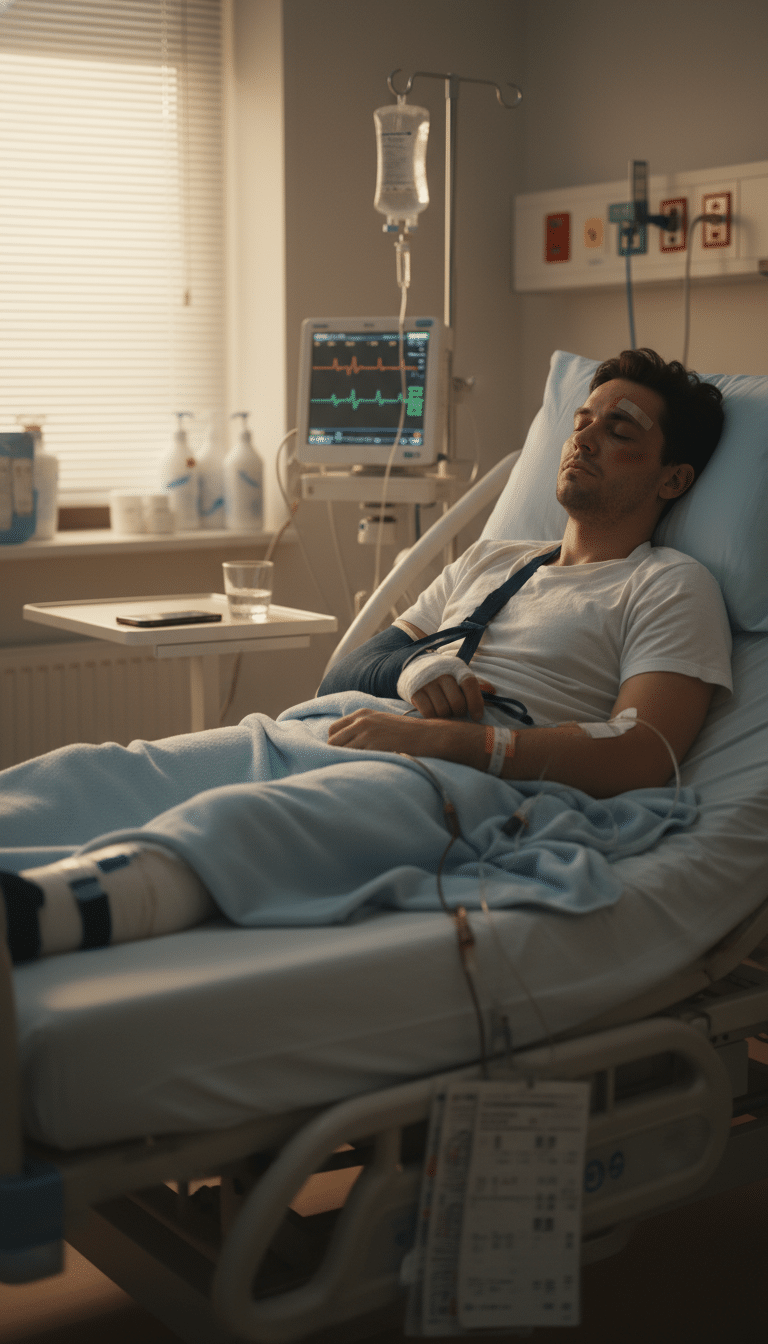
Drugged Driving Wreck Lawyer in Sapulpa, OK | McKay Law
What Is a Drugged Driving Accident Claim?
Drugged driving — driving while impaired by drugs — is just as dangerous as drunk driving but easier for drivers to hide than DUI. Whether illegal narcotics or legal but impairing (prescription opioids, benzodiazepines, sleep aids, antihistamines), driving under the influence of any impairing substance is a serious threat to public safety. Our firm fights for drugged driving accident victims in Sapulpa and across the state.
Common Drugs That Cause Impaired Driving
Illegal drugs:
THC
Meth
Cocaine
Opiates
Molly
Psychedelics
Phencyclidine
Legal but impairing prescriptions:
Opioid painkillers (oxycodone, hydrocodone, fentanyl)
Benzos
Sleeping pills
Muscle relaxers
Mental health medications
Allergy medications
Stimulants
OTC drugs:
Cold and cough remedies
OTC sleep medications
Antihistamines
How Drug Impairment Affects Driving
- Slower response to road conditions
- Compromised driving judgment
- Difficulty controlling the vehicle
- Drowsiness and falling asleep
- Hallucinations
- Difficulty following other vehicles
- Blurred or double vision
- Aggressive or erratic driving
- Blackouts
- Inability to maintain lane
Oklahoma DUID Statutes
Oklahoma criminalizes drug-impaired driving (Okla. Stat. tit. 47, § 11-902). It’s a crime to drive:
- While impaired by drugs
- Under Oklahoma’s per se rule for Schedule I drugs
- While polyimpaired
Oklahoma has a per se law for some drugs — where detectable presence equals impairment.
What These Crashes Do to Victims
Drug-impaired crashes tend to be severe because impaired drivers don’t take evasive action:
- Traumatic brain injuries
- Spinal cord injuries and paralysis
- Crush injuries
- Severe broken bones
- Internal organ damage
- Traumatic amputations
- Fire and burn injuries
- Whiplash and neck injuries
- Mental and emotional trauma
- Death from catastrophic crashes
Proving Drugged Driving
- Police reports
- Drug Recognition Expert (DRE) reports
- Drug test results
- Hospital toxicology screens
- Criminal court records
- Witness statements
- Surveillance and traffic camera footage
- Driver’s prior drug-related history
- Pharmacy records
- Phone and online activity
- Scene evidence
- EDR readouts on driver behavior
Potential Defendants
- The driver under the influence
- The driver’s employer when the crash occurred during work
- Alcohol vendors when overservice played a role
- A drug dealer in limited situations
- A pharmacy or pharmacist
- Prescribing physicians who improperly prescribed
- The vehicle owner when ownership liability applies
Criminal vs. Civil Cases
Drugged driving crashes typically result in both criminal prosecution and civil lawsuits. They operate on different tracks:
- Criminal case — the district attorney brings charges
- Personal injury claim — victims pursue financial recovery
Criminal convictions support civil claims. Even when criminal charges are dropped, the personal injury case is independent.
Building the Evidence
- Duty — All drivers must drive sober.
- Violation of That Duty — The driver drove while impaired.
- Causation — The impairment caused or contributed to the crash and your injuries.
- Quantifiable Losses — Medical costs, lost income, pain and suffering, and other losses.
Damages Available
- Medical bills, past and future
- Long-term care and rehabilitation
- Lost wages and diminished earning ability
- Damage to belongings
- Non-economic damages
- Loss of enjoyment of life
- Loss of consortium
- Survivor damages in fatal crashes
- Exemplary damages
Punitive Damages in Drugged Driving Cases
These cases often justify punitive awards because driving impaired meets the standard for gross negligence. Punitive awards send a message and deter similar conduct.
Time Limits to Be Aware Of
You typically have two years from the date of the crash to file (Okla. Stat. tit. 12, § 95). Wrongful death claims carry the same two-year limit.
How McKay Law Approaches Drugged Driving Cases
We get to work immediately to gather evidence of drug impairment, work with the criminal case when helpful, engage specialized experts on drug impairment, pursue punitive damages in appropriate cases, identify all liable parties and insurance coverage, and prepare every case as if it will go to trial.
Common Questions
Q: How do you prove the other driver was on drugs?
A: Drug testing, officer observations, witnesses, and criminal charges.
Q: What does it cost to hire McKay Law?
A: Nothing upfront. No recovery, no fee.
Q: The other driver was charged with DUI — does that help my case?
A: Absolutely. A conviction makes the civil case much stronger.
Q: The other driver was on a prescription drug, not illegal drugs — can I still recover?
A: Absolutely. Driving impaired is illegal regardless of whether the drug was prescribed.
Q: Can I get punitive damages?
A: Usually possible. Drug-impaired driving meets the standard for punitive awards.
Q: Should I give the insurance company a recorded statement?
A: Never. Talk to a lawyer first.
Q: What if criminal charges are dropped?
A: You can still pursue civil recovery.
Q: What is the deadline to file?
A: Two years from the date of the crash (Okla. Stat. tit. 12, § 95). Move fast — critical evidence may be lost.
Drugged Driving Accident Claims in Sapulpa, OK
Drugs are involved in more fatal crashes than alcohol in many recent studies. These claims operate under proof rules that complicate liability. Insurance companies use the proof challenges aggressively. A Sapulpa drugged driving accident lawyer builds these cases around the actual evidence available.
Drugged Driving Isn’t Just Illegal Drugs
The widespread misunderstanding is that drugged driving means illegal narcotics. Not at all.
Prescription Medications
Many prescription medications impair driving. Examples include:
- Opioid pain medications (Vicodin, OxyContin, Percocet, methadone)
- Anti-anxiety medications
- Sleep medications (Ambien, Lunesta, Sonata)
- Prescription muscle relaxants
- Antidepressants and antipsychotics (particularly during initiation)
- Antihistamines (especially first-generation antihistamines)
- ADHD medications (especially when misused)
- Migraine medications
- Seizure prevention drugs
Over-the-Counter Medications
OTC drugs frequently cause impairment:
- Sedating cold and allergy medications
- Cough suppressants
- Sleep aids (Tylenol PM, Nyquil)
- Dramamine and similar products
Recreational Drugs
Illicit substances include cannabis products in any form, cocaine and crack, meth, recreational opioid use, hallucinogens (LSD, psilocybin, others), synthetic substances, ketamine and PCP, and nitrous oxide and other inhalants.
Why Drugged Driving Cases Are Harder to Prove Than DUI Cases
No Equivalent of the .08 BAC Standard
The 0.08 BAC standard is universally established. There’s no analogous “limit” for most drugs. Some jurisdictions have THC per se limits, but those limits don’t necessarily correlate with actual impairment.
For non-alcohol substances generally, prosecutors and plaintiffs’ attorneys must prove actual impairment.
Detection Difficulties
Drug testing can identify substances, but drugs can be detected long after impairment has ended.
Marijuana detection windows extend far beyond impairment duration. This complicates proof in marijuana-related cases.
Detection times vary significantly. Some drugs disappear quickly, some are detectable for extended periods.
Testing Isn’t Routine
Alcohol testing happens automatically in many crash scenarios. Drug screening doesn’t happen automatically in many cases. Without testing, the impairment case requires alternative proof.
Drug Recognition Experts (DREs)
Drug-recognition trained officers use the DRE protocol to identify drug impairment. These assessments carry significant weight when conducted. DRE coverage isn’t universal.
Defense Challenges
Drug impairment cases face vigorous defense:
- “Detected metabolites prove drugs were used at some point, not that the driver was impaired”
- Testing methodology challenges
- Prescription drug defenses
- “You can’t prove impairment at the crash moment”
How These Cases Get Built
Toxicology Evidence
If toxicology was performed, lab results are key evidence.
However, the analysis needs expert interpretation. Expert toxicologists interpret the results in context.
Observable Impairment
Witness descriptions are often case-defining.
Common signs include:
- Verbal impairment
- Eye-related indicators
- Motor coordination issues
- Unusual behavior or affect
- Loss of consciousness
- Pre-crash driving behavior
- Failure of field sobriety tests
- Body signs of intoxication
Pre-Crash Driving Behavior
Pre-crash driving descriptions help establish impairment. Erratic lane keeping, slow reactions, unusual stopping or starting can support impairment findings.
Criminal Charges
Criminal charges against the driver can establish key elements as a matter of law. Adjudicated criminal cases carry significant weight in subsequent civil litigation.
Driver Statements and Admissions
Driver admissions provide direct proof.
Medical Records
The driver’s medical records provide additional evidence.
Vehicle Evidence
Physical evidence in the car build the impairment case.
Punitive Damages and Drugged Driving
Drug-impaired driving frequently meets the punitive damages threshold. Choosing to drive while drug-impaired is often considered gross negligence or reckless behavior.
Exemplary damages add significant value in serious drugged driving cases.
Common Insurance Defenses
“There’s No Proof of Impairment”
The most common challenge. Detection-doesn’t-equal-impairment arguments.
“The Medication Was Taken as Prescribed”
Where prescription drugs were involved, defense argues the medication was taken legally and properly. Prescription compliance doesn’t necessarily negate impairment. Even properly prescribed and properly taken medications can impair driving.
“Comparative Fault”
Defense pushes shared-fault arguments.
“The Crash Wasn’t Caused by Drug Impairment”
Defense argues other factors caused the crash. Expert testimony on how drugs affect driving establishes causation.
Critical Steps After a Drugged Driving Crash
Get the Police Report
Make sure law enforcement was called. Note documentation of drug testing.
Document Witness Observations
Independent observations of the driver’s condition can establish impairment when toxicology is unavailable.
Preserve the Vehicle Evidence
Drug paraphernalia, prescription bottles, or related materials can support drug impairment claims.
Document Driver Statements
Driver admissions.
Photograph the Scene
Visual evidence of the crash scene.
Get Medical Attention Immediately
Prompt medical evaluation protects against later disputes.
Track the Criminal Case
The criminal proceedings can substantially support the civil case.
Don’t Wait to Get Legal Help
Critical evidence needs prompt action.
Damages Available
Recoverable losses include the standard auto crash damages plus enhanced damages potential:
- Hospitalization, surgical, and rehabilitation costs
- Past and future income loss
- Reduced ability to work
- Property damage
- Loss of enjoyment of life
- Wrongful death and survivor damages
- Punitive damages — frequently significant in these cases
Dram Shop and Third-Party Liability
In some cases involving prescription drugs, additional defendants may exist. Improper prescription scenarios can support claims against the prescriber.
Attorney Costs
Drug-impaired driving lawyers work on contingency. Case reviews cost nothing. Expert witness costs can be significant advanced by the firm.
Move Quickly
Drug detection windows complicate evidence preservation. Witness recollections fade. OK’s statute of limitations sets a hard cutoff. Getting an attorney involved promptly protects the evidence.
McKay Law Is Your Sapulpa Advocate After A Drugged Driving Accident
A driver intoxicated by drugs is equally hazardous as one incapacitated by alcohol — and in countless cases, even more volatile. Opioid medications, sleep medications, anti-anxiety drugs, marijuana, cocaine, methamphetamine, and the rising category of synthetic substances all undermine judgment, stretch reaction times, skew perception, and create the kind of behind-the-wheel decisions that wreck innocent lives. Different from alcohol, which can be detected with a roadside breathalyzer, drug impairment typically requires blood testing, drug recognition expert evaluation, and toxicology analysis to document. At McKay Law, we move quickly to secure the police report, body cam footage, toxicology results, prescription history, and field sobriety evidence that pinpoints the drugged condition of the driver who hit you — and we work with substance specialists and toxicologists when expert testimony is necessary to make that proof airtight.
These types of claims regularly open the door to punitive damages on top of standard compensation, because the driver’s choice to operate a vehicle under the influence crosses into the level of willful negligence. When you join the McKay Law family, we don’t merely settle for the smallest offer — we explore whether a bar, dispensary, dealer, or employer bore responsibility for the situation, whether the driver had a history of impaired driving, and whether more parties share liability for allowing an impaired driver onto the highway. We fight for full compensation for emergency care, surgeries, hospitalization, ongoing rehabilitation, future medical needs, prescription costs, time away from work, reduced future income, vehicle replacement, the ongoing struggle of living through a crash like this — and in the most tragic cases, the wrongful death of a cherished loved one. Call us right away at (866) 679-9651 or reach out online to book your free consultation and bring a firm that forces impaired drivers properly liable fighting for you.
Video Testimonials






