

“Labor Omnia Vincit” McKay Law
Tuttle, OK Drugged Driving Accident Lawyer
Drugged driving has become a growing crisis on Oklahoma roads in Tuttle, OK. When a motorist drives while impaired by any substance, they gamble with the lives of everyone on the road. McKay Law represents victims of drugged driving crashes throughout OK. Drug impairment can come from controlled substances, prescription painkillers, cannabis products, and even legal drugs that impair driving ability. Drugs of any kind can create the same dangers as alcohol impairment. Drugged driving wrecks frequently cause high-speed wrecks, fatal head-on collisions, and catastrophic intersection crashes. Our Tuttle drug-impaired driver crash lawyers build powerful cases against impaired drivers. We secure key proof—police reports, toxicology and blood test results, drug recognition evaluations, witness statements, dash cam and surveillance footage, prescription histories, and any criminal charges filed against the driver. A conviction creates powerful evidence for your case—but you don’t need to wait for criminal proceedings to pursue justice. Liable parties may also include third parties who contributed to or enabled the impairment. Victims often suffer TBIs, paralysis, multiple fractures, chronic pain, and fatalities. We recover all available damages including hospital costs, ongoing treatment, missed income, suffering, and survivor damages. These cases frequently allow for exemplary damages—because choosing to drive impaired meets Oklahoma’s gross negligence standard. The insurers covering impaired motorists may quickly admit liability but try to minimize damages—we don’t let them shortchange you. Every client we represent is handled on a no-win, no-fee basis—zero upfront cost. Contact McKay Law today for a free consultation with a Tuttle, OK car accident attorney who will hold the impaired driver accountable.
Settlements Won
0
+
Million Dollars Won
0
+
Google 5 Star Reviews
0
+
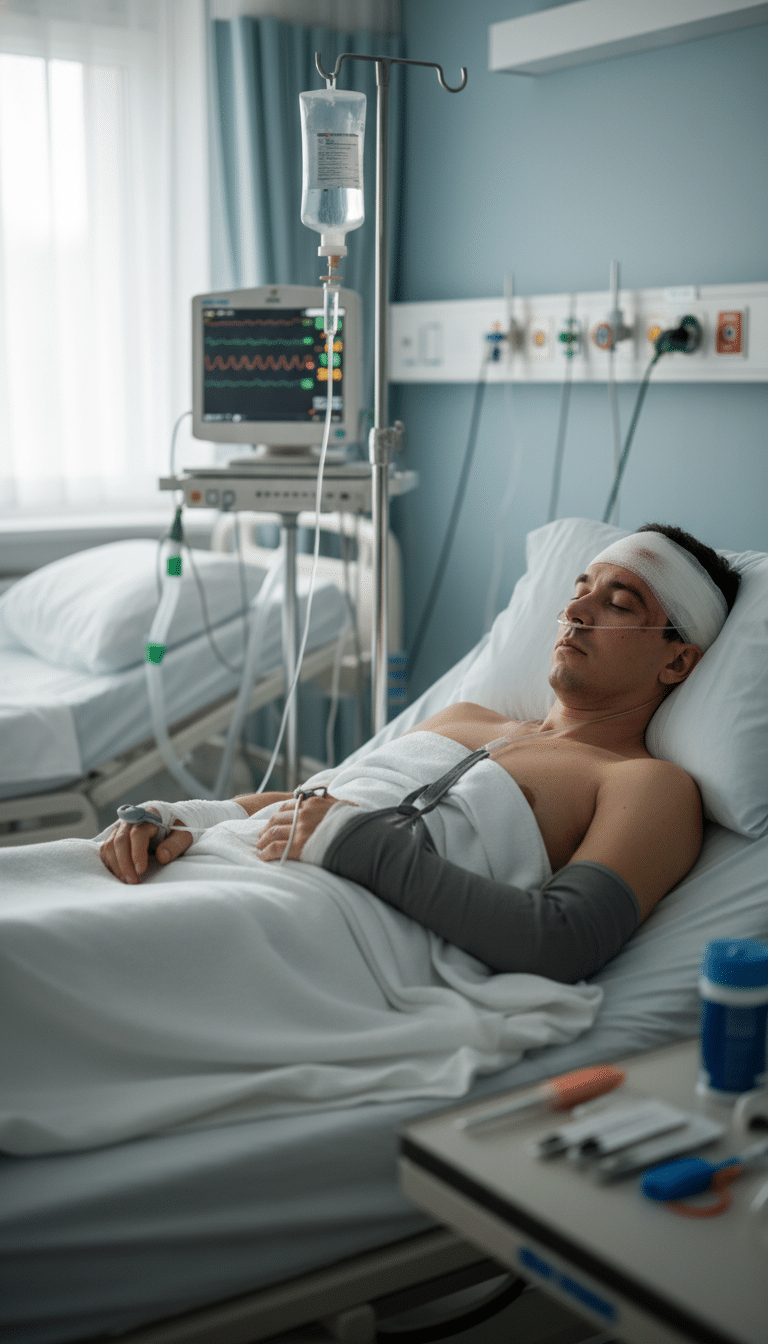
Drugged Driving Wreck Legal Counsel in Tuttle, OK | McKay Law
What Is a Drugged Driving Accident Claim?
Drugged driving — driving while impaired by drugs — is just as dangerous as drunk driving but easier for drivers to hide than DUI. Whether illegal narcotics or legal-but-impairing medications, impaired drivers endanger everyone. McKay Law represents drugged driving accident victims in Tuttle and across the state.
Common Drugs That Cause Impaired Driving
Illegal drugs:
THC
Crystal meth
Powdered cocaine
Opiates
Molly
LSD and hallucinogens
PCP
Prescription medications:
Pain medications
Anti-anxiety medications
Sleeping pills
Muscle relaxers
Antidepressants and antipsychotics
Sedating antihistamines
Stimulants
Non-prescription medicines:
Cold and cough remedies
Non-prescription sleep aids
OTC allergy medicine
The Effects of Drugs on Driving
- Slower response to road conditions
- Impaired judgment
- Reduced coordination
- Drug-induced drowsiness
- Drug-induced hallucinations
- Tracking failures
- Blurred or double vision
- Aggressive or erratic driving
- Loss of consciousness
- Inability to maintain lane
Oklahoma DUID Statutes
Oklahoma’s DUI statute covers drug impairment (Okla. Stat. tit. 47, § 11-902). Driving is prohibited:
- Under the influence of any drug
- Under Oklahoma’s per se rule for Schedule I drugs
- While polyimpaired
Some drugs trigger automatic DUI charges at any level — where detectable presence equals impairment.
What These Crashes Do to Victims
Drugged driving crashes are often catastrophic because impaired drivers fail to brake, swerve, or react:
- Brain injuries
- Spinal cord injuries and paralysis
- Crush injuries
- Compound fractures
- Internal organ damage
- Loss of limbs
- Thermal injuries
- Cervical strain
- Post-traumatic stress and psychological injuries
- Fatal injuries
How We Prove the Other Driver Was Impaired
- Officer observations
- Specialized officer drug impairment assessments
- Blood and urine test results
- Hospital toxicology screens
- Criminal court records
- Witness statements
- Surveillance and traffic camera footage
- Prior DUI history
- Records of impairing prescriptions
- Cell phone records and social media
- Scene evidence
- Vehicle event data recorder (EDR) data
Who Pays
- The drug-impaired motorist
- An employer if the driver was on the job
- Alcohol vendors where overserving contributed
- A drug dealer where applicable
- Pharmacy negligence
- Healthcare providers negligently prescribed impairing medications
- The car owner in cases of negligent entrustment
Criminal vs. Civil Cases
Drug-impaired drivers face both criminal and civil consequences. Criminal and civil cases run separately:
- Criminal case — the state prosecutes the driver for DUI charges
- Personal injury claim — the victim sues the driver and other responsible parties for compensation
A criminal conviction strengthens the personal injury lawsuit. Civil claims don’t require criminal charges, civil claims can proceed and succeed.
What You Must Prove
- A Duty of Care — There was a duty to drive without impairment.
- Breach — The driver drove while impaired.
- A Direct Link — The drug impairment produced the wreck and harm.
- Quantifiable Losses — Economic and non-economic harm.
What Compensation Looks Like
- Past and future medical expenses
- Ongoing rehabilitation expenses
- Lost income and reduced earning capacity
- Damage to belongings
- Non-economic damages
- The toll on daily life
- Loss of consortium
- Wrongful death compensation for surviving family
- Punitive awards
Why Punitive Damages Often Apply
Punitive damages are commonly available in these cases because impaired driving is reckless conduct. Punitive damages punish the wrongdoer and discourage others from driving impaired.
Time Limits to Be Aware Of
You typically have 2 years from the date of the crash to file (Okla. Stat. tit. 12, § 95). Fatal crash claims are likewise subject to two-year limit.
How McKay Law Approaches Drugged Driving Cases
We get to work immediately to obtain police reports, toxicology results, and criminal records, coordinate with criminal prosecutors when appropriate, engage specialized experts on drug impairment, seek punitive awards, identify all liable parties and insurance coverage, and prepare every case as if it will go to trial.
Common Questions
Q: How do you prove the other driver was on drugs?
A: Multiple sources — toxicology, police, witnesses, and court records.
Q: What does it cost to hire McKay Law?
A: Zero upfront. No recovery, no fee.
Q: The other driver was charged with DUI — does that help my case?
A: Absolutely. DUI charges and convictions strongly support civil claims.
Q: The other driver was on a prescription drug, not illegal drugs — can I still recover?
A: Definitely. Impairment is impairment — the source doesn’t matter for civil claims.
Q: Can I get punitive damages?
A: Frequently, yes. Drugged driving is reckless conduct that typically supports punitive damages.
Q: Should I give the insurance company a recorded statement?
A: Never. Talk to a lawyer first.
Q: What if criminal charges are dropped?
A: Criminal results don’t control civil cases.
Q: What is the deadline to file?
A: 2 years from the date of the crash (Okla. Stat. tit. 12, § 95). Act quickly — drug-related evidence has time limits.
Drugged Driving Accident Claims in Tuttle, OK
Drugged driving has surpassed drunk driving in the proportion of impaired-driving fatalities in recent years. These claims operate under proof rules that complicate liability. Insurers and defense counsel know this and exploit the proof gaps. A local attorney experienced with drug-impaired driving claims navigates the unique legal and forensic terrain these claims involve.
Drugged Driving Isn’t Just Illegal Drugs
One of the most common misconceptions about drugged driving is that drugged driving means illegal narcotics. Not at all.
Prescription Medications
Common prescription drugs can cause impairment. This category covers:
- Prescription opioids
- Anti-anxiety medications
- Sleep medications (Ambien, Lunesta, Sonata)
- Skeletal muscle relaxers
- Antidepressants and antipsychotics (particularly during initiation)
- Sedating allergy treatments
- ADHD medications (especially when misused)
- Migraine medications
- Seizure prevention drugs
Over-the-Counter Medications
Non-prescription medications can be drugged driving substances:
- First-generation antihistamines
- Dextromethorphan (DXM) in cough medicines
- Sleep aids (Tylenol PM, Nyquil)
- Motion sickness medications
Recreational Drugs
Drugs of abuse include marijuana products, cocaine and crack, methamphetamine, heroin and other opioids, psychedelics, designer drugs, sedative-hallucinogens, and huffing-type drugs.
Why Drugged Driving Cases Are Harder to Prove Than DUI Cases
No Equivalent of the .08 BAC Standard
Alcohol has a per se threshold. Drug impairment lacks comparable per se thresholds. Marijuana per se laws exist in some states, but the scientific basis for these limits is debated.
For most drugs, impairment must be demonstrated.
Detection Difficulties
Blood and urine tests can detect drug presence, but drugs can be detected long after impairment has ended.
Marijuana metabolites can be detected for days or weeks after use. This complicates proof in marijuana-related cases.
Different drugs metabolize differently. Some drugs disappear quickly, some last longer in the system.
Testing Isn’t Routine
Breath testing for alcohol is standard. Drug testing isn’t always conducted. If law enforcement didn’t test for drugs, the impairment case requires alternative proof.
Drug Recognition Experts (DREs)
Specially trained officers called Drug Recognition Experts can identify drug impairment through systematic evaluation. DRE evaluations provide valuable evidence when conducted. DRE availability varies.
Defense Challenges
Drug impairment cases face vigorous defense:
- “Detected metabolites prove drugs were used at some point, not that the driver was impaired”
- Testing methodology challenges
- Prescription drug defenses
- “You can’t prove impairment at the crash moment”
How These Cases Get Built
Toxicology Evidence
If toxicology was performed, results provide direct evidence of drug presence.
However, toxicology must be interpreted carefully. Forensic toxicology experts provide the scientific foundation for impairment proof.
Observable Impairment
Witness descriptions matter enormously.
Common signs include:
- Slurred speech
- Eye-related indicators
- Physical coordination problems
- Unusual presentations
- Drowsiness or unconsciousness
- Witnessed driving problems
- Failed standardized field sobriety testing
- Physical signs (dilated pupils, constricted pupils, sweating, agitation)
Pre-Crash Driving Behavior
Eyewitness reports of driving help establish impairment. Documented driving behavior build the impairment case.
Criminal Charges
Drug-impaired driving charges, DUI-drugs charges, or DWI charges provide powerful evidence. Guilty pleas can establish negligence as a matter of law.
Driver Statements and Admissions
Self-reported drug use provide direct proof.
Medical Records
Medical history may reveal prescription medications, drug abuse history, or related medical context.
Vehicle Evidence
Items in the driver’s possession build the impairment case.
Punitive Damages and Drugged Driving
These cases often involve egregious conduct supporting punitive damages. Knowingly operating a vehicle under drug impairment typically supports gross negligence findings.
These damages can transform case value in serious drugged driving cases.
Common Insurance Defenses
“There’s No Proof of Impairment”
The defining defense. Detection-doesn’t-equal-impairment arguments.
“The Medication Was Taken as Prescribed”
In prescription drug scenarios, Prescription compliance defense. This defense has limits. Compliance with prescription doesn’t mean safe driving.
“Comparative Fault”
Defense pushes shared-fault arguments.
“The Crash Wasn’t Caused by Drug Impairment”
Defense argues other factors caused the crash. Expert analysis defeats causation challenges.
Critical Steps After a Drugged Driving Crash
Get the Police Report
Make sure law enforcement was called. Pay attention to documentation of drug testing.
Document Witness Observations
Witnesses who observed the other driver’s behavior provide critical evidence.
Preserve the Vehicle Evidence
Physical evidence in the vehicle can provide direct evidence.
Document Driver Statements
Driver admissions.
Photograph the Scene
Comprehensive scene documentation.
Get Medical Attention Immediately
Prompt medical evaluation establishes the injury timeline.
Track the Criminal Case
Criminal charges against the other driver provides important evidence.
Don’t Wait to Get Legal Help
Toxicology and other evidence has time-sensitive preservation requirements.
Damages Available
Recoverable losses include the standard auto crash damages plus enhanced damages potential:
- Past and future medical expenses
- Lost wages
- Diminished earning capacity
- Out-of-pocket vehicle costs
- Pain and suffering
- Loss of consortium
- Enhanced damages — often substantial in drug-impaired driving cases
Dram Shop and Third-Party Liability
In specific prescription drug situations, additional defendants may exist. Negligent prescribing claims can support claims against the prescriber.
Attorney Costs
Counsel handling these cases work on contingency. Free initial consultations are standard. These cases require investment in toxicology experts and forensic specialists advanced by the firm.
Move Quickly
Drug evidence has time-sensitive preservation issues. Witness recollections fade. The legal time limit continues to run. Getting an attorney involved promptly positions the claim for the full recovery these cases can produce.
McKay Law Is Your Tuttle Advocate After A Drugged Driving Accident
A driver impaired by drugs is no less dangerous as one impaired by alcohol — and in countless cases, even more volatile. Opioid medications, sleep medications, anti-anxiety drugs, marijuana, cocaine, methamphetamine, and the increasing category of synthetic substances all damage judgment, slow reaction times, warp perception, and generate the kind of behind-the-wheel decisions that upend innocent lives. Unlike alcohol, which can be tested with a roadside breathalyzer, drug impairment frequently calls for blood testing, drug recognition expert evaluation, and toxicology analysis to document. At McKay Law, we move quickly to secure the police report, body cam footage, toxicology results, prescription history, and field sobriety evidence that establishes the impaired condition of the driver who hit you — and we work with drug experts and toxicologists when expert evidence is needed to leave no doubt.
Drugged driving cases regularly create grounds to punitive damages on top of standard compensation, because the driver’s choice to pilot a vehicle while intoxicated reaches the level of gross negligence. When you partner with the McKay Law family, we don’t just settle for the smallest offer — we examine whether a bar, dispensary, dealer, or employer bore responsibility for the situation, whether the driver had past convictions, and whether further at-fault parties share liability for allowing an impaired driver on the road. We pursue full compensation for emergency care, surgeries, hospitalization, ongoing rehabilitation, future medical needs, prescription costs, lost income, lost earning capacity, vehicle replacement, the enduring hardship of enduring a crash like this — and in the most heartbreaking cases, the wrongful death of a cherished loved one. Call us now at (866) 679-9651 or connect with us online to arrange your free consultation and put a firm that makes impaired drivers completely responsible fighting for you.
Video Testimonials






